The best dust extraction hoses and fittings for 2026
The extractor is rarely what limits your extraction — the hose usually is. We compare hose diameter and wall type, blast gates, the adaptors that never quite fit, cyclone separators and static earthing.
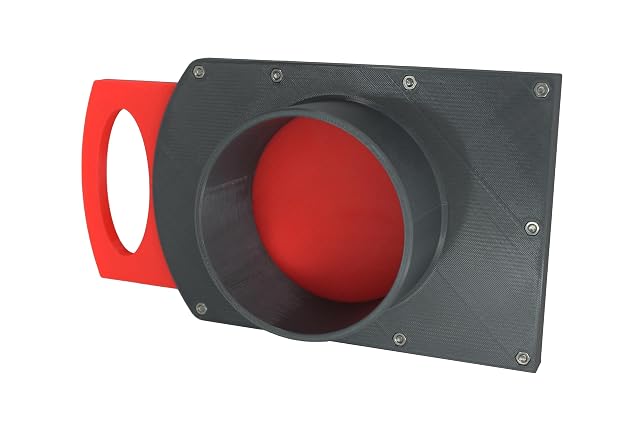
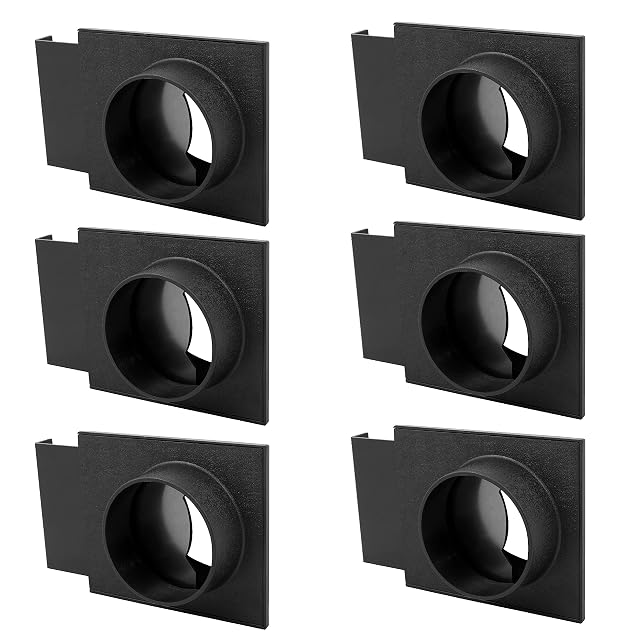
Six gates, which is how many a ducted shop needs — and a published stop, which is the complaint the shelf already had.
Diameter
4 in nominal · No actual diameters are published
Ports
Tapered on both sides, stated so hoses slip on and can be clamped, and stated to accept some tapered fittings
Gate
A sliding gate with a built-in stop, stated so it will not slide out when fully opened — the only stop published on this shelf
Function
Stated as a shut-off valve: closed, air does not flow; open, dust is collected · Stated that one gate per machine concentrates airflow on the machine in use
Material
ABS
Quantity
6 gates
Not supplied
Hoses and hose clamps, both stated sold separately
Part number
12109
Amazon reference
B0BG8X6NPN
EAN
0817918023386
Six gates, which is one per machine in a real workshop
A built-in stop, which answers the complaint the published single gate on this shelf records
No actual diameters published, only nominal four inches
Best for: A workshop with fixed four-inch ducting to several machines — one gate at each
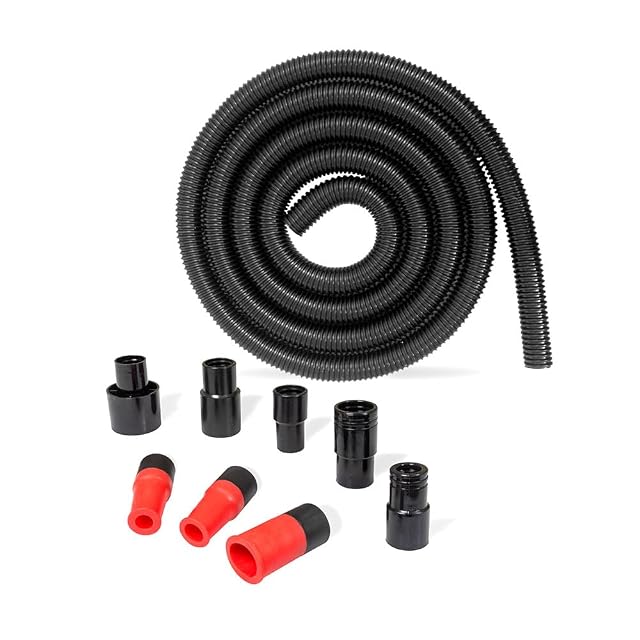
A hand-tool hose with eight adapters, three of them stretchable — and the only listing here that publishes a fit warning.
Hose
10 ft long, 1-3/16 in outer diameter — 3.05 m (10 ft) × 30 mm (1.18 in), stated puncture resistant
Fittings
Eight: 2 small rubber thread-on, 2 ribbed rubber adaptors, 1 plug-in shop vacuum adaptor and 3 Sili Flex fittings · The eight are enumerated and the count agrees
Silicone ends
Stretchable silicone, stated to adapt to different dust ports — the only stretch fitting on this shelf
Named tools
Orbital sanders and biscuit joiners, stated
Fit warning
Stated: shop vacuum port sizes vary by manufacturer, and the images and dimensions should be reviewed carefully — the only fit warning published on this shelf
Quantity
1 hose and 8 fittings
Part number
11714
Amazon reference
B0FPNH1XWK
EAN
0817918025298
Enumerates all eight fittings, and the count agrees with the total
Stretchable silicone ends, which is the only real answer to a non-standard port
Thirty millimeters of hose will not serve a machine port
Best for: A random orbital sander and a biscuit joiner on a shop vacuum, where no two ports are the same size
Rigid ducting, gentle branches and blast gates. A well-designed network loses half as much flow as an improvised assembly.
An extractor that follows the machine of the day
Quick couplings let you move the extractor from one machine to another in seconds. Without them, you end up not extracting at all.
Portable tools
Tool outlets vary from maker to maker: a set of adapters is all but compulsory as soon as you own several brands.
What each advantage costs, on extraction fittings
Large diameter against suction
A large hose passes volume and loses air speed; a small hose sucks hard and blocks. The diameter is chosen on the machine, not on the extractor.
Bends against losses
Every sharp bend costs the equivalent of several meters of straight hose. Wide sweeps radically change a network's flow.
Rigid pipe keeps the flow, flexible hose takes the bends
Rigid duct loses far less pressure and is installed once and for all; flexible adapts anywhere and slows the air permanently.
Before buying extraction fittings
What diameter for which machine?
100 mm (3.94 in) and up for thicknesser, table saw and bandsaw; 32 to 40 mm (1.26 to 1.57 in) for portables. Reducing a 100 to a 40 amounts to not extracting at all.
Should unused branches be closed?
Imperatively. An open port elsewhere in the network takes all the flow and the machine in use gets nothing.
Are fittings standardized?
No, and that is the aisle's main problem. Portable tool outlets vary by maker, hence the adapter sets.
Does corrugated flexible hose slow the air?
Far more than smooth pipe. On a fixed network, smooth ducting is worth the investment; keep flexible for the last few meters.
Should the network be earthed?
On a PVC installation with a strong flow of dry dust, static builds up. A continuity wire removes the unpleasant discharges.
How do I join two different diameters?
With a tapered reducer rather than an abrupt change. A step creates turbulence and a clogging point.
Are automatic blast gates useful?
On a multi-machine network, yes: they open the right port and close the others without your having to think. That convenience is what makes extraction actually happen.
Can a pool hose be used for extraction?
It collapses under suction and is not antistatic, so it builds up charge over a run of dry wood dust. Hoses meant for extraction cost more for exactly those two reasons.
What to remember about extraction fittings
Diameter and bends decide the real flow far more than the extractor does. Close unused branches, prefer smooth ducting to flexible, and plan for adapters when you buy portable tools.
A quick look at extraction fittings
Function: 2 to 4 in flexible hose, on 3 of the 15 models.
Nominal size: 2 to 4 in, on 3 of the 15 models.
Extraction fittings, side by side
There is no table here, and the reason is in the listings. The figure published most often across these 15 products is material, given by 9 of them — short of the four in five a column needs to compare rather than to display gaps. Each product page says what its own maker published.