Skip to content

The best abrasives for 2026

Abrasive is the largest running cost in most workshops, and the one where cheap is genuinely expensive. We compare aluminum oxide against ceramic, backing types, mesh abrasives that do not clog, and set out a grit progression that does not leave scratches under the finish.

What we recommend

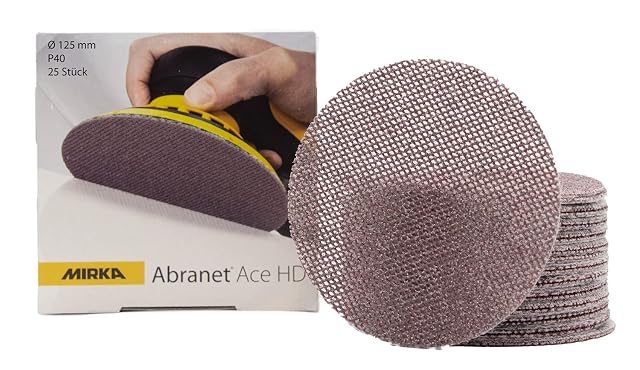
  1. Mirka Abranet Ace HD mesh sanding discs, product photograph

    Mirka Abranet Ace HD, Ø 125 mm, P40

    A mesh disc extracts through its whole surface rather than through eight holes — which is why it lasts several times longer.

    Diameter
    125 mm (4.92 in)
    Grit
    P40
    Construction
    Open mesh, hook and loop
    Part number
    AH23202540
    Amazon reference
    B082FTHFR3 (identical on 6 markets)
    EAN
    6416868271607
    • Mesh extracts over the whole disc face, not through punched holes
    • Does not clog on resinous softwood, which is where paper discs die
    • Costs several times what a paper disc costs

    Best for: Sanding resinous or filled surfaces where paper discs clog within minutes
    Check price on Amazon
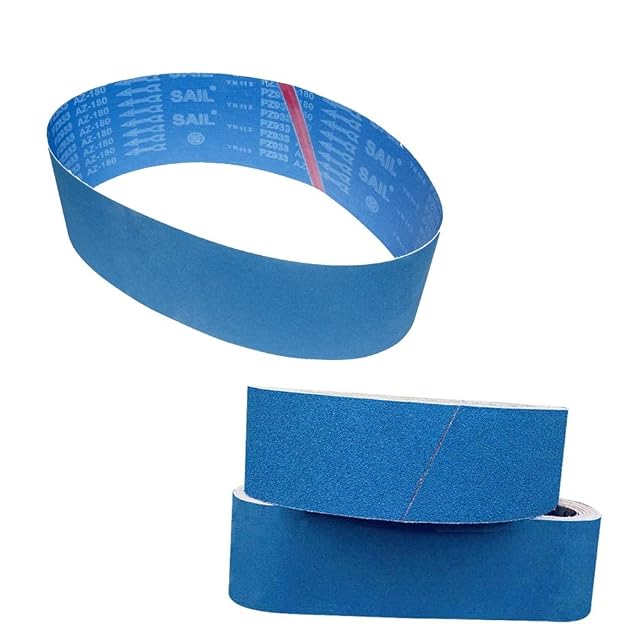
  2. Set of twelve sanding belts 100 x 915 mm, product photograph

    FEIHU 100 × 915 mm zirconia belts, set of 12

    The standard belt size, in the standard grit progression, at €29 for twelve. This is the consumable that makes a bench sander worth owning.

    Size
    100 × 915 mm (3.94 × 36 in)
    Grits
    60, 80, 100, 120, 240, 320 — two of each
    Abrasive
    Zirconia
    Quantity
    12
    Amazon reference
    B08M6CY9TN (identical on 5 markets)
    EAN
    0786297339992
    • 915 × 100 mm (36 × 3.94 in) is the common bench sander size — it fits the Scheppach BTS800 exactly
    • Six grits, so a full progression is covered from one purchase
    • Jumps 120 to 240, which skips a step in the progression

    Best for: Feeding a 915 × 100 mm (36 × 3.94 in) bench belt sander for a year

    Search Amazon for this model
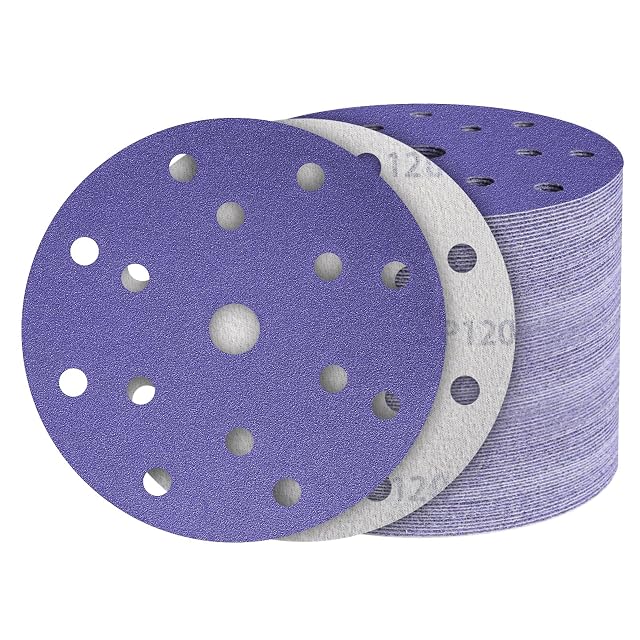
  3. Fifty 150 mm hook-and-loop sanding discs with fifteen holes, product photograph

    BFZRDT 150 mm hook-and-loop discs, 15 hole, 50 pack

    Fifty discs for €20 — and a hole pattern that either lines up with your sander pad or throws dust straight into the room.

    Diameter
    150 mm (5.91 in)
    Holes
    15
    Backing
    Hook and loop
    Abrasive
    Ceramic alumina
    Quantity
    50
    Grits
    Mixed — the listing does not say which
    Part number
    150Z-YPS-MixGrit
    Availability
    No EAN published — other markets could not be verified
    Amazon reference
    B0FZTWK114
    • Ceramic alumina cuts harder and lasts longer than plain aluminum oxide
    • An anti-clog coating, which is where discs usually die on resinous softwood
    • The listing never states which grits are in the mixed pack

    Best for: A 150 mm (5.91 in) random orbital sander whose pad has a matching fifteen-hole pattern

    ≈ $20
    Search Amazon for this model
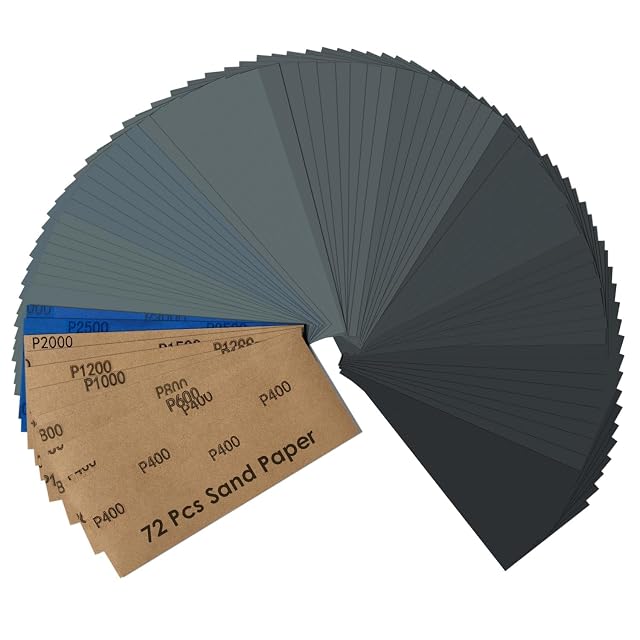
  4. Assorted wet and dry sandpaper sheets, product photograph

    auriikoop Wet and dry sheets, 230 × 90 mm, 72 sheets

    Nine grits, none of them coarse. This is the box you open after the sander has finished, not instead of it.

    Sheet size
    230 × 90 mm (9.06 × 3.54 in)
    Grits
    P400, P600, P800, P1000, P1200, P1500, P2000, P2500, P3000
    Quantity
    72 — eight of each grit
    Abrasive
    Silicon carbide, electroplated
    Use
    Wet or dry
    Part number
    2023053_1
    Availability
    No EAN published — other markets could not be verified
    Amazon reference
    B0CC1QG9D3
    • Nine grits with no gaps between them, eight sheets of each
    • The grit is marked on the back of every sheet, which sounds trivial until you have a bench full of them
    • P400 is the coarsest sheet — this set removes nothing

    Best for: Cutting back between coats of finish, and de-nibbing a varnished surface

    ≈ $9
    Search Amazon for this model
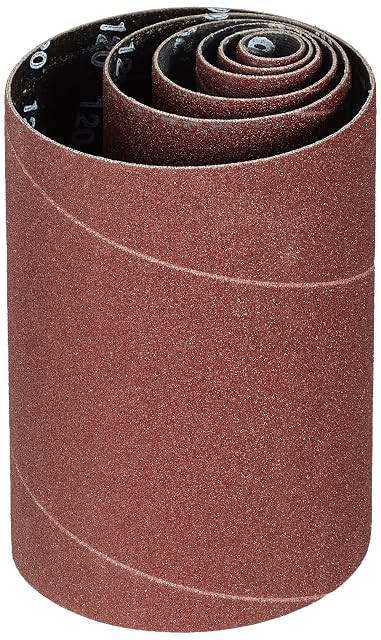
  5. Set of eighteen Scheppach spindle sanding sleeves, product photograph

    Scheppach 7903400702, 18 sanding sleeves, grit 120

    Three sleeves for each of the six drums, in one grit. The consumable that decides whether a spindle sander stays in use.

    Quantity
    18 — three of each size
    Diameters
    13, 19, 26, 38, 51 and 76 mm (2.99 in)
    Grit
    120
    Part number
    7903400702
    Intended machines
    Scheppach OSM600 and OSM100 — the description also names OSM101
    Amazon reference
    B078JG7MHR (identical on 6 markets)
    EAN
    4014915098171
    • Covers all six drum diameters the machine ships with
    • Three of each size, so a worn sleeve does not stop the job
    • Grit 120 only — no coarse sleeves for shaping and none finer for finishing

    Best for: Keeping a Scheppach oscillating spindle sander fed across its whole drum range

    ≈ $120
    Check price on Amazon
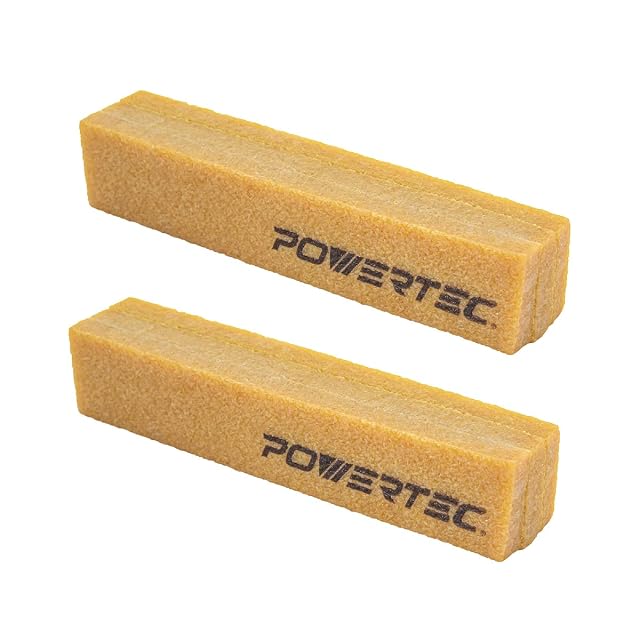
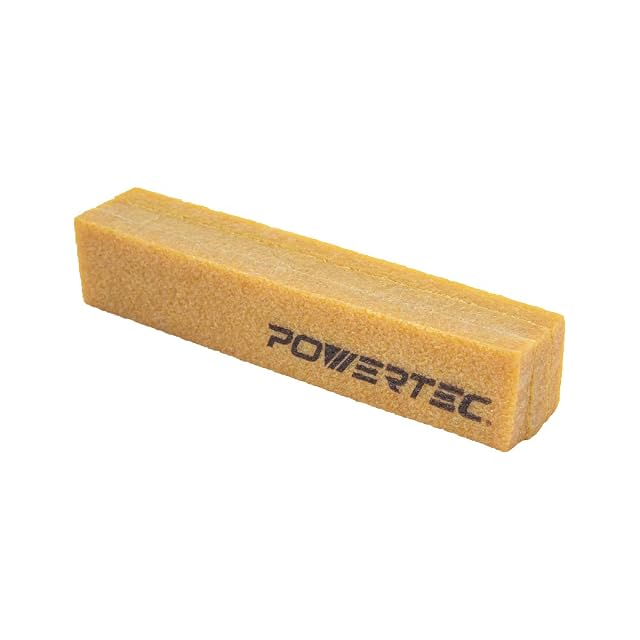
  6. POWERTEC abrasive cleaning sticks, two-pack, product photograph

    POWERTEC 71002-P2 cleaning stick, 8-1/2 in, 2 pack

    Two sticks instead of one, from a listing identical to its single-stick sibling in every word but the quantity.

    Quantity
    2 sticks
    Stick size
    8-1/2 × 1-1/2 × 1-1/2 in, published — about 19 cubic inches of rubber per stick
    Material
    All-natural rubber, stated professional grade
    Removes
    Sawdust, pitch, gum, glue and other residue, stated without damaging the grit
    Method
    Held against the abrasive while the sander is running, per the maker
    Named uses
    Sanding belts, disc sanders, drum sanders, skateboard grip tape, rubber-bottomed shoes
    Not for
    Plastic, and conveyor-feed type sanders — stated by the maker · Stated to work best on cured or dry residue
    Part number
    71002-P2
    Amazon reference
    B099WMPH2W
    EAN
    0843441111450
    • Publishes the stick size as three figures, which lets the rubber be compared
    • The only listing on this shelf to publish what it is not for
    • Its five published features are its single-stick sibling's, word for word

    Best for: A workshop with a belt sander and a disc sander, where a stick should live beside each

    ≈ $16
    Check price on Amazon
  7. POWERTEC abrasive cleaning stick, single, product photograph

    POWERTEC 71002 cleaning stick, 8-1/2 in

    The single stick — and the cheapest way onto this shelf, at a higher price per stick than the two-pack beside it.

    Quantity
    1 stick
    Stick size
    8-1/2 × 1-1/2 × 1-1/2 in, published — about 19 cubic inches of rubber
    Material
    All-natural rubber, stated professional grade
    Removes
    Sawdust, pitch, gum, glue and other residue, stated without damaging the grit
    Method
    Held against the abrasive while the sander is running, per the maker
    Named uses
    Sanding belts, disc sanders, drum sanders, skateboard grip tape, rubber-bottomed shoes
    Not for
    Plastic, and conveyor-feed type sanders — stated by the maker · Stated to work best on cured or dry residue
    Part number
    71002
    Amazon reference
    B00AJW0CY8
    EAN
    0736815004703
    • The least expensive item on the American half of this shelf
    • Publishes its size as three figures and its two exclusions
    • Costs more per stick than the two-pack of the same stick on this shelf

    Best for: One sanding machine, and the smallest sum that gets a cleaning stick into the workshop

    ≈ $10
    Check price on Amazon
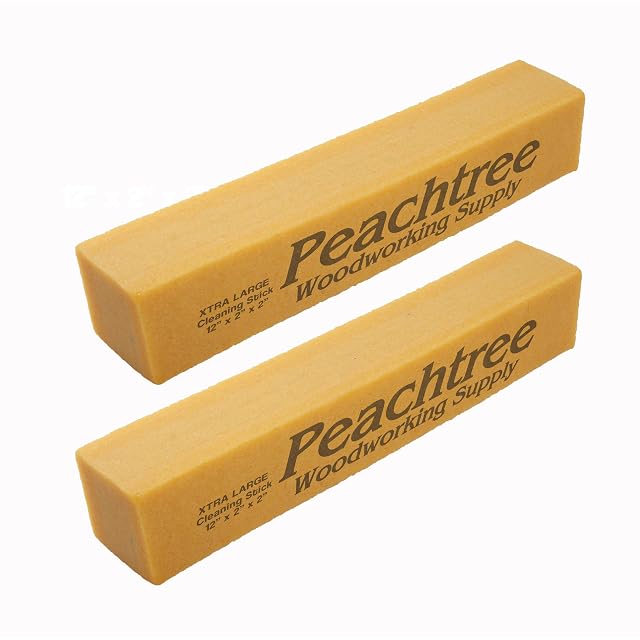
  8. Peachtree abrasive cleaning sticks, two-pack, product photograph

    Peachtree Woodworking Supply BCS cleaning stick, 2 × 2 × 12 in, 2 pack

    The largest cleaning stick on this shelf — forty-eight cubic inches of rubber each — from a listing that mentions skateboards four times.

    Quantity
    2 sticks
    Stick size
    2 × 2 × 12 in, published — about 48 cubic inches of rubber per stick, the largest section on this shelf
    Material
    Natural rubber
    Removes
    Residue and debris, stated to restore belts and abrasive materials to like-new condition · No residue type is named
    Method
    Pressed against the running belt, or rubbed by hand, per the maker
    Named uses
    Sanding belts, disc sanders, drum sanders, skateboard grip tape, grip tape on floor areas
    Not for
    Not published by the maker.
    Part number
    BCS
    Amazon reference
    B0DPJ4QDFN
    EAN
    0817918024895
    • The largest stick on this shelf — forty-eight cubic inches against nineteen
    • More rubber per dollar than the POWERTEC pair, on the published dimensions
    • Publishes no exclusions, where the POWERTEC listings publish three

    Best for: A wide belt sander, where a two-inch square section stays square against the belt

    ≈ $21
    Check price on Amazon
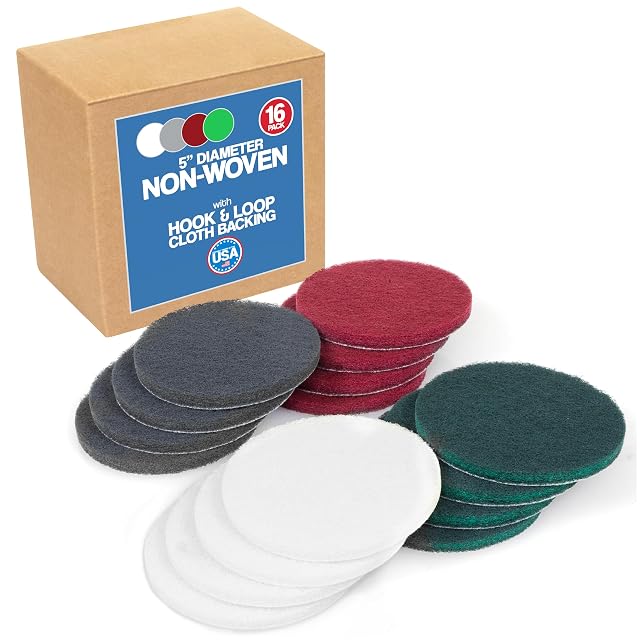
  9. Peachtree 5 inch non-woven abrasive pads in four colors, product photograph

    Peachtree Woodworking Supply 21904 non-woven pads, 5 in, 16 pack

    Four grades told apart by color rather than by a printed number — and one of the four is non-abrasive by the listing's own account.

    Diameter
    5 in
    Quantity
    16 pads · The split between the four grades is not published
    Grades
    Four, by color: green stated like 240 grit, maroon stated 320, grey stated 800 very fine, and white stated non-abrasive — the only color-coded grading on this shelf
    Backing
    Hook and loop, for a 5 in random orbital sander or polisher
    Construction
    Non-woven
    Named uses
    Paint removal, scuff sanding between coats, smoothing before a final finish, buffing, applying oils and waxes · Also rust removal, deburring, metal cleaning and auto paint prep
    Water
    The white pad is stated to stand up to water, cleaners and wood finishes
    Part number
    21904
    Amazon reference
    B0FB46JFX6
    EAN
    0817918025045
    • Four grades in one purchase, each with a stated grit equivalent
    • Color-coded, so a pad on the bench is identifiable at a glance
    • Sixteen pads across four grades, and the split between them is not published

    Best for: Scuff sanding between coats of finish on a 5 in random orbital, and buffing the last one

    ≈ $27
    Check price on Amazon

For which need, in abrasives

Sanding a large surface

Discs clog far faster than people think, and a saturated disc stops cutting. Quantity decides how often you allow yourself to change.

auriikoop Wet and dry sheets, 230 × 90 mm, 72 sheets

Sticking to the pad you own

A six-hole disc on an eight-hole pad blocks the extraction and loads the abrasive. The stated hole count and diameter are decisive, before the grit.

BFZRDT 150 mm hook-and-loop discs, 15 hole, 50 pack

For whom, within abrasives

Furniture finishing
You need the full range of grits, 80 to 240. Skipping a step leaves scratches the next grit does not remove and which show up under the varnish.
Taking old stain off pine
Coarse grits and plenty of them: 40 and 60 wear out fast on old paint. It is where the consumable costs most.
De-nibbing between coats
A very fine grit, 320 or above, used by hand. A machine pass at this stage goes straight through the finish coat.

What each advantage costs, on abrasives

Price per disc against life
A cheap abrasive costs three times less and lasts five times less. Overall it costs more, and it burns the wood at the end of its life.
Proprietary pattern against universal
Hole patterns vary from brand to brand. A machine with a proprietary pattern locks you into a more expensive catalog, sometimes for a genuine gain in extraction.
Hook-and-loop against adhesive
Hook-and-loop repositions and can be reused; adhesive costs less and cannot go back on. Hook-and-loop also wears out, on the pad side.

Before buying abrasives

What grit progression should I follow?

Skipping no more than one step: 80, 120, 180, 240. Each grit has to erase the scratches of the previous one, which it cannot do if it is too fine.

When should a disc be changed?

Far sooner than people do. As soon as it heats up, slides, or leaves dark marks, it has stopped cutting and is burning.

Can an abrasive be cleaned?

A cleaning stick removes the clogging and appreciably extends its life. It does not restore an abrasive whose grit is worn.

Should wood be wet sanded?

On finishes and varnishes, yes, with an abrasive intended for it. On bare wood, never: water raises the grain.

What grit to finish before varnishing?

Generally 180 to 240 for varnish, finer for oil. Too fine and the wood is burnished and the varnish adheres badly.

Why do my discs come off?

A worn or dust-clogged hook-and-loop pad. A pad is replaced for a couple of euros and makes the discs hold again.

Do abrasives have a shelf life?

The paper backing takes up damp and tears. Dry storage keeps discs almost indefinitely.

Do one brand's discs fit another brand's sander?

The diameter and the hole count must match, and some makers use their own hole pattern. That is the only point to check: the hook-and-loop backing itself is universal.

What to remember about abrasives

Abrasive is the consumable people keep too long. A disc changed often costs less than a burnt surface, and a grit progression with no skipped steps does more for the finish than the sander itself.

A quick look at abrasives

  • Stick size: 2 to 8 1/2 × 1-1/2 × 1-1/2 in, on 3 of the 9 models.

Abrasives, side by side

There is no table here, and the reason is in the listings. Enough of these 9 products name the same row — quantity — for a column to qualify, and too few publish a figure in it: the column would compare blanks rather than models. Each product page says what its own maker published.

What each budget cuts on this shelf

Where the data is read

Specifications: manufacturer sheets for woodworking machines and the matching Amazon product pages. Prices and availability: Keepa.

Most recent revision in this category: October 7, 2026.

How we assess abrasives

Prices quoted in these summaries are dated readings. The live price is shown next to each product.