Skip to content

The best wood lathes for 2026

A lathe is chosen on two dimensions and one hidden commitment. We compare swing over bed and distance between centers, the quality of variable speed at the low end, and the spindle thread — because every chuck and faceplate you ever buy has to match it.

The models we recommend

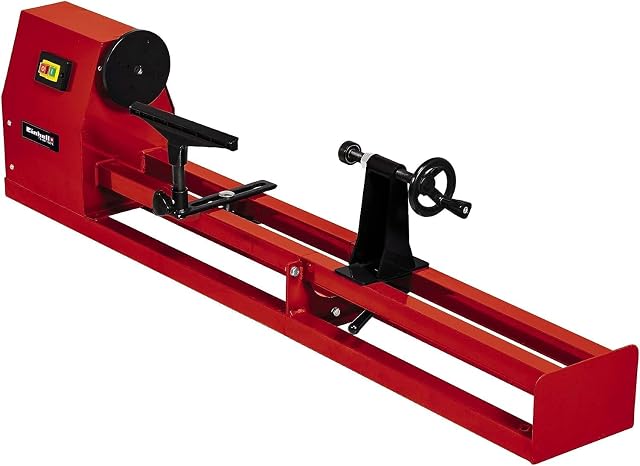
  1. Einhell TC-WW 1000/1

    Entry lathe · €155 in Germany

    The cheapest full-size wood lathe here, and the one that most clearly needs bolting down before it is any good.

    Best for: A first lathe for spindle work — chair legs, tool handles, stair spindles

    7.2/10

    ≈ $490

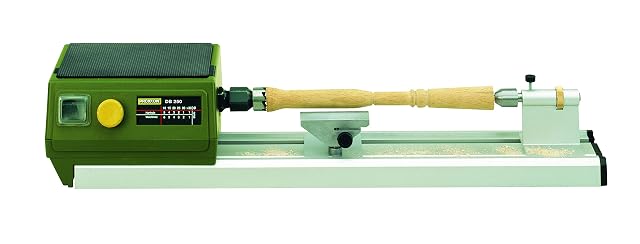
  2. Proxxon DB 250

    Micro lathe · electronic speed control

    A micro lathe for model work, with proper electronic speed control and a faceplate — and no pretensions to being a furniture machine.

    Best for: Pens, small boxes, model parts — precise work at small scale

    7.2/10

    ≈ $295

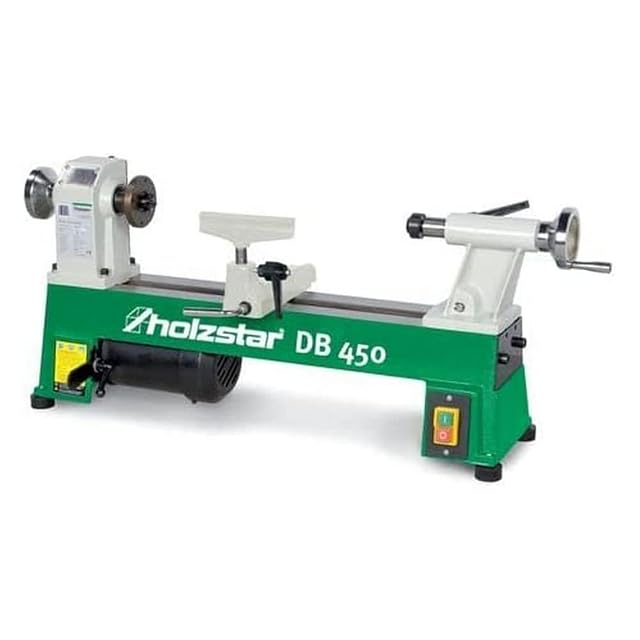
  3. Holzstar DB 450

    230 V · Ø 254 mm (10 in) swing · 5 speeds

    A properly built small lathe with five speeds and a stated swing — the first machine here that publishes what it can turn.

    Best for: Bowls up to 254 mm (10 in) and spindle work, in a workshop that wants a machine rather than a starter kit

    7.8/10

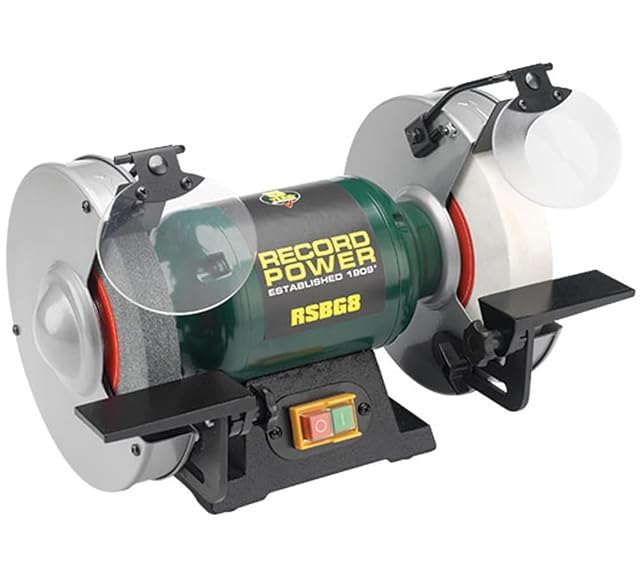
  4. Record Power RSBG8

    Ø 200 mm (7.87 in) wheels · 2,850 min⁻¹ · 16 mm (0.63 in) shaft

    A 200 mm (7.87 in) bench grinder for sharpening tools — at 2,850 rpm, which is the specification you have to work around.

    Best for: Reshaping chipped edges and grinding primary bevels, followed by honing elsewhere

    7.8/10

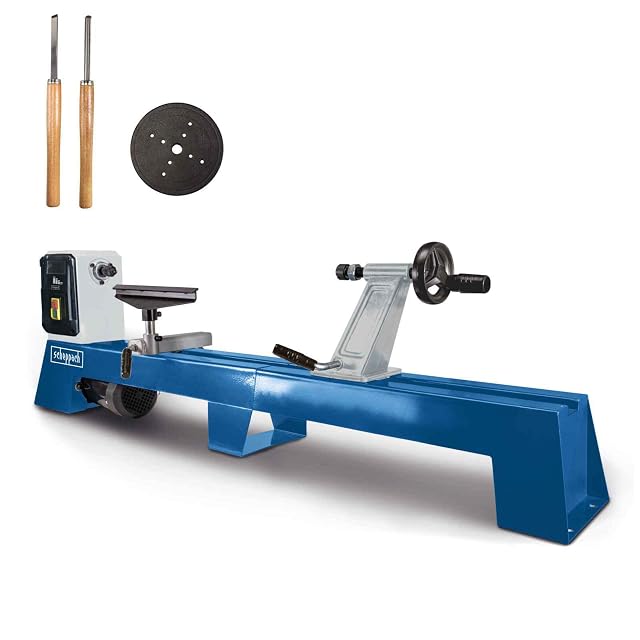
  5. Scheppach DM1100T

    400 W · Ø 350 mm (13.8 in) · 1,000 mm (39.4 in) between centers

    The most capacity per euro of the European lathes on this page — and a listing whose title and part number name two different machines.

    Best for: Long spindle work — stair balusters, table legs — if you can confirm which machine you are buying

    7.8/10

    ≈ $480

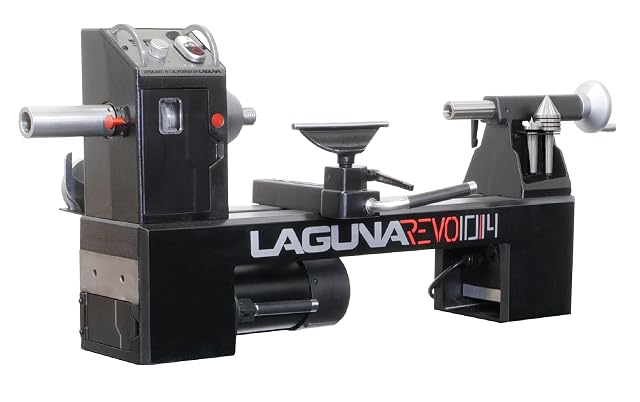
  6. Laguna Revo 10|14, 10 × 14 in

    10 × 14 in · 250–3,200 rpm in three ranges · TEFC · 95 lb · 24 index positions

    Ninety-five pounds and a published footprint, with a bearing-spacing claim no other lathe here makes.

    Best for: A bench that can take 43 kg (94.8 lb), and spindle work where the tool rest edge matters

    ≈ $565

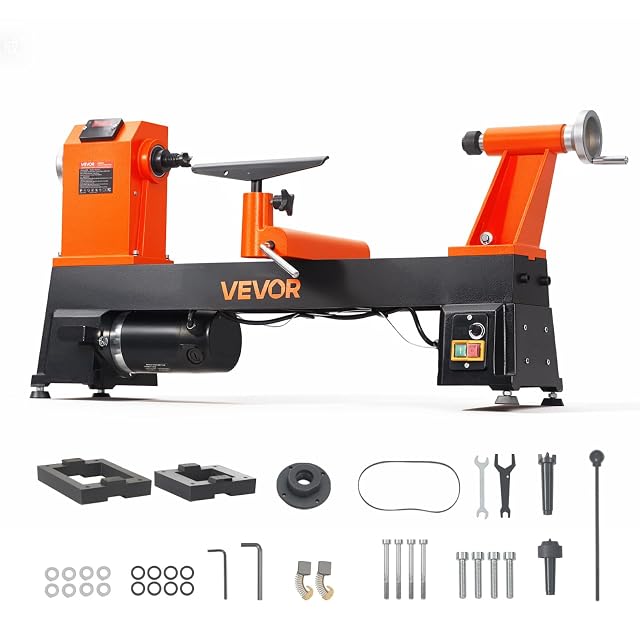
  7. VEVOR 14 × 20 in, 1 HP

    14 in swing, 16 in with riser · 20 in centers · 150–3,500 rpm · 1 HP / 750 W

    The largest swing on this shelf once the riser block is fitted — and two power figures that agree with each other.

    Best for: The largest bowl on this shelf, turned from a blank that has already been rounded

    ≈ $580

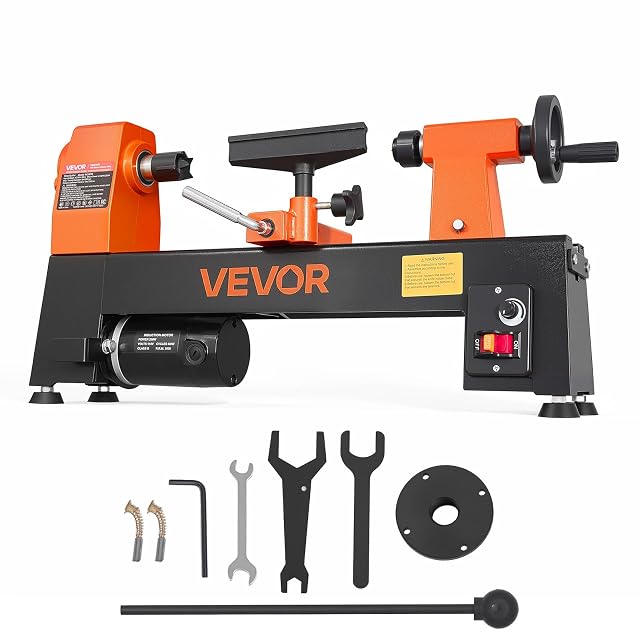
  8. VEVOR 8 × 13 in mini, 1/3 HP

    8 × 13 in · 150–3,200 rpm · 1/3 HP / 250 W · metal frame

    The small VEVOR: a hundred and fifty rpm at the bottom like its big sibling, on a third of the power.

    Best for: Pens, handles, small boxes and spindle practice, on the smallest sensible budget

    ≈ $195

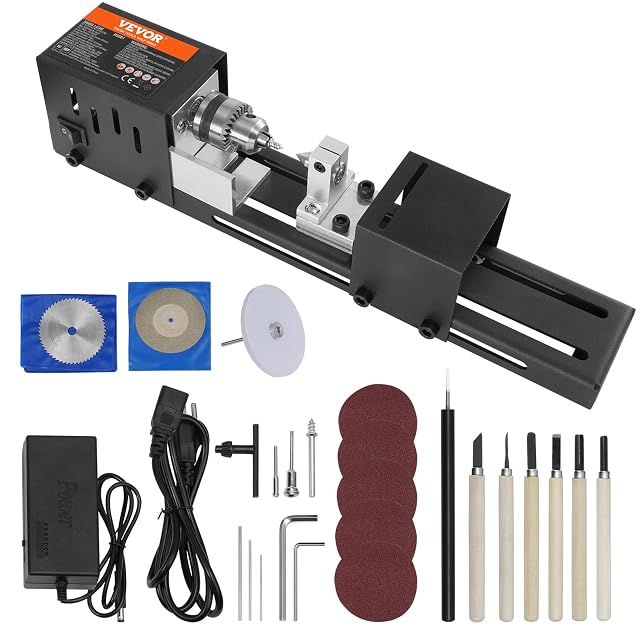
  9. VEVOR 96 W mini, 2.76 × 6.3 in

    70 × 160 mm (2.76 × 6.30 in) · 24 V DC 96 W · 7 speeds from 4,220 rpm · 8,450 and 8,500 both claimed

    Seven speeds, and the slowest of them is faster than the fastest speed of every other lathe on this shelf.

    Best for: Beads, pen blanks and small finials, turned from stock already round and already balanced

    ≈ $43

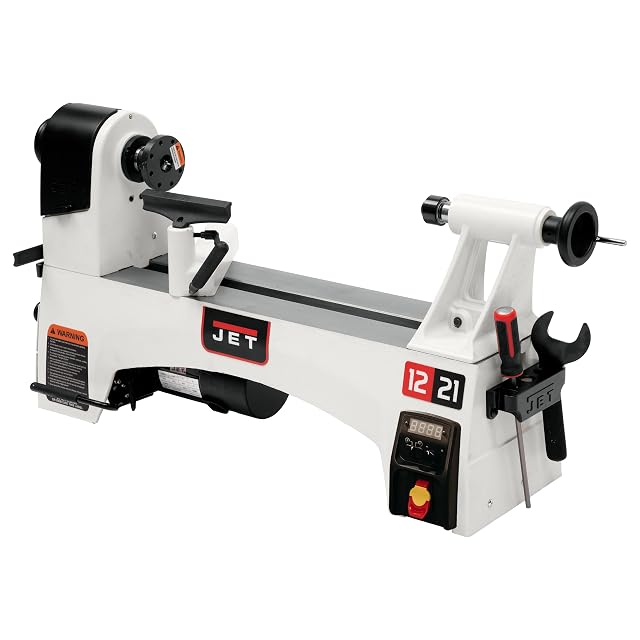
  10. Jet JWL-1221VS, 12 × 21 in

    12 × 21 in · 60–3,600 rpm in three ranges · reverse · 24 index positions

    Sixty revolutions a minute at the bottom — the only lathe here slow enough to start an unbalanced blank safely.

    Best for: Bowl work up to 305 mm (12 in), where the first minute at low speed is the dangerous one

    ≈ $990

For which need, in wood lathes

Taking the length you actually turn

A table leg wants seventy centimeters between centers, a tool handle twenty. The stated distance between centers closes or opens whole projects.

Holzstar DB 450

Absorbing an unbalanced blank

A rough log turns off-center and walks a light lathe across its bench. The stated machine weight is the only thing that soaks up that wobble.

VEVOR 96 W mini, 2.76 × 6.3 in

Going slow enough to rough out

A twenty-centimeter blank must start below five hundred revolutions or it will jump. The stated minimum speed decides what can safely be mounted.

Record Power RSBG8

For whom, within wood lathes

Spindle turning
Legs, handles, spindles: it is the length between centers that limits you. A short machine rules out certain projects permanently.
Faceplate turning
Bowls and dishes: here what counts is the swing over the bed, and the machine's stability under an unbalanced blank.
A first bowl turned in ash
A bench lathe and three well-sharpened gouges are enough for years. Sharpening matters more than the machine in this discipline.

What each advantage costs, on wood lathes

Length between centers against footprint
A long bed allows table legs and takes up two meters of wall. Some lathes accept a bed extension, which postpones the choice.
Variable speed against belts
The variable drive lets you start an unbalanced blank very slowly, which is a genuine safety gain. Belts keep the torque and mean opening the cover.
Mass against portability
A heavy lathe absorbs the vibration of a rough blank; a light one dances on the bench. It is the one aisle where weight is frankly a quality.

Before buying wood lathes

What speed to start a rough blank?

The slowest possible until the piece is running round. An unbalanced blank at high speed is the main danger on this machine.

Do I need to sharpen often?

Constantly. A sharp gouge cuts effortlessly and leaves a clean surface; a dull gouge tears and demands force, which is again dangerous.

Which tools to start with?

A roughing gouge, a spindle gouge and a parting tool cover the essentials. A set of ten tools does not speed up learning.

Can green wood be turned?

Very well, and more easily than dry wood. You have to accept that the piece will move as it dries, which is sometimes the point.

Do I need a chuck?

For faceplate work it changes everything. For spindle work it is not necessary — a drive center and a tailstock are enough.

What protection do you wear at a wood lathe?

A full face shield, not glasses: a piece that comes loose leaves at face height. And a mask, since turning produces a great deal of fine dust.

Why is my surface torn?

Cutting against the grain, a dull tool, or a badly placed rest. On end grain the technique differs and tearing is the norm unless you adapt.

Can you turn on a lathe sitting on a light bench?

It must be bolted down, or the wobble of a rough blank shakes the whole thing. Bench lathes are meant to be bolted, and it is that fixing, not the lathe's weight, that decides stability.

What to remember about wood lathes

The wood lathe is the machine where the tool and its sharpening count more than the equipment. Choose length between centers and swing according to what you want to turn, favor mass, and always start slowly on a rough blank.

A quick look at wood lathes

  • Between centers: 6.3 to 21 in — 533 mm, on 5 of the 10 models.
  • Swing over bed: 2.76 to 14, on 5 of the 10 models.
  • Speed range: 60 to 250 to 3, on 4 of the 10 models.

Wood lathes, side by side

There is no table here, and the reason is in the listings. The figure published most often across these 10 products is motor, given by 7 of them — short of the four in five a column needs to compare rather than to display gaps. Each product page says what its own maker published.

What each budget cuts on this shelf

Also worth reading on wood lathes

Where the data is read

Specifications: manufacturer sheets for woodworking machines and the matching Amazon product pages. Prices and availability: Keepa.

Most recent revision in this category: October 7, 2026.

How we assess wood lathes

Prices quoted in these summaries are dated readings. The live price is shown next to each product.