Skip to content

The best workshop sanders for 2026

Stationary sanders do what hand sanding cannot: remove material to a line, squarely. We compare belt-and-disc combinations, oscillating spindle sanders and drum sanders on table squareness, how well they clear dust, and the running cost of their abrasives.

The models we recommend

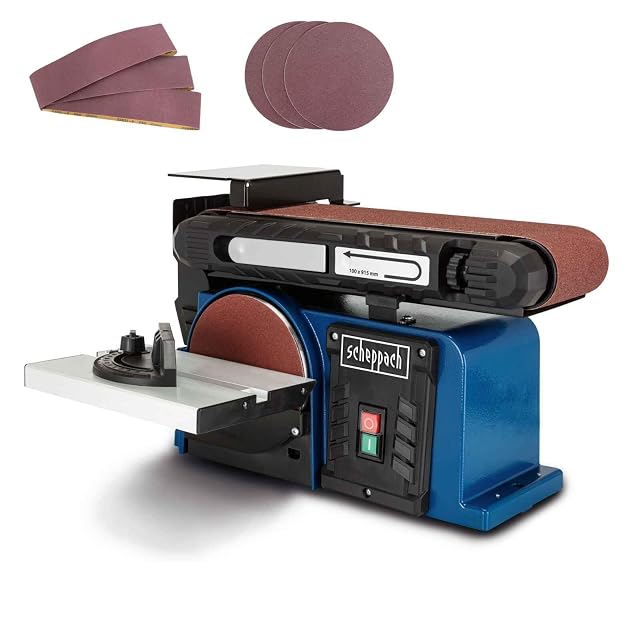
  1. Scheppach BTS800

    370 W · belt 915 × 100 mm (36 × 3.94 in) · disc Ø 150 mm (5.91 in)

    The belt-and-disc sander that publishes its consumable sizes — which is the only specification on a sander that really matters.

    Best for: Small parts, bevels and cleaning up band saw curves

    7.5/10

    ≈ $425

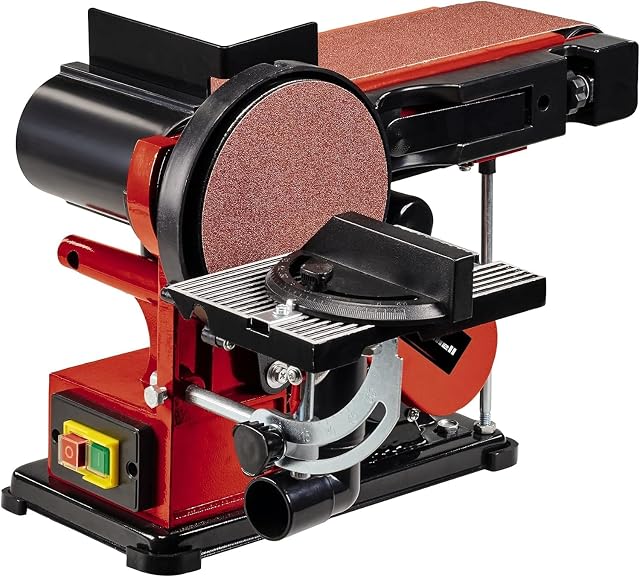
  2. Einhell TC-US 380

    Belt and disc · bench · €111

    The cheapest belt-and-disc combination here, and the machine that stops you sanding curves by hand.

    Best for: Sanding to a line on small parts, where hand sanding is slow and imprecise

    6.9/10

    ≈ $360

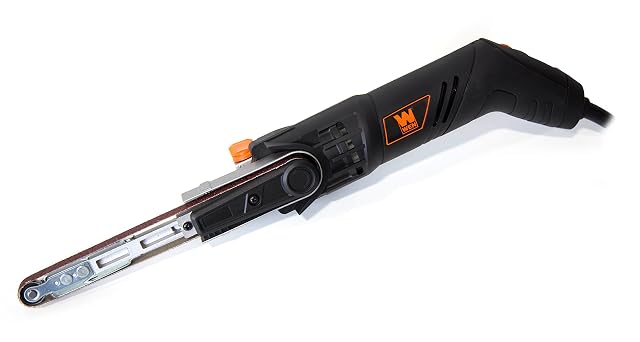
  3. WEN 6307 variable speed file sander

    1/2 × 18 in belt · 1,080–1,800 FPM · pivots 50° and 55° on the same page · 3 belts

    A half-inch belt on an arm that the listing says pivots 50 degrees in one bullet and 55 in the next.

    Best for: Cleaning up a mortice, a slot or an internal corner no other sander on this shelf can enter

    ≈ $28

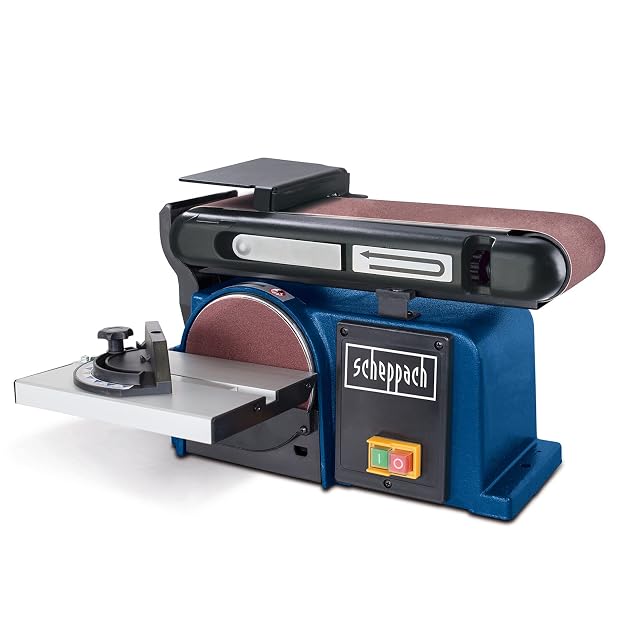
  4. Scheppach BTS900

    370 W induction · Ø 150 mm (5.91 in) disc · 915 × 100 mm (36 × 3.94 in) belt

    A belt and disc sander with a cast-iron body and an induction motor for €121 in France — the cheapest way to true an edge accurately.

    Best for: Truing end grain, fitting mitres and cleaning up small parts to a line

    8.1/10

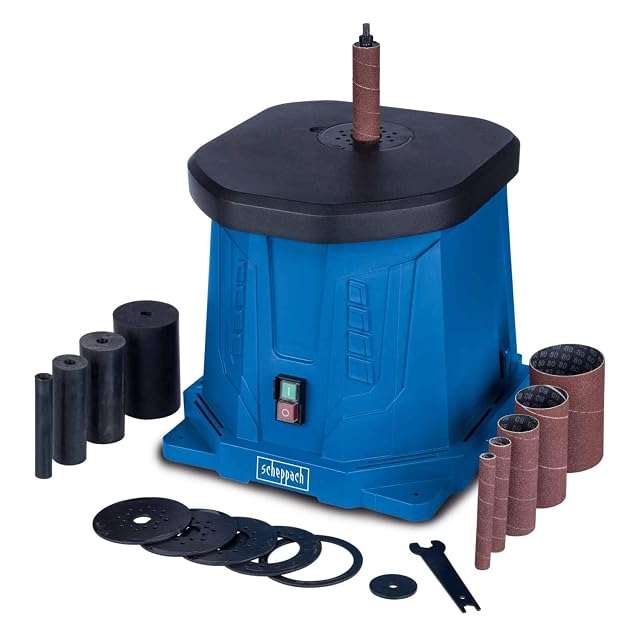
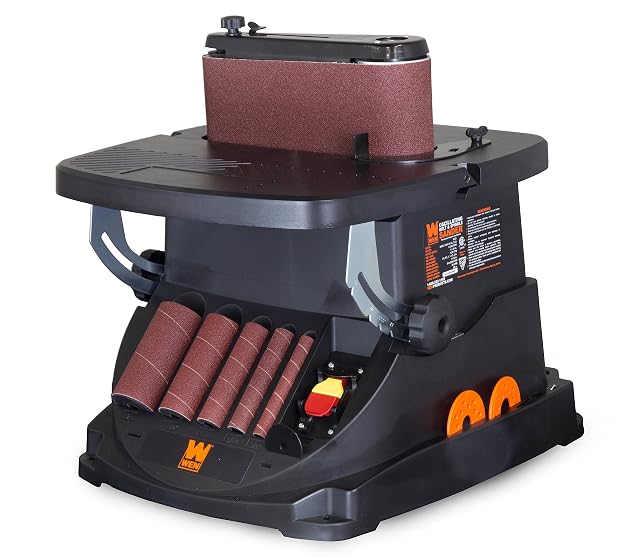
  5. Scheppach OSM100

    450 W oscillating spindle · 6 sleeves included

    An oscillating spindle sander with six sleeve sizes in the box — the machine that makes an inside curve as clean as an outside one.

    Best for: Cleaning up the inside of every curve a band saw or jigsaw has cut

    7.5/10

    ≈ $445

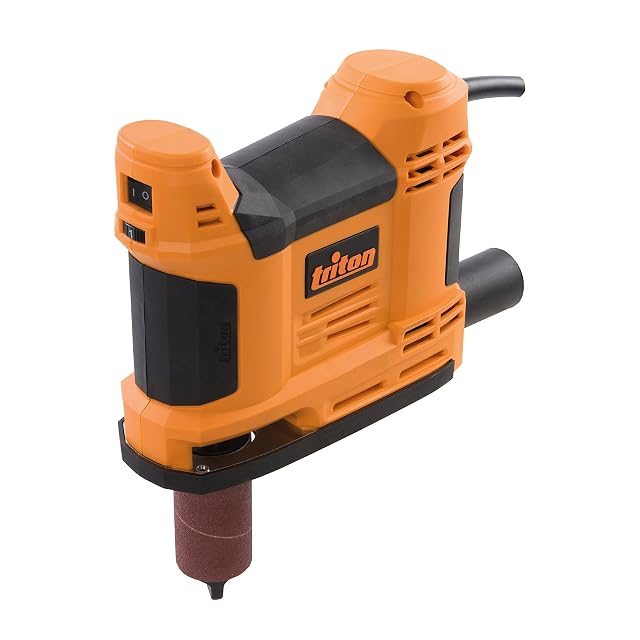
  6. Triton 949538

    650 W compact oscillating spindle

    A 650 W compact oscillating spindle sander — more motor than the Scheppach, in a smaller footprint, at €148.

    Best for: The same job as the Scheppach, with more power and less bench

    7.5/10

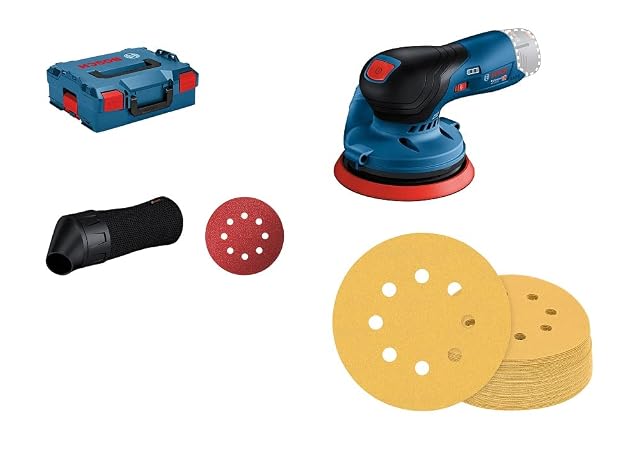
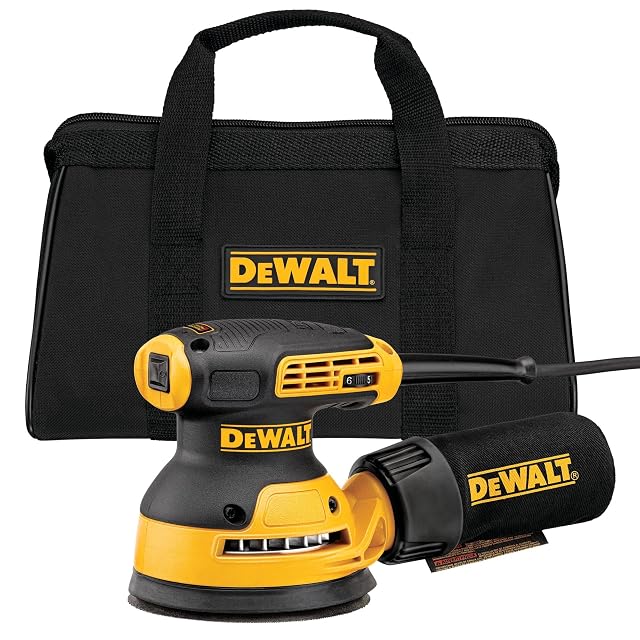
  7. DEWALT DWE6423, 5 in random orbit sander

    5 in pad · 3 A · 8,000–12,000 OPM · counterweight · dust-sealed switch

    The only random orbit sander on either half of this shelf with a price on its listing — and it publishes an orbit range.

    Best for: Finishing a surface before a finish goes on it, with a DEWALT extractor already in the shop

    ≈ $79

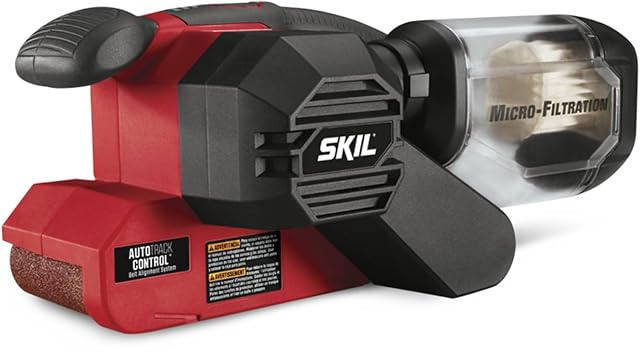
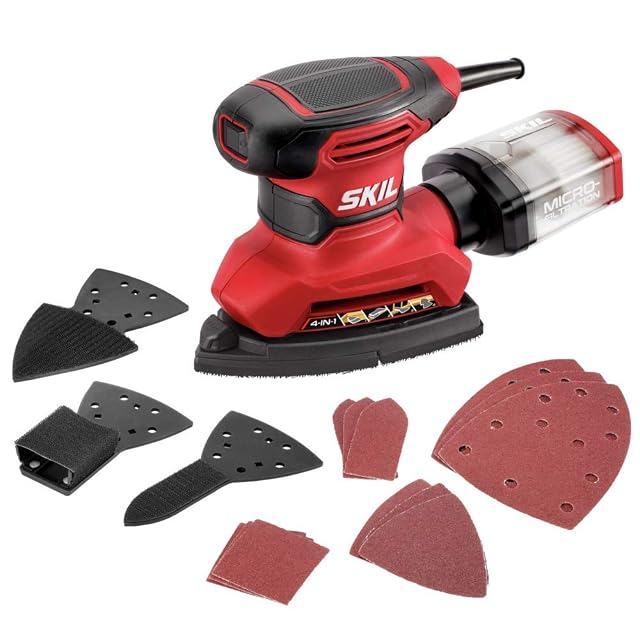
  8. Skil SR232301 detail sander

    1.2 A · 13,500 OPM · 4-in-1 with 3 attachments · 1-1/4 in port · 12 sheets

    The fastest orbit rate on this shelf at 13,500 a minute, on the smallest motor — which is what a detail sander is.

    Best for: Corners, moldings and contours — the places a random orbit sander cannot reach

    ≈ $37

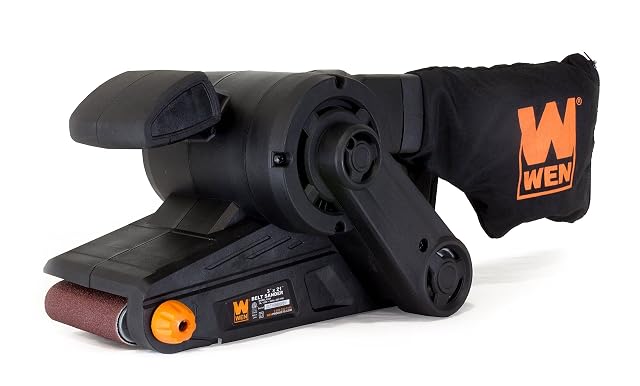
  9. WEN 6321, 3 × 21 in belt sander

    3 × 21 in belt · 7 A · over 13 feet per second · 6 lb · lock-in trigger

    The only belt speed in this catalog published in feet per second — which is 780 feet a minute.

    Best for: Leveling a glued-up panel quickly, where the machine is carried and the dust goes in a bag

    ≈ $39

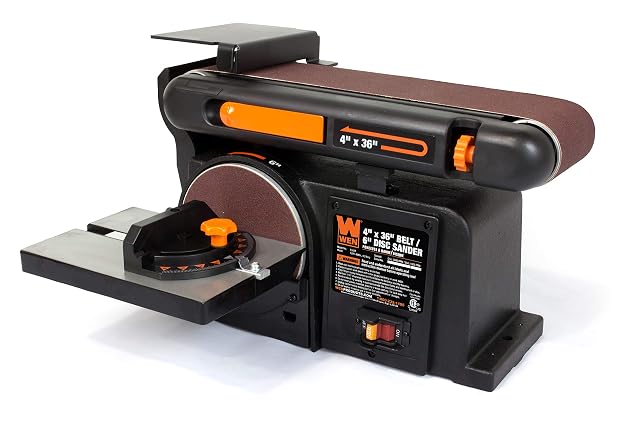
  10. WEN 6502T belt and disc sander

    4 × 36 in belt · 6 in disc · belt tilts 0–90° · 4.3 A at 3,600 rpm · cast iron

    A belt and disc on a cast iron base whose consumables are, to a millimeter, the ones the European machines here take.

    Best for: Small parts, bevels and cleaning up band saw curves, with belts bought anywhere

    ≈ $110

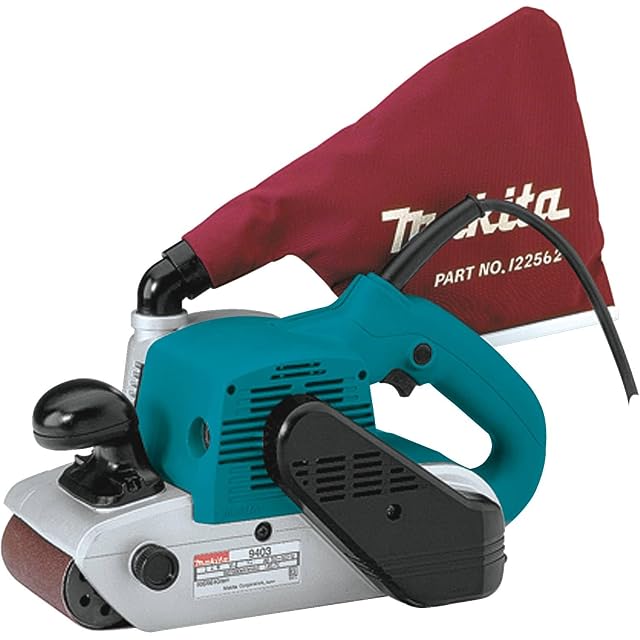
  11. Makita 9403

    100 × 610 mm (3.94 × 24 in) belt · portable · the same price everywhere

    A 100 mm (3.94 in) portable belt sander with a decades-old part number, priced within €10 across the whole of Europe.

    Best for: Leveling glued-up panels, doors and floors — flat work at speed

    8.3/10

    ≈ $420

For which need, in workshop sanders

Sanding a whole table top

On a tabletop or a floor the sander works for long stretches without pause. It is the motor's reserve that prevents overheating and loss of speed.

Triton 949538

A first powered sander

Moving from a hand block to a random orbital changes the finish more than any subsequent step up the range.

WEN 6307 variable speed file sander

Staying bearable in the hands

A sander is held for an hour straight over a tabletop, and the vibration travels up the wrist. The stated vibration level decides session length as much as power does.

Makita 9403

For whom, within workshop sanders

Furniture finishing
A random orbital gives a surface with no rotational marks, which no sheet sander matches. It is the machine to favor as soon as varnish follows.
Stripping and rough work
A belt sander removes material fast and forgives little: it digs a hollow in seconds if you pause. Reserved for rough work.
Corners and small pieces
A delta sander reaches recesses no round machine approaches. It is slow on surfaces and irreplaceable in corners.

What each advantage costs, on workshop sanders

Removal rate against finish
The belt tears, the random orbital smooths, the sheet sander finishes. One machine does not cover the chain, and trying to finish with a belt leaves hollows invisible until the varnish goes on.
Built-in extraction against weight
The integrated dust box catches little and adds weight. A connection to a workshop vacuum catches markedly more, at the cost of a hose that gets in the way.
Proprietary abrasive against universal
Disc hole patterns vary from brand to brand. A machine with a proprietary pattern locks you into a more expensive abrasive catalog.

Before buying workshop sanders

What grit progression should I follow?

Skipping no more than one step: 80, 120, 180, 240 depending on the finish sought. Skipping grits leaves scratches from the previous one that the next does not remove.

Random orbital or sheet sander?

The random orbital combines rotation and oscillation, which removes visible patterns. The sheet sander is slower and reaches corners. For a surface that will be varnished, the random orbital.

Why do I get swirls in the wood?

Excessive pressure, a clogged disc, or a skipped grit. A random orbital should be walked across the surface without pressing: its own weight is enough.

Does extraction change the result?

A great deal. Dust trapped under the disc acts as a loose abrasive and scratches. Good extraction improves the surface as much as your health.

Should I sand between coats of finish?

A light de-nibbing with fine grit between two coats removes raised grain and markedly improves the adhesion of the next.

Can I sand bare wood straight to a fine grit?

No, that burnishes without flattening. You have to start coarse enough to remove the defects, then refine.

How long does a disc last?

Far less than people think. A clogged disc stops cutting, heats up and burns the wood: changing often costs less than rescuing a burnt surface.

Should you press down on a sander?

No: the machine's own weight is enough, and pressing stalls the pad and heats it. A sander that stops cutting wants fresh abrasive, not more force.

What to remember about workshop sanders

Sanding is decided by grit progression and by extraction, not by the machine. A decent random orbital, discs changed often and a connected vacuum give a better surface than any high-end machine badly used.

A quick look at workshop sanders

  • Belt size: 1 to 4, on 5 of the 14 models.

Workshop sanders, side by side

There is no table here, and the reason is in the listings. The figure published most often across these 14 products is motor, given by 10 of them — short of the four in five a column needs to compare rather than to display gaps. Each product page says what its own maker published.

What each budget cuts on this shelf

Also worth reading on workshop sanders

Where the data is read

Specifications: manufacturer sheets for woodworking machines and the matching Amazon product pages. Prices and availability: Keepa.

Most recent revision in this category: October 7, 2026.

How we assess workshop sanders

Prices quoted in these summaries are dated readings. The live price is shown next to each product.