Skip to content

The best joinery machines for 2026

Four systems, four different jobs, and a great deal of confusion between them. We compare biscuit joiners, loose-tenon machines, dowelling jigs and pocket hole systems on alignment accuracy — and on the honest question of which joints they are strong enough for.

The models we recommend

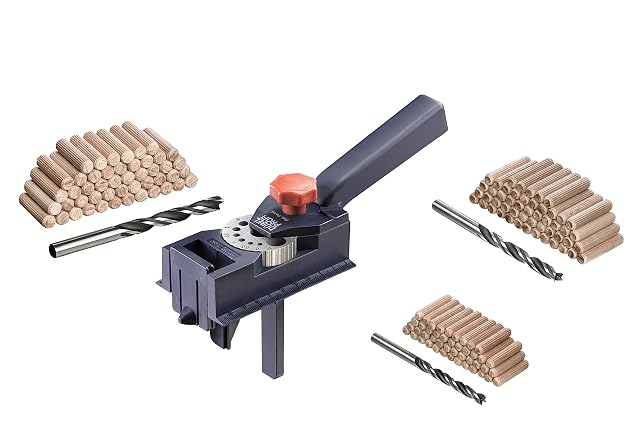
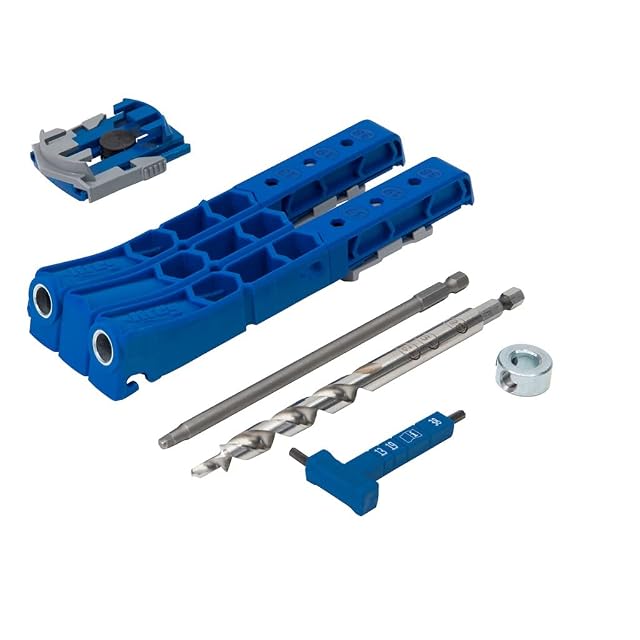
  1. kwb Dübelprofi dowelling jig set

    3 to 12 mm (0.12 to 0.47 in) bushes · 150 dowels · 3 drills · €19

    A €19 dowelling jig with 150 dowels and three drill bits in the box — and a different brand on it than the one we searched for.

    Best for: Occasional dowelled carcase work and repairs, and accurate freehand drilling

    7.5/10

    ≈ $63

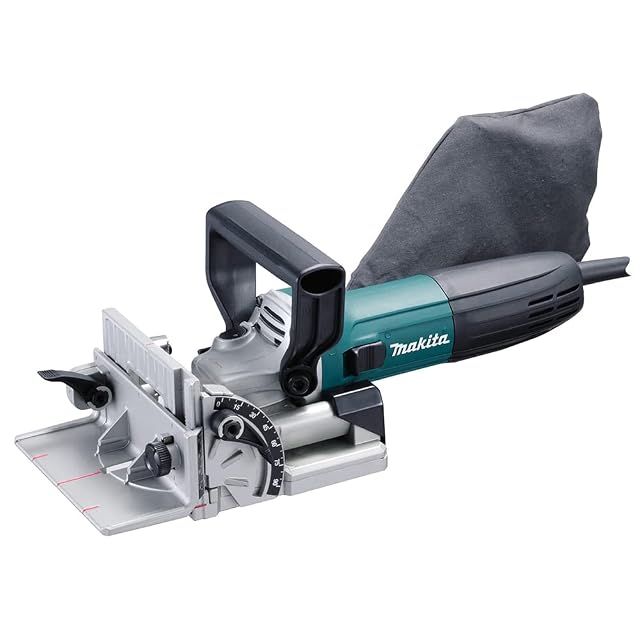
  2. Makita PJ7000

    Biscuit jointer · cheaper outside the eurozone

    Makita's biscuit jointer, and the clearest case on the site of a machine costing far less in Britain than in Germany.

    Best for: Panel alignment, for a buyer who checks the price in more than one country first

    7.5/10

    ≈ $240

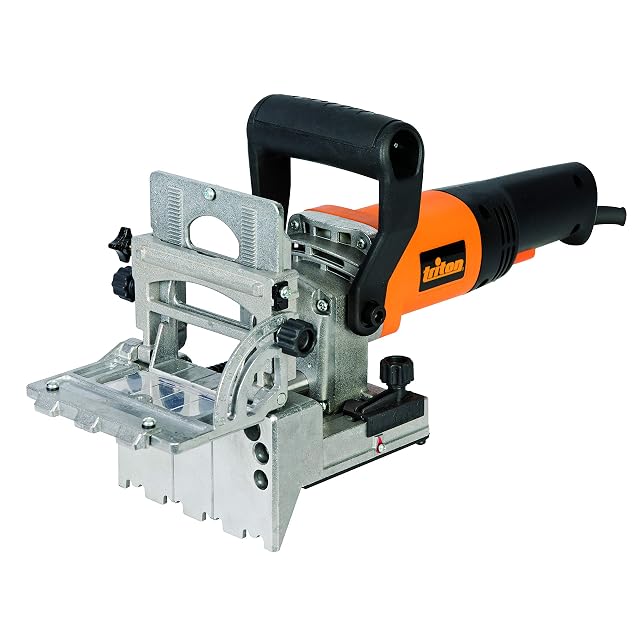
  3. Triton TDJ600

    Biscuit jointer · €300–309 everywhere

    A biscuit jointer priced within €9 across four European markets — and the cheapest way into machine-cut alignment joints.

    Best for: Aligning panel glue-ups and carcase joints quickly and repeatably

    7.5/10

For which need, in joinery machines

Joining eighteen-millimeter board

A size-zero biscuit is the only one that fits thin board without breaking through. The stated thickness range decides what can be joined without piercing the face.

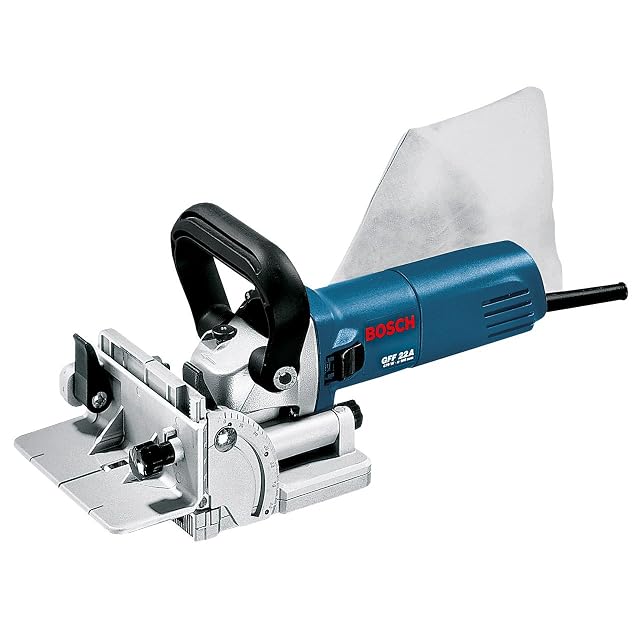
Bosch Professional GFF 22 A

Repeating the same joint a hundred times

A stop that sets to the millimeter and locks makes the hundredth mortise identical to the first. The stated number of preset positions measures exactly that gain.

kwb Dübelprofi dowelling jig set

Pulling the chips away at source

A mortise full of chips falsifies the depth on the next cut. A stated extraction port and its diameter change accuracy, not just tidiness.

Makita PJ7000

For whom, within joinery machines

Furniture joints
Biscuits and dowels align and locate without pretending to the strength of a mortise and tenon. For panel work they are amply enough.
Structure and doors
Where the joint works, you need a mortise and tenon or a loose-tenon system. The difference in strength is considerable, not marginal.
Small workshop
A router and a jig make most of the joints a dedicated machine makes faster. The question is time, not possibility.

What each advantage costs, on joinery machines

Speed against strength
The biscuit jointer is the fastest and the weakest; the mortise and tenon the opposite. The choice depends on what the joint has to take, not on taste.
Dedicated machine against jig
A dedicated machine makes the joint in seconds and costs a lot for one function. A router jig is slow, versatile and perfectly accurate.
Proprietary system against universal
Some systems impose their own consumables. That is a recurring cost to fold into the decision, not just the price of the machine.

Before buying joinery machines

Are biscuits strong?

They align very well and resist moderately. On a joint that works — a door, a leg frame — they are insufficient.

Dowels or biscuits?

Dowels resist better and forgive imprecision less; biscuits tolerate lateral shift and ease assembly. The choice depends on your drilling kit.

What replaces a mortise and tenon?

Nothing completely, but oval loose-tenon systems come close with far quicker execution. The difference shows mainly in long-term fatigue.

Can mortises be cut with a router?

Yes, with a jig and several passes. It is slower than a mortiser and the result is identical once the glue has set.

Should every joint be glued?

Glue does almost all the work on a well-fitted joint; the solid wood of a tenon provides the mechanical strength. The two together hold, either alone much less.

Which glue should I use?

A PVA for interior work, a D3 or D4 class as soon as moisture is involved. Polyurethane fills gaps better and cleans up with difficulty.

How do I rescue a joint that is too loose?

A filled glue, or a wooden shim glued into the mortise before re-cutting to size. Filling with glue alone does not hold.

Does a screwed joint hold as well as a glued one?

A screw in chipboard loses its grip at the first disassembly, while a well-clamped glue joint exceeds the strength of the wood. Screws are there to hold while the glue sets.

What to remember about joinery machines

The choice of joint is made on the load it has to take, not on the machine available. Biscuits align, dowels hold, the mortise and tenon resists — and a router with a jig does all of it more slowly and just as well.

A quick look at joinery machines

    Joinery machines, side by side

    There is no table here, and the reason is in the listings. The figure published most often across these 6 products is type, given by 3 of them — short of the four in five a column needs to compare rather than to display gaps. Each product page says what its own maker published.

    Also worth reading on joinery machines

    Where the data is read

    Specifications: manufacturer sheets for woodworking machines and the matching Amazon product pages. Prices and availability: Keepa.

    Most recent revision in this category: August 12, 2026.

    How we assess joinery machines

    Prices quoted in these summaries are dated readings. The live price is shown next to each product.