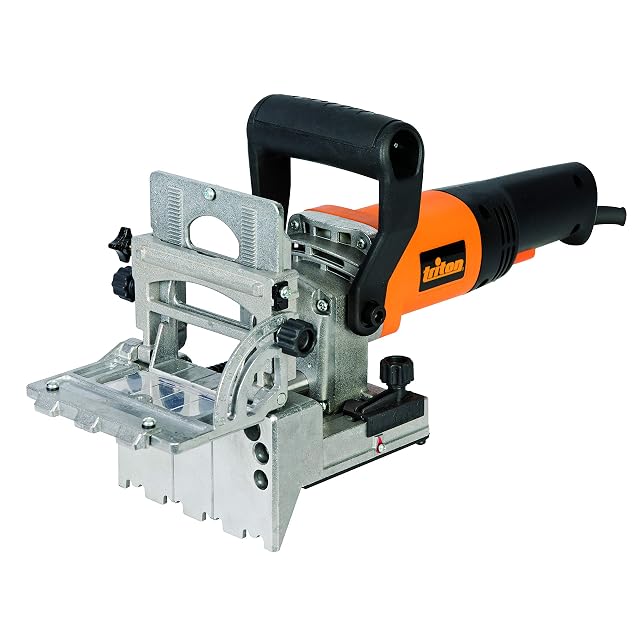
Triton TDJ600
Biscuit jointer · €300–309 everywhere
A biscuit jointer priced within €9 across four European markets — and the cheapest way into machine-cut alignment joints.
Best for: Aligning panel glue-ups and carcase joints quickly and repeatably
Joinery
Most arguments about biscuits, dowels and pocket screws come from comparing them at the wrong job. Choose by what the joint has to resist, not by which system is best.
Aligning two panels for a tabletop: biscuits. Fast, forgiving, and alignment is exactly what they do. Resisting racking in a frame: dowels or loose tenons, because a round dowel in a snug hole resists in every direction. Speed, hidden face: pocket screws — clamped and finished in a minute, and visible forever on one side.
A self-centering dowel jig costs €11 and makes a stronger joint than a €300 biscuit jointer. What it does not do is make it quickly. On a long glue-up that difference is the whole argument for the machine.
The biscuit's home ground. It positions boards during glue-up and adds little strength, which is exactly what is needed.
Pocket holes assemble a cabinet quickly and hold while glue cures. In hidden positions it is a sound method.
Dowels resist racking better than biscuits and demand accuracy, since there is no slot to slide in.
Pocket holes again, because access is from one side and the fixing is mechanical rather than dependent on clamping.
| The joint | Best method | What you accept |
|---|---|---|
| Aligning a panel glue-up | Biscuits | Little added strength |
| Frame that must resist racking | Dowels | Very little tolerance |
| Fast cabinet carcass | Pocket holes | Visible holes |
| Fine visible joinery | Traditional joints | Time and skill |
These are simple machines whose accuracy depends on their fences and their cutters. A biscuit joiner's blade dulls and tears the slot, a dowel jig's bushings wear oval, and a pocket hole jig's clamp loses grip.
Small machines with exposed cutters and workpieces that can move.
Prices quoted in this text were read on 2026-08-12. The live price is at the top of the page.
Biscuit jointer · €300–309 everywhere
A biscuit jointer priced within €9 across four European markets — and the cheapest way into machine-cut alignment joints.
Best for: Aligning panel glue-ups and carcase joints quickly and repeatably
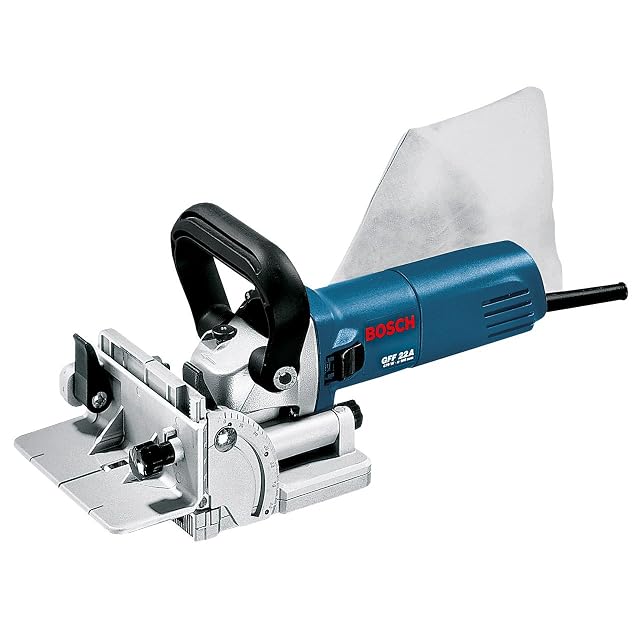
22 mm (0.87 in) depth · 105 × 22 mm (4.13 × 0.87 in) cutter · dust bag
The professional biscuit jointer that publishes its cutting depth and ships with the cutter and a dust bag.
Best for: A professional workshop where the jointer is used weekly rather than occasionally
Biscuit jointer · cheaper outside the eurozone
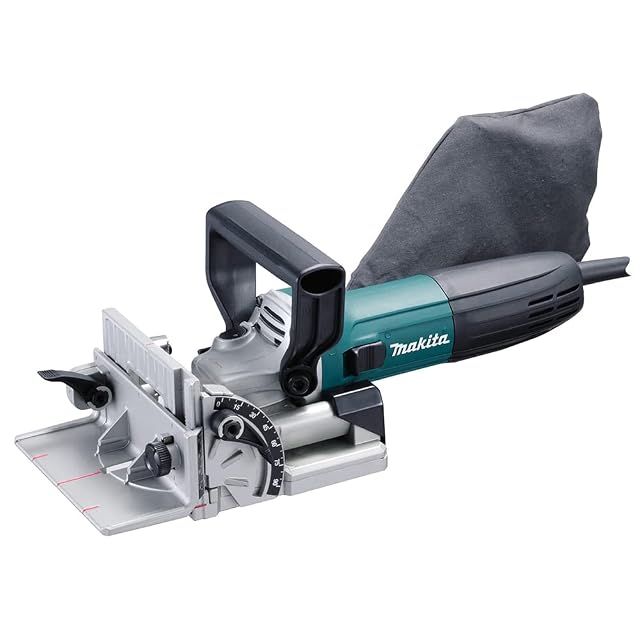
Makita's biscuit jointer, and the clearest case on the site of a machine costing far less in Britain than in Germany.
Best for: Panel alignment, for a buyer who checks the price in more than one country first
≈ $240
Barely. A biscuit swells in the glue and holds two panels in plane while they are clamped. That is alignment, and it is valuable — but for a joint that must resist racking, use a dowel or a loose tenon.
For a carcase screwed to a wall, entirely. For a chair or a table that has to stand on its own, no — there is no glued long-grain surface holding it.
Barely. In a long-grain glue joint the glue provides the strength; the biscuit aligns the boards and stops them sliding under clamps.
Dowels have almost no tolerance. Either the holes are not aligned, or the two parts were referenced from different faces.
Pocket holes, by a clear margin, because the screw acts as the clamp. Biscuits and dowels both need clamping and glue time.
Not in the same sense. They are production methods with different aims; a well-cut traditional joint is stronger and is meant to be seen.
Rarely. Most workshops settle on one that matches the work they do most, and add a second only when a specific job requires it.
For cutting: Aligning panel glue-ups and carcase joints quickly and repeatably
Where it shines: One reference and one EAN across all six markets
Where it disappoints: The listing publishes no cutting depth or fence detail
For cutting: A professional workshop where the jointer is used weekly rather than occasionally
Where it shines: Publishes its cutting depth, which neither the Triton nor the Makita does
Where it disappoints: The most expensive jointer here
For cutting: Panel alignment, for a buyer who checks the price in more than one country first
Where it shines: Makita spares and service network
Where it disappoints: No price on the French store when we checked
Blades, inserts and spares from the same aisle, at the price we recorded. Check they fit the saw you pick before ordering: it depends on the bore and the part number, which the listing states.
Saw against saw, where the comparison already exists in this guide or this aisle.
The saws above are drawn from the catalog of this site. Specifications are the published ones, from the maker and from the Amazon product page; prices are the Keepa figure for the date below, and both shift. Ranking uses declared specifications, the balance of stated strengths and stated limits, and price. No machine here has cut wood for us, and the page claims nothing else.
Last checked on
Table saws and planers swing by a hundred dollars or more across the year, and the biggest "discounts" often land at prices the same model sold for six weeks earlier. UniverTrack tracks the real price history across retailers, spots fake reductions, and alerts you when it is genuinely the moment to buy.