Skip to content

The best planer thicknesser for a small shop

This is the machine that turns cheap rough-sawn timber into stock you can build with. It changes what a workshop can afford to make more than any other purchase.

The order of operations

Surface one face flat. Square one edge to it. Then thickness to the second face. Skipping the first step is the single most common frustration with these machines, and it is not a fault of the machine.

Helical heads

Indexed carbide inserts in a helical cutterhead are markedly quieter, do not tear out on figured grain, and rotate rather than needing to be reset. No machine at the entry price has one, and it is the upgrade that changes this category most.

Which saw fits your shop?

You buy rough sawn timber
This is the machine that makes it usable, and nothing else does the same job.
You buy prepared timber
You may not need one at all, which is worth saying before spending the money and the space.
Space is the constraint
A combination machine does both jobs in one footprint, at the cost of changeover time.
You work with wide boards
Width capacity is the limit, and it is expensive to increase.

Picking by the cut you need

Flattening a face

The surfacing operation, and the one that has to come first. Without a flat reference face, thicknessing only copies the twist.

Squaring an edge

Against the fence, after the face. These two operations are what a surfacer is for.

Thicknessing to dimension

Bringing the board to a consistent thickness parallel to the flattened face. It cannot flatten; it copies.

Preparing stock in batches

Where these machines earn their place: a pile of rough boards becomes usable material in an afternoon.

What matters once the blade is turning

Table length on the surfacer
Short tables cannot flatten a long board, because the reference is too short to average the bow out. It is the specification that limits results most.
Cutterhead type
Straight knives are cheap to replace and noisy; helical or spiral heads are quieter, cope better with figured grain and cost more. It is a real decision.
Width capacity
The board width you can surface in one pass. Wider is dearer and heavier, and there is no workaround for a board that will not fit.
Changeover on a combination machine
If switching modes is slow, you will avoid doing it, and the machine will be used badly. This is a practical criterion, not a detail.
Extraction requirement
These machines produce shavings by the sackful. Without adequate extraction they clog, and that is a functional problem before it is a health one.

Which figure for which cut

The operationThe machineWhat it cannot do
Flatten a faceSurfacerMake two faces parallel
Make parallelThicknesserFlatten a twisted board
Square an edgeSurfacer with fenceCorrect a bowed edge alone
Both, small spaceCombination machineAvoid changeover time

Where it goes wrong in the shop

Thicknessing a twisted board first
A thicknesser presses the board flat, planes the top, and lets it spring back. The twist stays, and it is the classic first mistake.
Taking heavy cuts
Deep passes tear out figured grain and load the motor. Light passes finish better and the machine lasts longer.
Ignoring snipe
The dip at the ends comes from support and roller pressure, not from bad luck. Infeed and outfeed support removes most of it.
Feeding wet or dirty timber
Grit and embedded nails destroy knives instantly. Reclaimed timber goes through a metal detector before it goes through a planer.

By the woodworker you are

The rough timber buyer
The machine pays for itself in material cost, and nothing else does the job.
The small shop
A combination machine, accepting the changeover. One footprint, two operations.
The occasional user
Buying prepared timber avoids the machine entirely, and for a few projects a year that is the sensible answer.

Blades, alignment and working life

These machines live on sharp knives and clean, waxed tables. A dull knife tears rather than cuts, and a sticky table makes the operator push, which is exactly what produces snipe and uneven results.

  • Change or rotate knives as soon as they tear rather than cut.
  • Wax the tables so boards slide with no push from the operator.
  • Clear resin from the cutterhead and rollers, which grip badly when coated.
  • Check the tables are coplanar after moving the machine.

Safety

An exposed cutterhead on the surfacer, and powerful feed rollers on the thicknesser.

  • Use the bridge guard over the cutterhead and set it close to the work.
  • Push blocks always on the surfacer, never bare hands over the block.
  • Never reach into the thicknesser while the rollers turn.
  • Do not plane short or thin pieces that the guards and rollers cannot control.

Our picks, and the case for each

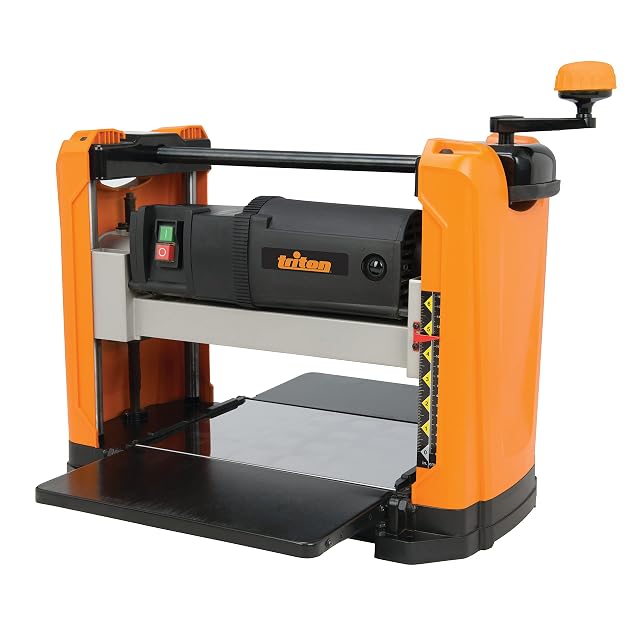
  1. Triton TPT125

    1,100 W · 317 mm (12.5 in) wide · €289 in Britain

    A 317 mm (12.5 in) portable thicknesser — the widest capacity on this page — and a price that swings by nearly €300 depending on the country.

    Best for: A workshop that already flattens faces some other way and needs width

    7.5/10

What comes up most often

Surfacer, thicknesser, or both?

Both, and in that order. A thicknesser references the face on its bed, so it makes a cupped board thinner and still cupped. You need a way to flatten one face first.

How do I stop snipe?

You manage it rather than eliminate it. Feed a sacrificial board nose-to-tail with the real one, or cut stock 150 mm (5.91 in) over-length and trim the ends.

Which do I use first, surfacer or thicknesser?

Surfacer, always. It creates the flat reference face; the thicknesser then makes the other face parallel to it.

Why is my board still twisted?

Because it went through the thicknesser first. The rollers press a twisted board flat, plane it, and it springs back exactly as it was.

What causes snipe?

Support and roller pressure at the ends of the pass. Infeed and outfeed support, and a slightly raised feed at the ends, removes most of it.

Straight knives or a helical head?

Straight knives are cheaper to maintain and noisier; helical heads are quieter and handle figured grain better. It is a genuine trade rather than a clear winner.

How much extraction do I need?

More than for a saw: these machines produce shavings in volume, and inadequate extraction clogs the machine before it becomes a health question.

Can I plane reclaimed timber?

Only after checking it for nails and grit. Embedded metal ruins knives instantly, and that is the expensive part of the machine.

Each saw, and the cut it was bought for

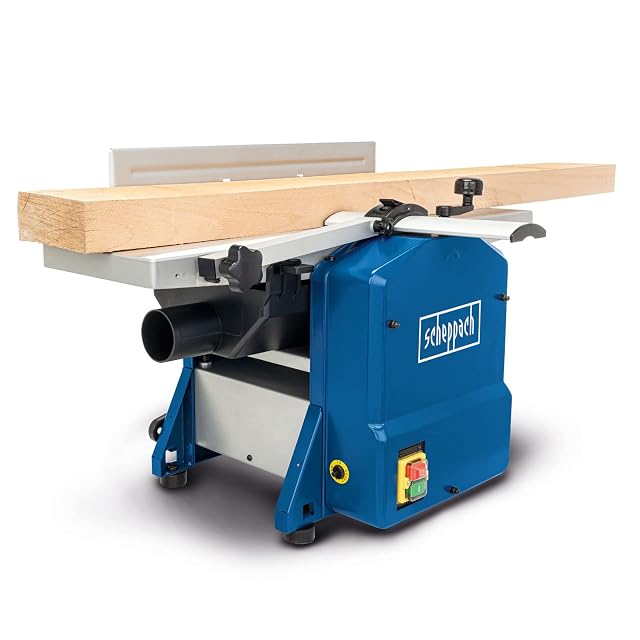
Scheppach HMS850 · $835

For cutting: A first workshop buying rough-sawn timber instead of pre-planed stock

Where it shines: One reference and one EAN across all six markets

Where it disappoints: Straight knives, so figured grain will tear out

Read the full review →

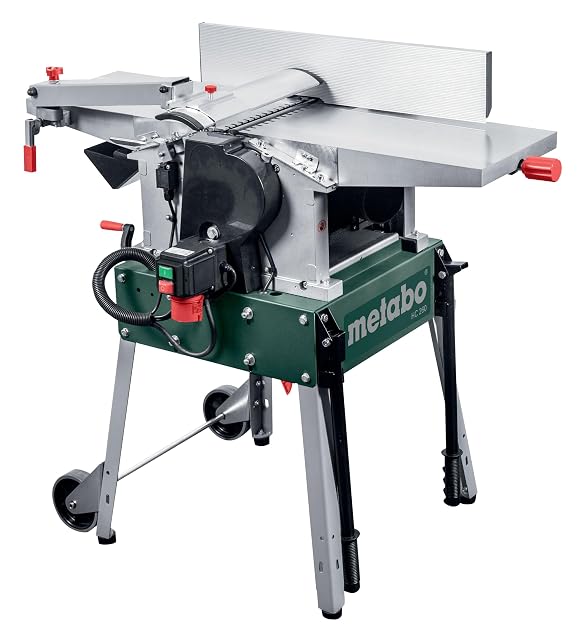
Metabo HC 260 C/2,8 DNB

For cutting: A permanent workshop that processes rough timber regularly and wants to stop compromising

Where it shines: Cast-iron tables — flat, and they stay flat

Where it disappoints: 2,800 W on a domestic circuit needs checking before you buy

Read the full review →

Triton TPT125

For cutting: A workshop that already flattens faces some other way and needs width

Where it shines: 317 mm (12.5 in) of width, which takes a glued-up panel rather than just a board

Where it disappoints: Thicknessing only — it does not surface, so you still need a way to flatten a face

Read the full review →

What else the cut needs

Blades, inserts and spares from the same aisle, at the price we recorded. Check they fit the saw you pick before ordering: it depends on the bore and the part number, which the listing states.

The quick cut

Pairings that settle the choice

Saw against saw, where the comparison already exists in this guide or this aisle.

How this selection was built

The saws above are drawn from the catalog of this site. Specifications are the published ones, from the maker and from the Amazon product page; prices are the Keepa figure for the date below, and both shift. Ranking uses declared specifications, the balance of stated strengths and stated limits, and price. No machine here has cut wood for us, and the page claims nothing else.

Last checked on

Prices quoted in these summaries are dated readings. The live price is shown next to each product.

The tool we use ourselves

Chosen your machine? Now buy it at the right price.

Table saws and planers swing by a hundred dollars or more across the year, and the biggest "discounts" often land at prices the same model sold for six weeks earlier. UniverTrack tracks the real price history across retailers, spots fake reductions, and alerts you when it is genuinely the moment to buy.

Real price historyBuy-now alertsAI buying assistant
Try free for 14 days →
No commitment · Cancel in one click · 5 languages