Skip to content

The best dust extractors and air filters for 2026

Chips on the floor are a nuisance; the dust you cannot see is why this category matters. Wood dust is classified as a Group 1 carcinogen by the IARC, and the fine fraction is the part that stays airborne. We compare chip collectors against workshop vacuums, cyclone separators and ambient air filters — on airflow, suction and filter class.

The models we recommend

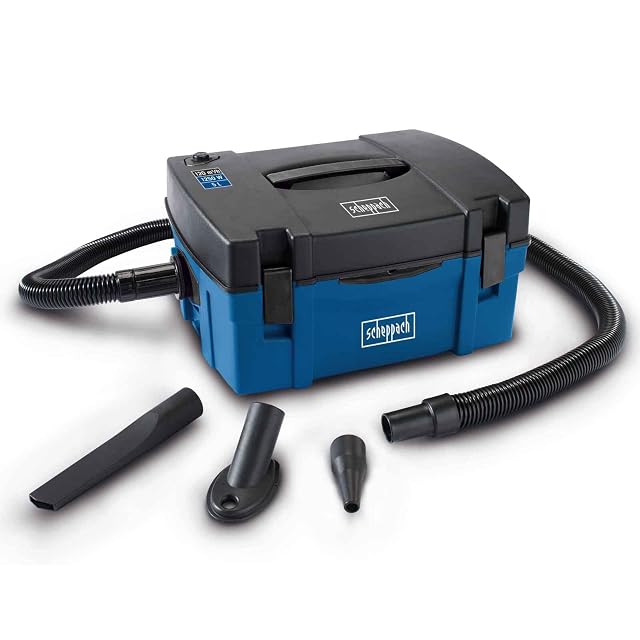
  1. Scheppach HD2P

    1,250 W · 120 m (394 ft)³/h · 5 L

    A €79 three-in-one extractor that publishes its airflow — and that airflow figure tells you exactly what it is for.

    Best for: A single small machine at a time — a sander, a small router, a bench top

    7.5/10

    ≈ $235

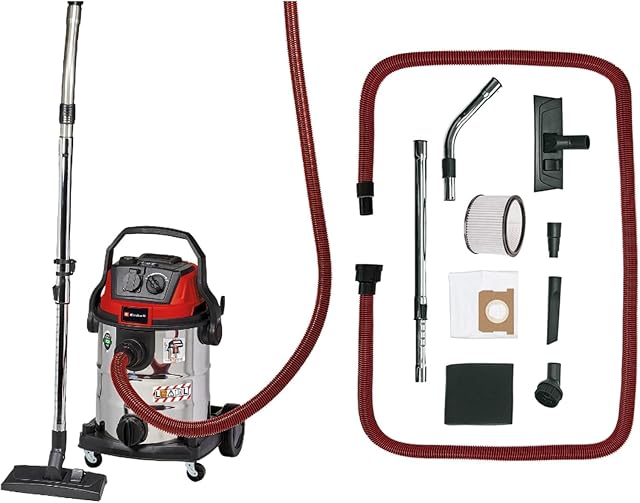
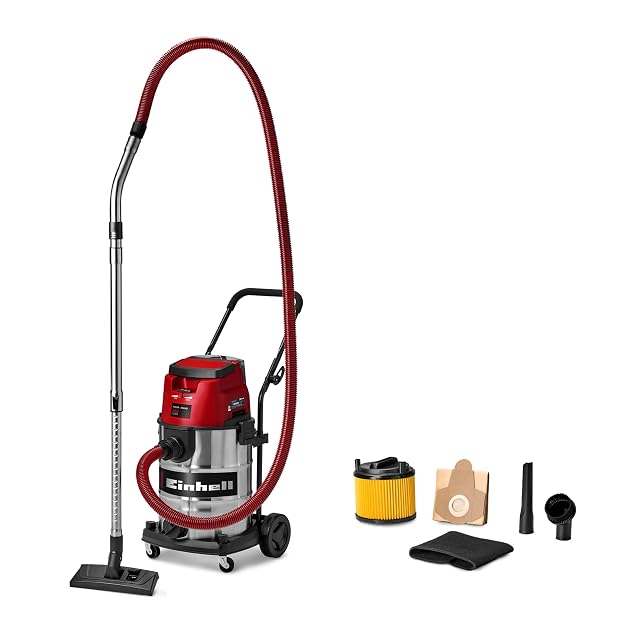
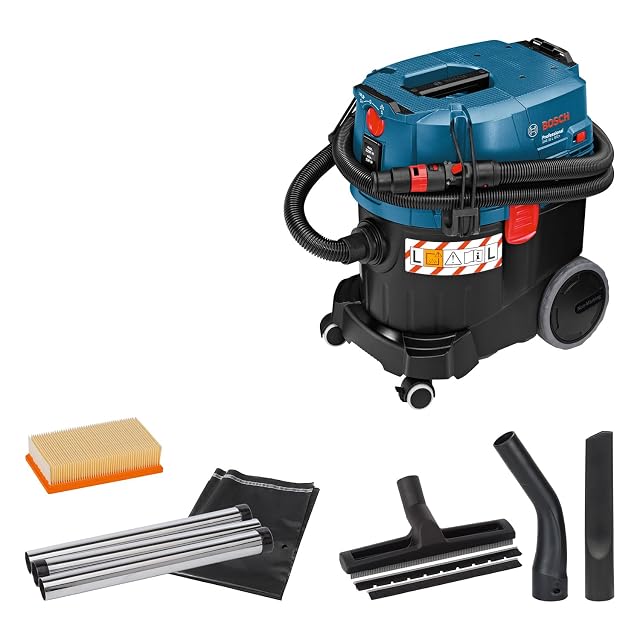
  2. Einhell TE-VC 36/30 Li S-Solo

    2 × 18 V · 30 L stainless · Ø 36 mm (1.42 in) hose · bare tool

    A cordless wet and dry vacuum with a 30 liter stainless drum — the machine that goes to the dust rather than waiting for it.

    Best for: Site and garage clean-up, and extraction at small tool ports away from a socket

    8.1/10

    ≈ $490

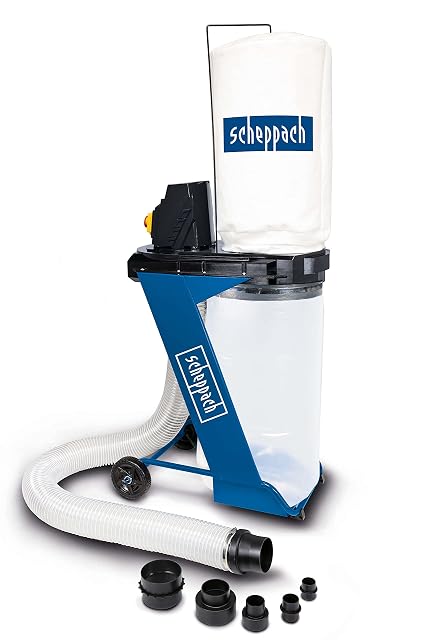
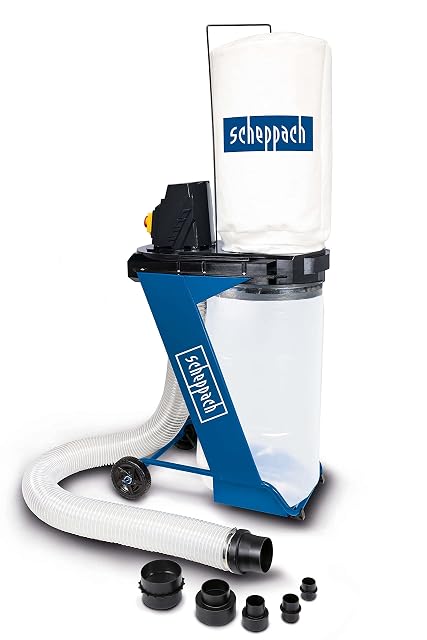
  3. Scheppach DC500

    Chip collector · wheeled · 4 adaptors

    A proper chip collector on wheels, with four machine adaptors in the box — the right machine for a planer or a table saw port.

    Best for: A planer, a table saw or a band saw with a 100 mm (3.94 in) port

    7.5/10

    ≈ $380

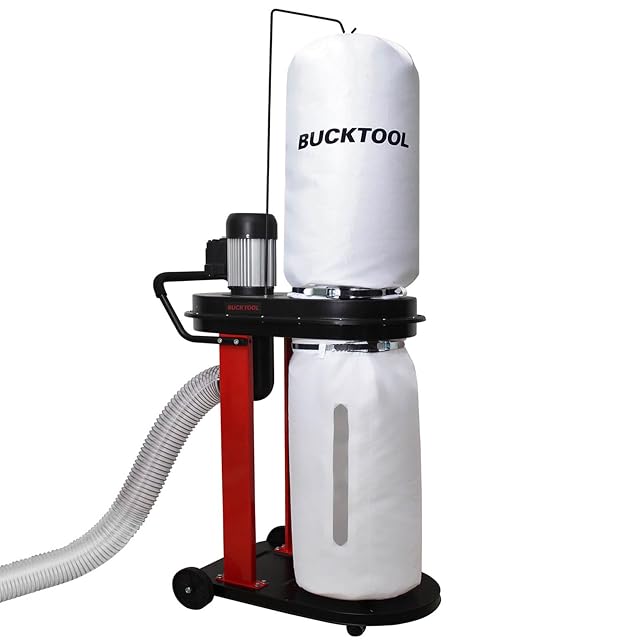
  4. Bucktool DC50, 750 CFM collector

    750 CFM · 2 micron upper bag · auto-start outlet rated 7 A · CSA listed

    The finest bag on the American half of this shelf at two microns — and the only auto-start outlet here that publishes its limit.

    Best for: A sander, a router table or a band saw on auto-start, where the fine bag matters more than the volume

    ≈ $270

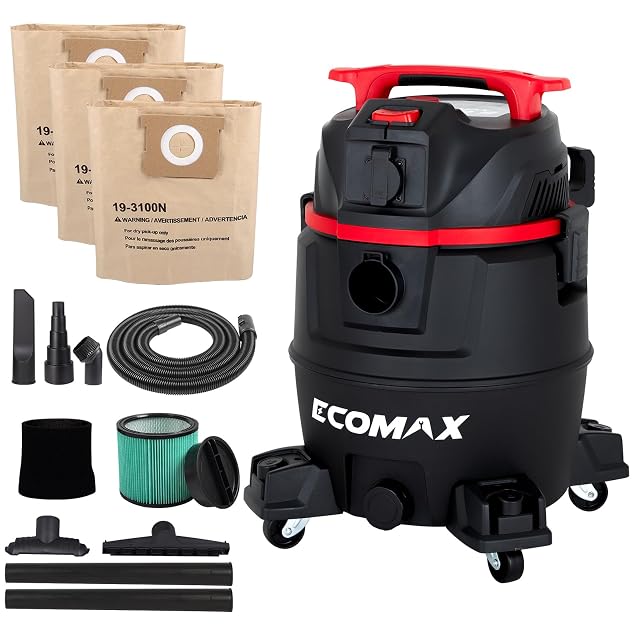
  5. ECOMAX EM18412PE, 8 gal HEPA extractor

    HEPA · semi-automatic filter cleaning · tool-activated · anti-static hose · 6.5 HP claimed

    HEPA filtration and semi-automatic filter cleaning on a shop vacuum — and six and a half horsepower claimed from a domestic socket.

    Best for: A sander, a track saw or a router connected by hose, where the fine fraction is the whole point

    ≈ $130

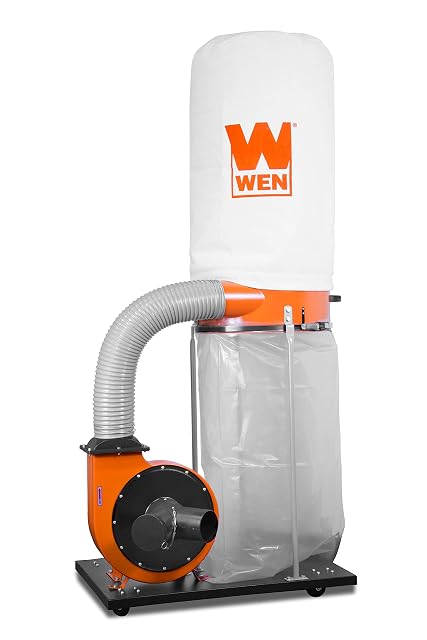
  6. WEN DC1300, 1,300 CFM collector

    1,300 CFM · 14 A · 10 in impeller at 3,450 rpm · 5 micron · dual 4 in inlets

    The only machine here to publish its impeller — ten inches of steel at 3,450 rpm — and the only one with two inlets.

    Best for: A workshop with a table saw and a planer that both need a 4 inch port, on a dedicated circuit

    ≈ $390

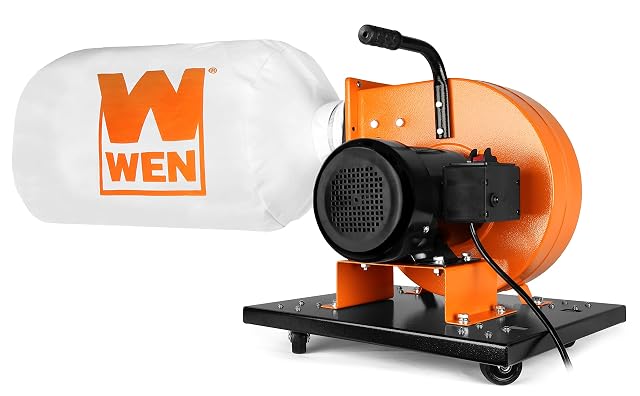
  7. WEN DC3474, 600 CFM collector

    600 CFM · 7.4 A · 9 in impeller · 5 micron · wall mountable · 41.1 lb

    Half the amps and one inch less impeller than its sibling, for less than half the air — and it will hang on a wall.

    Best for: A one-machine shop with no floor to spare, where the collector hangs on the wall

    ≈ $230

  8. Scheppach HD12

    550 W · 1,150 m (3773 ft)³/h · 75 L · Ø 100 mm (3.94 in) hose

    A €169 chip extractor that moves 1,150 cubic meters an hour — and publishes nothing at all about what it filters.

    Best for: Feeding a planer, a bandsaw or a table saw in a single-machine workshop

    8.7/10

    ≈ $635

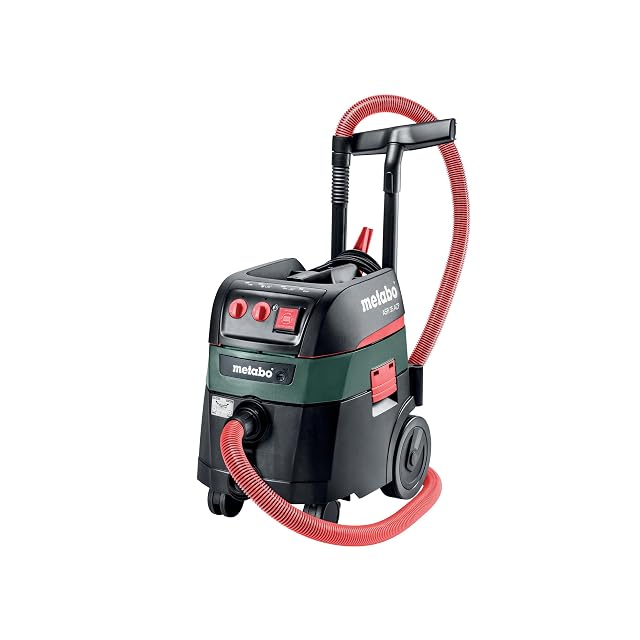
  9. Metabo ASR 35 M ACP

    Dust class M · automatic filter cleaning

    The M-class machine on this page — ten times less fine dust returned to the room, which for hardwood is the whole argument.

    Best for: Hardwood work in an enclosed workshop, where the fine fraction is the point

    8.1/10

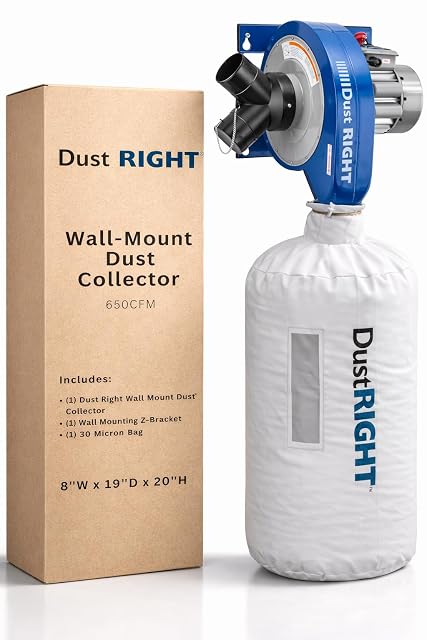
  10. Dust Right Dust Right 650 CFM wall mount

    650 CFM · 30 micron bag · wall mount on keyhole slots · 1 micron canister optional

    A wall-mounted 650 CFM collector supplied with a thirty-micron bag — the coarsest filtration on this shelf, with a finer one sold separately.

    Best for: A shop with wall space and no floor — bought together with the one-micron canister

    ≈ $440

For which need, in dust extraction

Extracting from a stationary machine

A thicknesser or a table saw produces a volume of chips a workshop vacuum cannot keep up with. Air flow decides, not suction pressure.

WEN DC1300, 1,300 CFM collector

Starting to protect your lungs

Wood dust is classified as carcinogenic. Even the most modest set-up in the aisle is infinitely better than nothing.

ECOMAX EM18412PE, 8 gal HEPA extractor

Staying quieter than the machine it serves

An extractor louder than the machine it serves doubles the fatigue of a day in the shop. The stated noise level counts as much as the airflow in a closed room.

WEN DC1300, 1,300 CFM collector

For whom, within dust extraction

Stationary machines
You need flow and a large hose diameter. A workshop vacuum blocks within seconds on a thicknesser.
Portable tools
The opposite: a vacuum with high suction and a small diameter, ideally with power take-off synchronized to the tool.
A wood shop with no window
Beyond extraction at source, an air cleaner deals with the fine particles that stay airborne for hours after work stops.

What each advantage costs, on dust extraction

Flow against suction
Chip extractors move a lot of air at low suction; workshop vacuums do the reverse. Neither replaces the other, and that is the most common mistake in this aisle.
Fine filtration against flow
A filter capable of holding fine particles reduces the flow. A coarse filter bag sends straight back into the workshop exactly what is dangerous.
Fixed installation against mobile
A fixed ducted network is efficient and freezes the workshop layout. A wheeled machine moves and loses flow with every meter of flexible hose.

Before buying dust extraction

Is a workshop vacuum enough?

For portable tools, yes. For a thicknesser or a table saw, no: it has not got the flow and blocks immediately.

What hose diameter?

100 mm (3.94 in) and up for stationary machines, 32 to 40 mm (1.26 to 1.57 in) for portables. Reducing the diameter throttles the flow far more than people expect.

What is actually dangerous?

The finest, invisible particles, which stay airborne and penetrate deeply. The pile of chips on the floor is the least problematic part.

Do you need a HEPA filter for wood dust?

On an installation that exhausts into the workshop, it is the serious minimum. A classic cloth bag lets the most dangerous fraction through.

Is a cyclone useful?

Very: it drops out most of the load before the filter, which stays clean and keeps its flow. It is the best addition to an existing installation.

Can I exhaust outside?

It is the most effective solution for indoor air, and it also expels heated air. In winter that quickly becomes expensive.

Should I wear a mask as well?

Yes, for operations where extraction is impossible — hand sanding, sweeping up. FFP2 as a minimum, FFP3 for exotic timbers.

Can two machines share one extractor?

Technically yes, but the airflow splits and neither one is properly extracted. A network with blast gates solves it; a plain branch does not.

What to remember about dust extraction

Extraction is not a comfort accessory: fine wood dust is the real risk in the workshop, and it is invisible. Distinguish flow from suction according to the machines, watch hose diameters, and add a cyclone before changing extractor.

A quick look at dust extraction

  • Filtration rating: 2 to 30 micron bag, on 4 of the 13 models.

Dust extraction, side by side

There is no table here, and the reason is in the listings. The figure published most often across these 13 products is motor, given by 7 of them — short of the four in five a column needs to compare rather than to display gaps. Each product page says what its own maker published.

What each budget cuts on this shelf

Also worth reading on dust extraction

Where the data is read

Specifications: manufacturer sheets for woodworking machines and the matching Amazon product pages. Prices and availability: Keepa.

Most recent revision in this category: October 7, 2026.

How we assess dust extraction

Prices quoted in these summaries are dated readings. The live price is shown next to each product.