Skip to content

The best table saws for 2026

A table saw is judged on one number you can measure and one you cannot see: how parallel the fence stays to the blade, and how honestly the riving knife is set up. We compare saws on fence design, table flatness and rip capacity — and say which ones need a better fence before they are usable.

The models we recommend

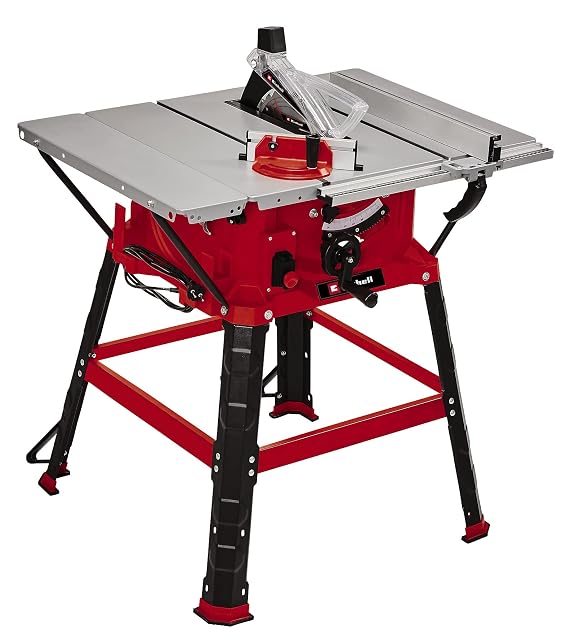
  1. Einhell TC-TS 254 U

    2,200 W · 80 mm (3.15 in) at 90° · Ø 254 mm (10 in) · stand included

    A €171 table saw that cuts 10 mm (0.39 in) deeper than the Bosch above at a quarter of the price — in a plastic housing, on a stand, with everything stated.

    Best for: A first table saw in a home workshop, used occasionally rather than daily

    7.4/10

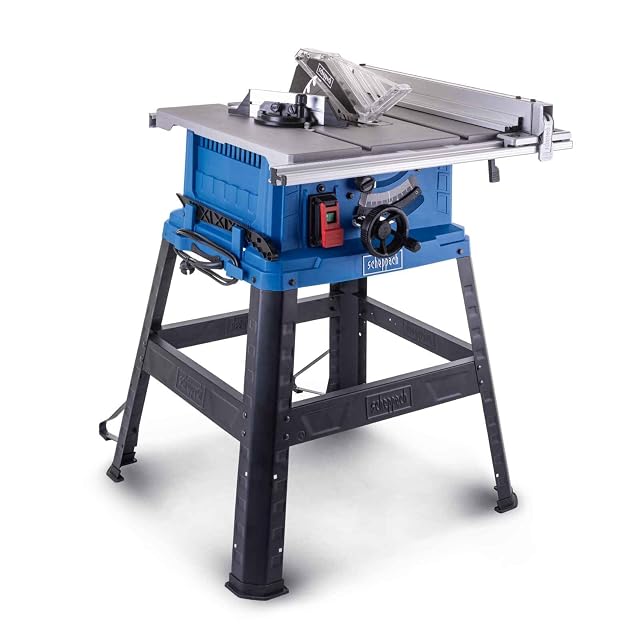
  2. Scheppach HS105

    255 mm (10 in) · 2,000 W · with stand

    A full-size blade, a stand and a 640 × 920 mm (25.2 × 36.2 in) table for the price of a compact site saw — the most machine per euro on this page, with the compromises that implies.

    Best for: A garage or a shed where the saw stays put and space, not portability, is the constraint

    7.4/10

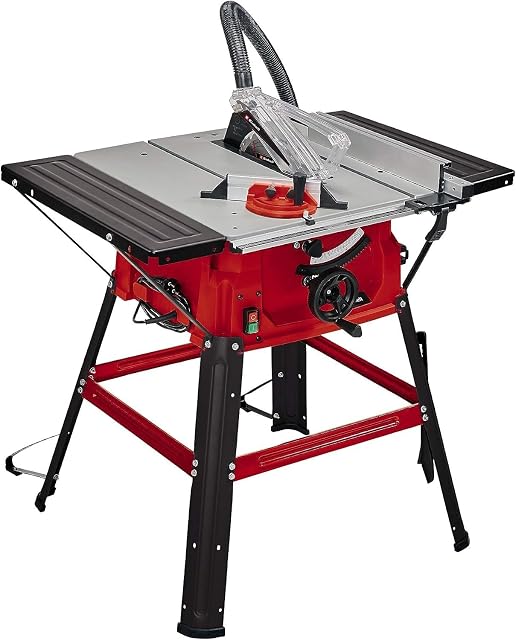
  3. Einhell TC-TS 2025/2 U

    250 mm (9.84 in) · 2,000 W · 85 mm (3.35 in) cut

    The cheapest way into a real table saw, and honest about what that buys — a big blade, a big cut, and a fence you will end up improving.

    Best for: A first table saw for occasional sheet and softwood work, where the alternative is no table saw at all

    6.8/10

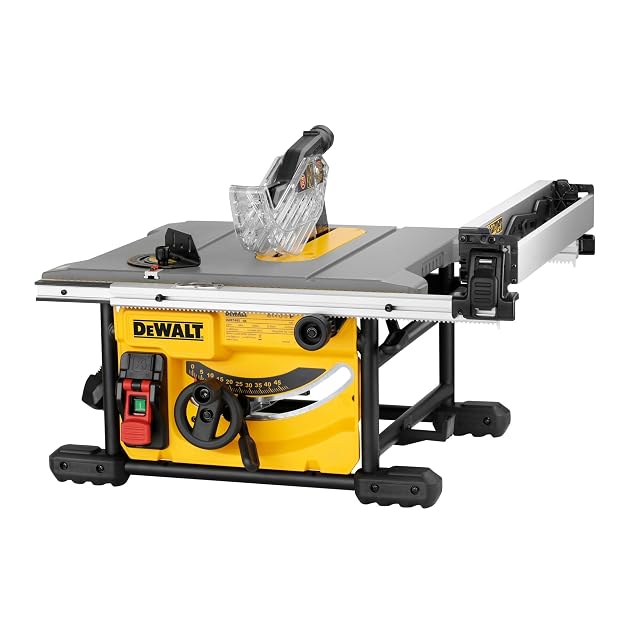
  4. DeWalt DWE7485

    210 mm (8.27 in) · rack-and-pinion fence · 65 mm (2.56 in) cut

    The most refined compact saw here: a rack-and-pinion fence that moves squarely by design, in a body small enough to carry in one hand.

    Best for: Site work and small workshops where accuracy matters more than capacity

    8.2/10

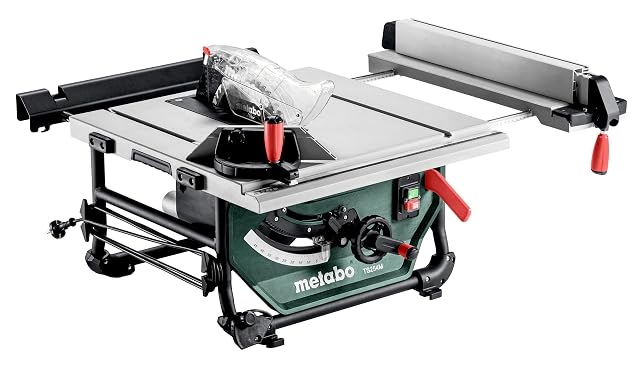
  5. Metabo TS 254 M

    254 mm (10 in) · double-clamped fence · 3 s brake

    The saw on this page whose fence clamps at both ends — the single detail that separates a machine you can trust from one you fight.

    Best for: Anyone who wants accuracy out of the box rather than after a weekend of tuning

    7.6/10

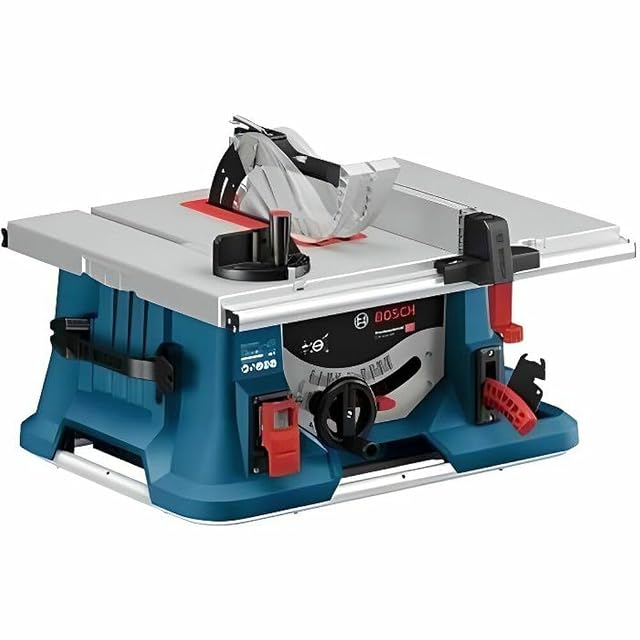
  6. Bosch Professional GTS 635-216

    216 mm (8.50 in) · 1,600 W · 30 mm (1.18 in) bore

    Bosch’s compact site saw: lighter than the class, sensibly guarded, and built around a blade small enough to limit what it can rip.

    Best for: Trim, second-fix and repeated small rips, where the saw has to move between rooms or sites

    7.4/10

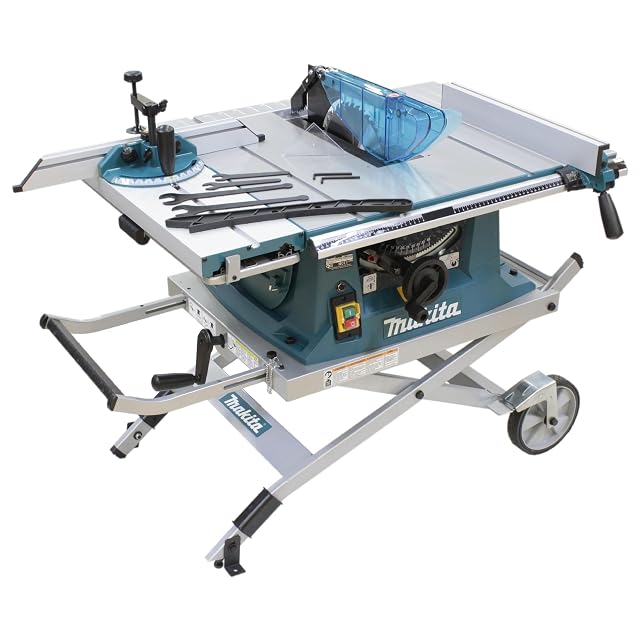
  7. Makita MLT100NX1

    260 mm (10.2 in) · with stand

    A 260 mm (10.2 in) stationary saw with its stand, from a brand with a real service network — and one of the thinnest published specifications we have come across.

    Best for: A buyer who already knows this machine, or who values the spares network above the paper specification

    7.4/10

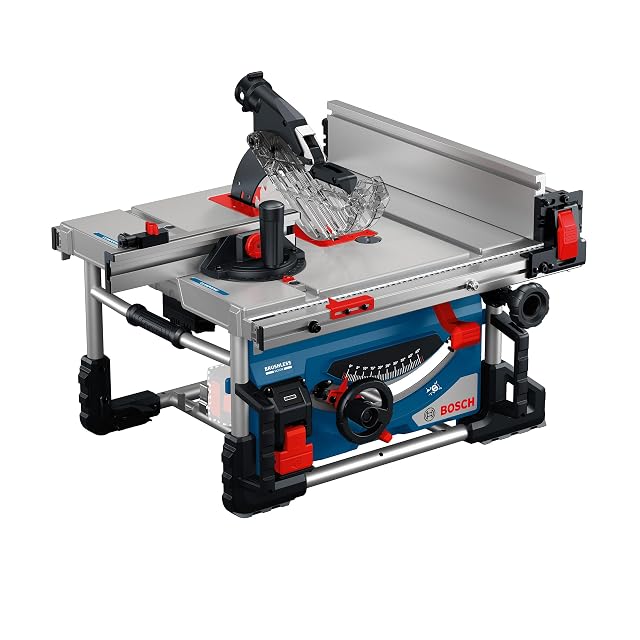
  8. Bosch Professional GTS 18V-70

    18 V · 70 mm (2.76 in) cut height · 216 mm (8.50 in) blade · bare tool

    A cordless table saw with a 70 mm (2.76 in) cut height and no battery in the box — and a French price nearly €300 below the British one.

    Best for: Site work and small shops already holding Bosch Professional 18 V batteries

    8.6/10

For which need, in table saws

Ripping thick panels

Blade diameter sets the usable depth of cut. It decides whether the machine takes a 45 mm (1.77 in) board in one pass or in two flipped passes.

Makita MLT100NX1

Working hardwood without the speed dropping

On a long rip through oak or beech, it is the motor's reserve that prevents bogging down — and bogging down burns the cut.

Einhell TC-TS 254 U

For whom, within table saws

Garage workshop
Compact format and folding matter as much as power. A machine you have to drag out alone before every use will be used half as often.
Panels and joinery
The quality of the rip fence decides everything. A fence that shifts as you lock it cancels any precision the machine has.
Cutting sheet goods every week
Look at the safety system — riving knife, guard, accessible emergency stop — before the cutting figures. It is the most dangerous machine in the workshop.

What each advantage costs, on table saws

Cutting capacity against footprint
A wide table lets you rip a panel and occupies the workshop permanently. Retractable extensions are a real compromise, at the cost of some rigidity.
Power against supply
Beyond a certain power the machine wants three-phase or a dedicated circuit. Many home workshops cap out there, well before the machine's own limits.
Stock fence against aftermarket fence
The fences supplied on entry-level machines are the most common weak point. Replacing the fence sometimes costs less than buying the next machine up, for a greater gain in precision.

Before buying table saws

What depth of cut for what blade diameter?

Roughly a third of the diameter at 90°, and less again on a bevel. A 254 mm (10 in) blade therefore takes around 80 mm (3.15 in) flat, and markedly less at 45°.

Is the riving knife essential?

Yes. It stops the wood closing on the blade behind the cut, which is the main cause of violent kickback. Removing it to save time is the most dangerous mistake in the workshop.

Do I need a specific blade per material?

Tooth count changes everything: few teeth for ripping with the grain, many for crosscutting and for melamine panels. A universal blade does both moderately well.

How do I know the machine is set up correctly?

The blade must be parallel to the mitre slot, and the fence parallel to the blade. A tenth of a millimeter of error over a meter is enough to burn the cut and cause kickback.

Can plywood be cut without tear-out?

With a fine-toothed blade, a slow feed and a sacrificial board underneath, yes. Without the sacrificial board the underside will always chip.

Does a table saw need dust extraction?

Imperatively. Wood dust is classified as carcinogenic and the table saw produces a great deal of it. A closed, connected shroud completely changes the air quality in the workshop.

Table saw or track saw?

The table saw excels on pieces you bring to the blade; the track saw on panels you cannot move. Many workshops end up with both.

Does a table extension change the rip capacity?

It changes the width of workpiece you can support, not the fence's maximum distance. It is the stated rip capacity, not the table's size, that limits the cut.

What to remember about table saws

A table saw is judged on the quality of its fence and its safety devices before its cutting figures. Blade diameter sets the usable depth, the motor sets how it holds up in hardwood, and extraction decides what you breathe for ten years.

A quick look at table saws

  • Motor: 1,600 to 2,200 W, on 7 of the 10 models.
  • Highest figure for blade diameter: Makita MLT100NX1 (260 mm (10.2 in)).

Table saws in one table

A column holds only if four machines in five publish the figure. Below that, it would compare what the manuals left out.

ModelPriceBlade diameter
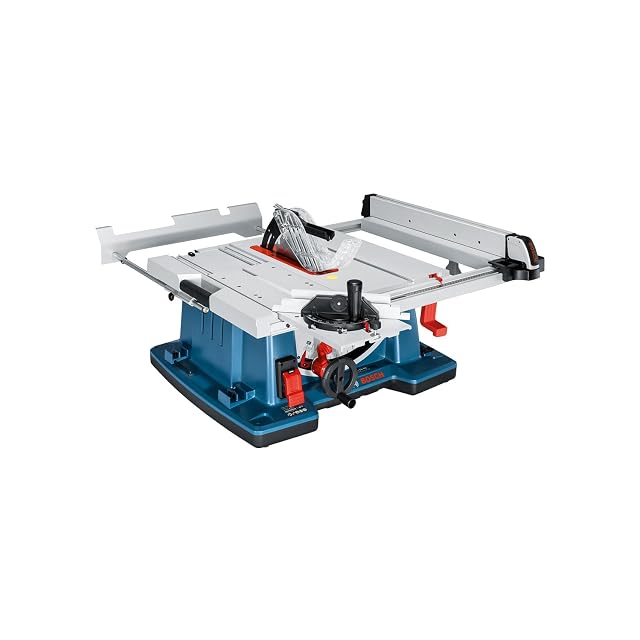
Bosch Professional GTS 10 XC—254 mm (10 in)
Bosch Professional GTS 635-216—216 mm (8.50 in)
Bosch Professional GTS 18V-70——
DeWalt DWE7485—210 mm (8.27 in)
Einhell TC-TS 2025/2 U—250 mm (9.84 in)
Einhell TC-TS 254 U—254 mm (10 in)
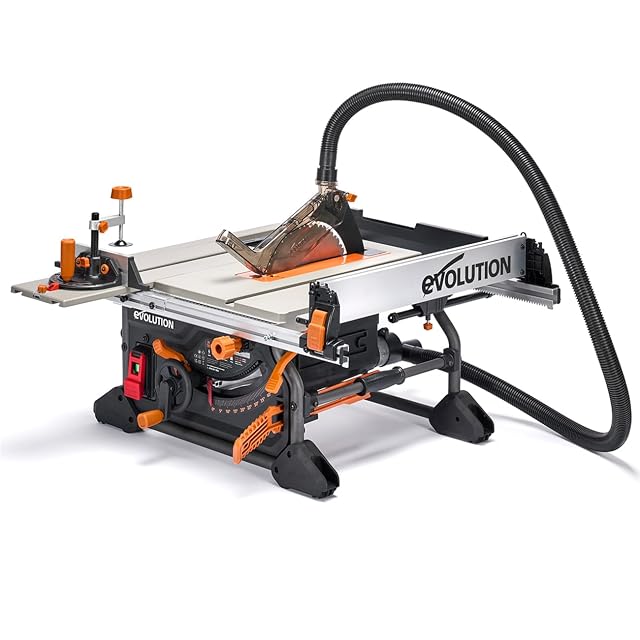
Evolution Power Tools R255TBL+—255 mm (10 in)
Makita MLT100NX1—260 mm (10.2 in)
Metabo TS 254 M—254 mm (10 in)
Scheppach HS105—255 mm (10 in)

Also worth reading on table saws

Where the data is read

Specifications: manufacturer sheets for woodworking machines and the matching Amazon product pages. Prices and availability: Keepa. Every figure in this table names its source.

Most recent revision in this category: August 12, 2026.

How we assess table saws

Prices quoted in these summaries are dated readings. The live price is shown next to each product.