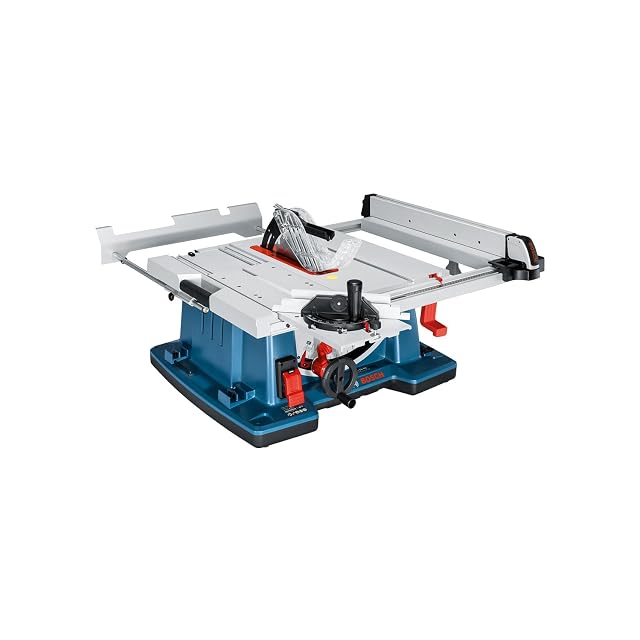
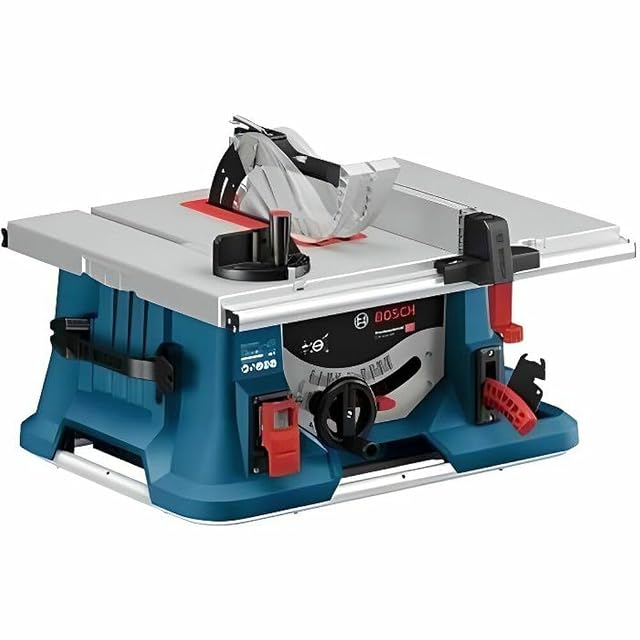
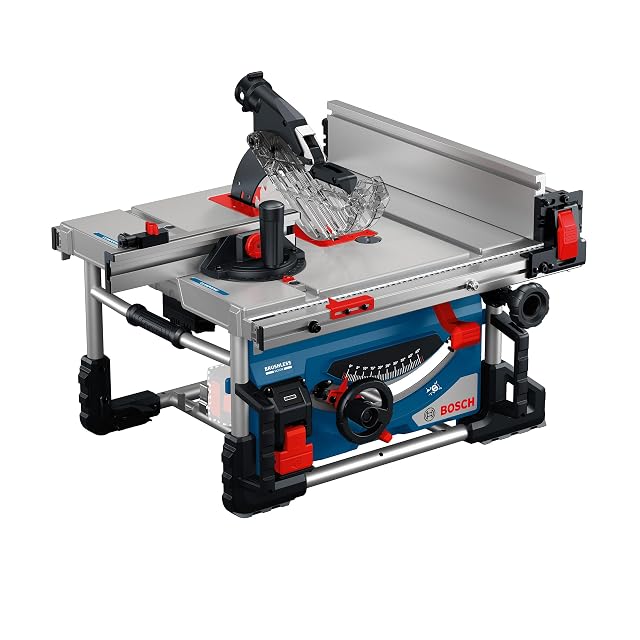
The end of it A specialist tool that happens to be cheap. If you never cut metal, the money is better spent on the Scheppach or the Metabo.
Every figure is a manufacturer specification, read off the
listing itself, and the judgments are ours — drawn from how the
specification behaves in this class of machine and from what long-term
owners consistently report. Where a figure is missing, we say so rather
than fill it in.
What the specification says
255 mm (10 in) multi-material blade, 1,800 W with soft start, bevel to 45°, mitre to
±60°, and a 3 m (10 ft) cable. Evolution rates the supplied blade for wood, metal and
plastic.
The trick, and whether you need it
Evolution built its business on carbide-tipped blades that cut mild steel dry,
without coolant and without the shower of sparks an abrasive disc produces. It
works, it is genuinely useful in a mixed workshop, and no other saw on this page
offers it.
The question is whether you cut metal. If the answer is no — and for most people
reading a woodworking site it is — then this is a 255 mm (10 in) saw whose blade is a
compromise, competing against saws whose blade is not. The Scheppach above has
more table and a stand at a lower price; the Metabo has a better fence.
The compromise in the blade
A blade that cuts steel has a tooth geometry that cuts steel: more teeth, a
different grind, a different rake. On wood that produces a cut that is
acceptable rather than clean, especially across the grain and on veneered
material. The fix is straightforward — keep the supplied blade for metal, fit a
dedicated wood blade for wood — and it costs the price of a blade.
One hazard worth stating plainly
Hot metal chips and a bin of fine sawdust are a bad combination, and an
extractor connected during a metal cut delivers the first directly into the
second. Either empty and disconnect the extractor for metal work, or accept
sweeping up afterwards.
Availability
No such listing: the American Amazon shop answers the reference with a search box rather than a page.
Read from Keepa on the day this page was last revised; stock and price both move without notice.
The good side, and the catch
Strengths
Cuts mild steel, aluminum and plastic with the supplied blade — no other saw here does
±60° mitre range is wider than most
Soft start, which matters on a 255 mm (10 in) blade
Consistently the cheapest 255 mm (10 in) saw across every European market we checked
Compromises
A multi-material blade is a compromise blade: for wood alone, a dedicated blade cuts cleaner
Cutting metal on a wood-shop machine puts hot chips into a dust system full of sawdust
Not sold on amazon.com
Specifications
Blade diameter
255 mm (10 in)
Motor
1,800 W, soft start
Bevel
45°
Mitre
±60°
Supplied blade
Multi-material TCT — wood, metal and plastic
Cable
3 m (10 ft)
Amazon reference
B0CZTZKRPH (identical on 5 markets)
EAN
5056583007696
What comes up most often
Is the multi-material blade any good on wood?
It cuts wood perfectly well and it does not cut it as cleanly as a dedicated wood blade with the right tooth count and grind. Treat the supplied blade as the metal-cutting one, buy a proper wood blade for wood, and swap — the saw is then better at both jobs than any single blade makes it.
Is it safe to cut metal on a table saw?
On a machine designed for it and with the blade it was designed to use, yes — that is the point of this one. The hazard people miss is downstream: hot metal chips into an extractor full of wood dust. Empty the extractor first, or run the metal cuts without it and sweep up.
Where this model is listed
A listing is not an offer: the reference exists on these stores, availability changes daily.
France
Germany
Italy
Spain
United Kingdom
Our score
7.6/ 10
A specialist tool that happens to be cheap. If you never cut metal, the money is better spent on the Scheppach or the Metabo.
Who buys this one, among woodworking machines
A mixed workshop where the same machine has to handle timber one day and steel section the next
Sources
Specifications: the manufacturer sheet for woodworking machines and the matching Amazon product page. Prices and availability: Keepa. Every figure on this page names its source.