Skip to content

The best planer thicknessers for 2026

This is the machine that turns bought timber into stock you can actually build with. We compare infeed table length — which sets how straight an edge you can produce — cutterhead type, and the two faults that define the category: snipe at the ends of a board, and the time lost switching between the two functions.

The models we recommend

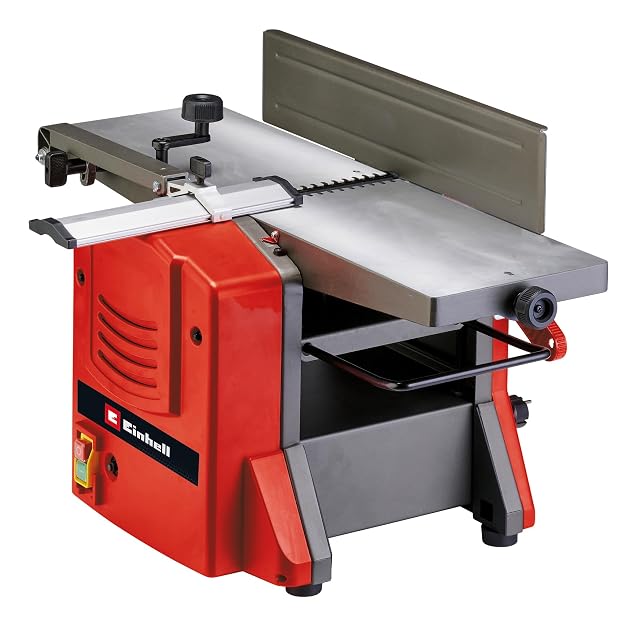
  1. Einhell TC-SP 204/2

    1,500 W · 204 mm (8.03 in) wide · 3 mm (0.12 in) cut · aluminum table

    The only planer here that publishes how much it takes off in one pass — 3 mm (0.12 in) surfacing, 2 mm (0.08 in) thicknessing — and the most evenly priced across Europe.

    Best for: Smaller stock — battens, rails, small beams — where 204 mm (8.03 in) is enough
    7.5/10

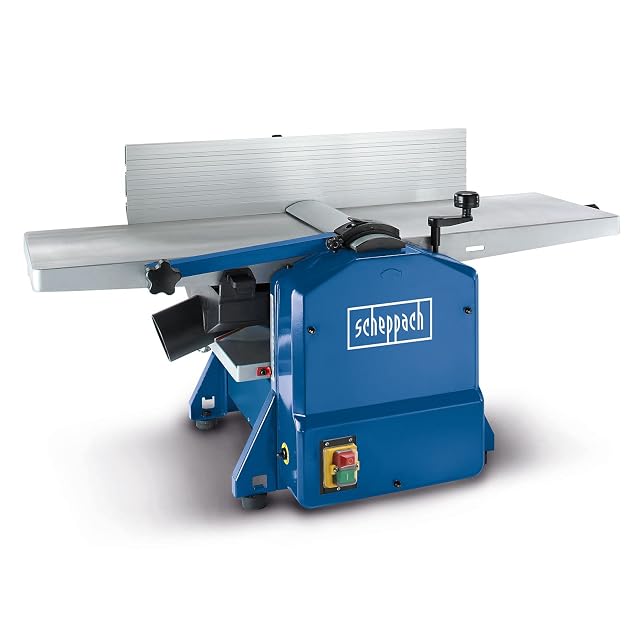
  2. Scheppach HMS850

    1,250 W · surface and thickness · €240

    The cheapest machine that does both jobs — flattening a face and taking a board to thickness — and the one most first workshops buy.

    Best for: A first workshop buying rough-sawn timber instead of pre-planed stock

    6.9/10

    ≈ $835

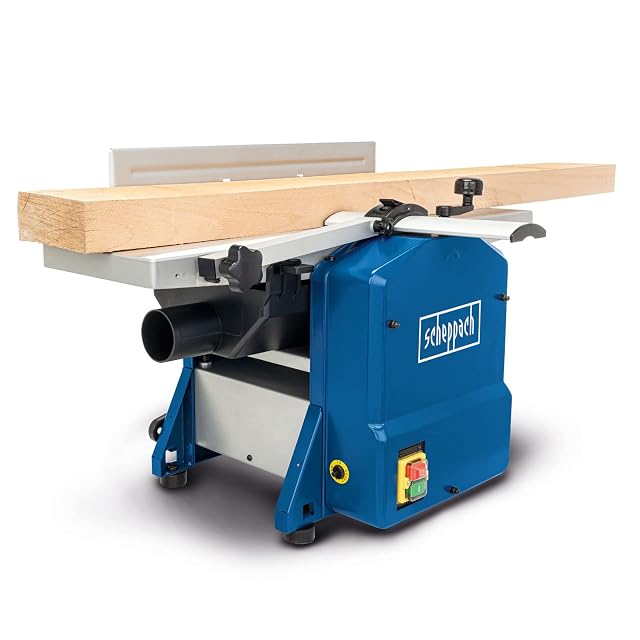
  3. Scheppach HMS1070

    1,500 W · 254 mm (10 in) wide · 120 mm (4.72 in) high · both functions

    A €340 combination planer that takes 254 mm (10 in) of width and states every figure that matters — and costs €939 on amazon.com.

    Best for: A home workshop starting to buy rough-sawn timber instead of pre-planed stock

    8.1/10

    ≈ $940

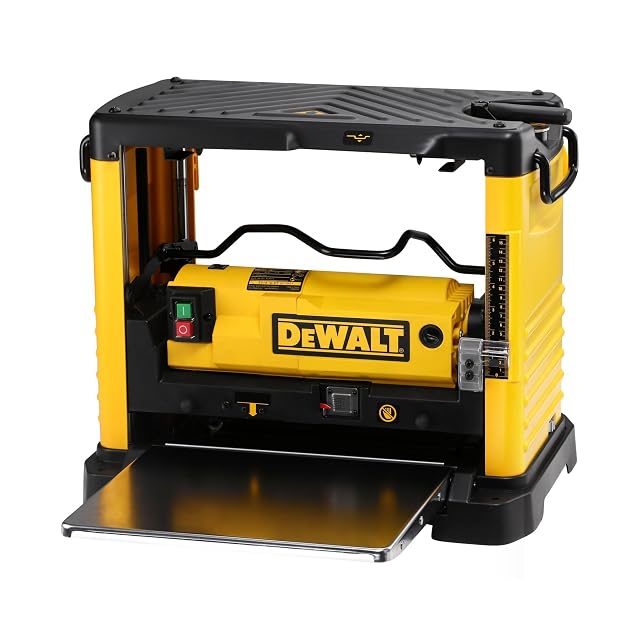
  4. DeWalt DW733

    1,800 W · 317 mm (12.5 in) · portable

    The professional portable thicknesser: 317 mm (12.5 in) wide, 1,800 W, and built to be carried to a job and used all day.

    Best for: Daily use at full width, where the machine has to keep going rather than keep up

    7.5/10

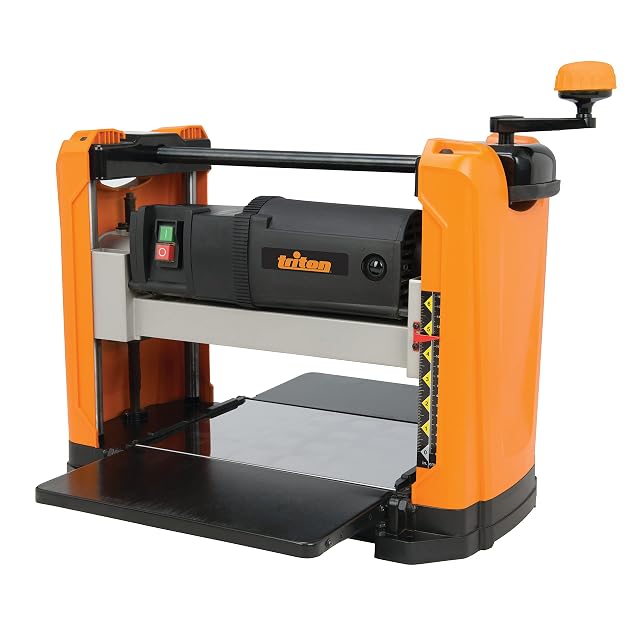
  5. Triton TPT125

    1,100 W · 317 mm (12.5 in) wide · €289 in Britain

    A 317 mm (12.5 in) portable thicknesser — the widest capacity on this page — and a price that swings by nearly €300 depending on the country.

    Best for: A workshop that already flattens faces some other way and needs width

    7.5/10

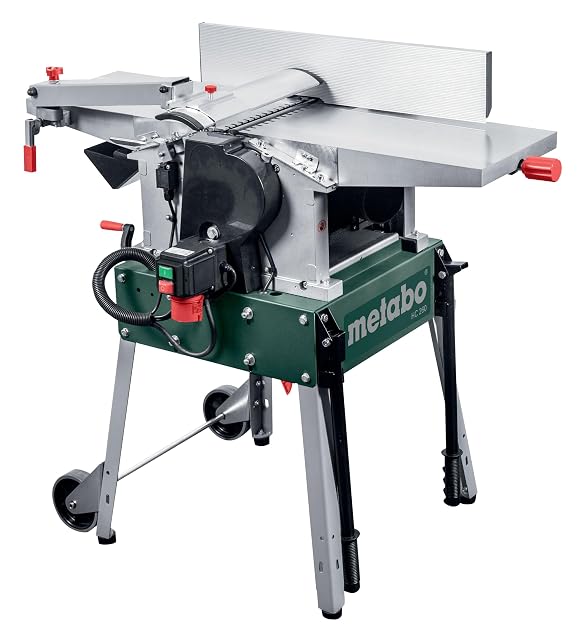
  6. Metabo HC 260 C/2,8 DNB

    2,800 W · 260 mm (10.2 in) · cast-iron tables

    The only machine on this page with cast-iron tables and a 2,800 W motor — and the only one that publishes every figure that matters.

    Best for: A permanent workshop that processes rough timber regularly and wants to stop compromising

    8.9/10

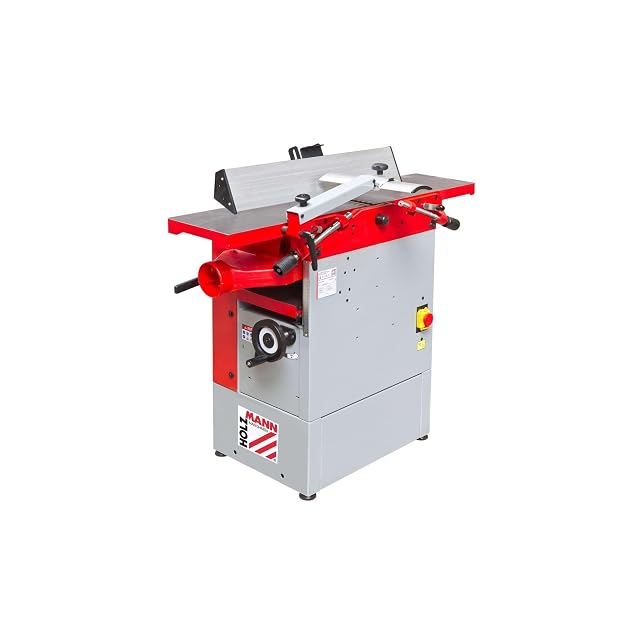
  7. Holzmann HOB260ECO

    230 V · planer thicknesser · nothing else published

    A €1,098 planer whose listing publishes a part number and a barcode — and which costs €2,017 in Britain.

    Best for: A buyer who has already seen this machine and needs a European price check

    8.2/10

For which need, in planer thicknessers

Planing hardwood

On a full-width pass through oak, it is the motor's reserve that prevents bogging down — and bogging down leaves a mark across the piece.

Metabo HC 260 C/2,8 DNB

Working wide boards

Planing width is the machine's physical limit: beyond it you have to rip and re-glue, which changes the project entirely.

Metabo HC 260 C/2,8 DNB

Starting out in solid timber

Moving from shop-planed timber to rough sawn halves the cost of material. Even the most affordable machine in the aisle opens that door.

Scheppach HMS850

For whom, within planer thicknessers

Buying rough sawn timber
This is the machine that makes rough timber accessible, and it pays for itself quickly on material costs. The jointer flattens, the thicknesser brings to thickness: both are needed.
Small workshop
Combination machines do both functions in one frame, with a changeover each time you switch. It is the reasonable compromise when space is short.
Finish work
A helical head with inserts leaves a markedly cleaner surface on interlocked grain, and it costs appreciably more.

What each advantage costs, on planer thicknessers

Combination against separate machines
The combination saves space and imposes a changeover at every switch of function. On a project that alternates, that quickly becomes wearing.
Straight knives against helical head
Straight knives cost little and nick; the helical insert head lasts, runs quieter and costs several hundred euros more. On interlocked grain the difference in surface is clear.
Width against footprint and supply
Every centimeter of width adds weight, noise and consumption. Beyond a certain size the home workshop cannot follow, electrically or physically.

Before buying planer thicknessers

What is the difference between jointing and thicknessing?

Jointing creates a flat face and a square edge; thicknessing brings the piece to thickness parallel to that face. Thicknessing without jointing first reproduces the original twist.

What depth of pass?

One to two millimeters at most on hardwood, less if the motor slows. Light passes give a better surface and tire the machine less.

Why do I get regular marks on the board?

Those are the cutterblock's scallops, normal and faint if the knives are sharp and correctly set. Pronounced marks signal a nicked knife or an uneven feed.

Is extraction compulsory?

In practice yes. These machines produce a considerable volume of shavings that blocks the outlet within seconds without proper extraction.

Can I plane reclaimed timber?

Only after removing every nail and screw, and while watching for embedded grit. A single nail destroys a set of knives.

What useful table length?

The longer the tables, the straighter a long board comes out. On compact machines, infeed and outfeed stands partly compensate.

Should knives be sharpened or replaced?

Disposable knives are flipped once then replaced; thick knives are re-sharpened. A helical head simply has its nicked inserts rotated.

Does a thicknesser need a special supply?

Machines past two kilowatts often want a dedicated circuit, and some want three-phase. The stated voltage and current are checked before anything else.

What to remember about planer thicknessers

The planer-thicknesser is what makes rough timber accessible, and it pays for itself on material. Look at usable width and table length before power, and plan for extraction from the outset: on this machine it is not optional.

A quick look at planer thicknessers

  • Planing width: 204 to 260 mm (10.2 in), on 3 of the 7 models.
  • Highest figure for motor: Metabo HC 260 C/2,8 DNB (2,800 W).

Planer thicknessers in one table

A column holds only if four machines in five publish the figure. Below that, it would compare what the manuals left out.

ModelPriceMotor
Scheppach HMS850$8351,250 W
Scheppach HMS1070$9401,500 W
DeWalt DW733—1,800 W
Einhell TC-SP 204/2—1,500 W
Holzmann HOB260ECO——
Metabo HC 260 C/2,8 DNB—2,800 W
Triton TPT125—1,100 W

Also worth reading on planer thicknessers

Where the data is read

Specifications: manufacturer sheets for woodworking machines and the matching Amazon product pages. Prices and availability: Keepa. Every figure in this table names its source.

Most recent revision in this category: August 12, 2026.

How we assess planer thicknessers

Prices quoted in these summaries are dated readings. The live price is shown next to each product.