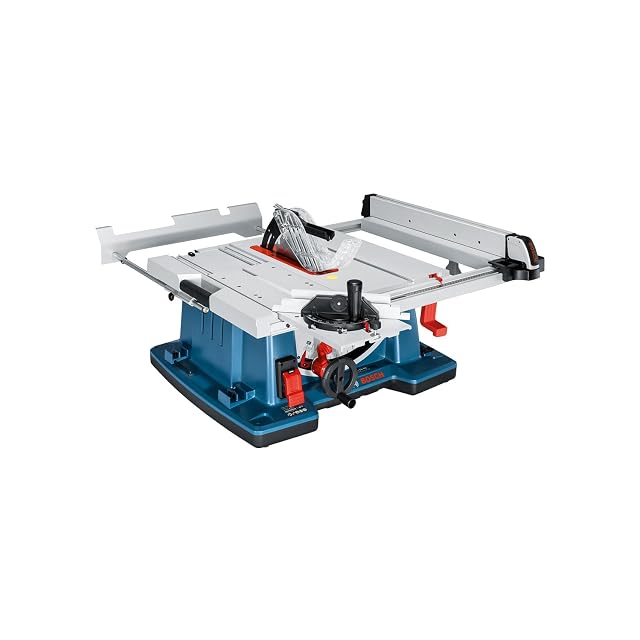
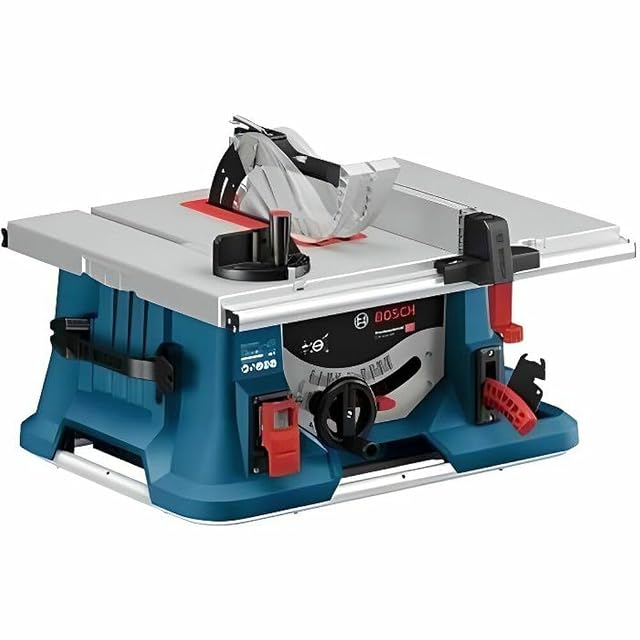
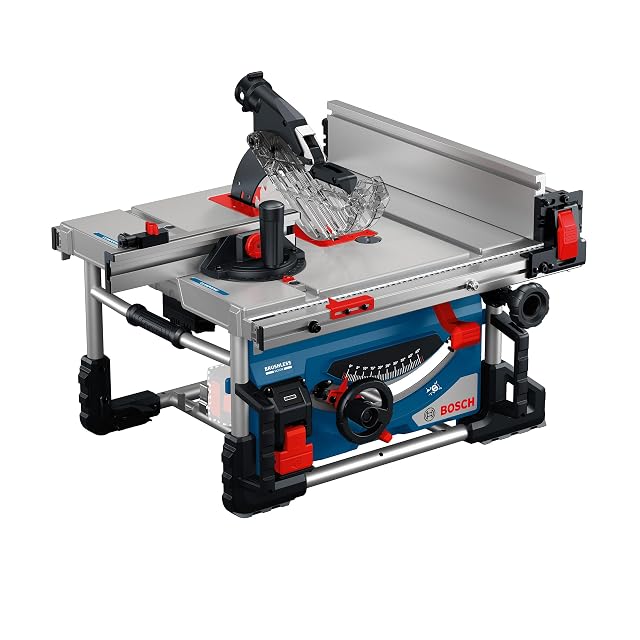
The end of it The best-judged machine on this page. It spends its money on the fence, the brake and the electrics rather than on the number in the title.
Every figure is a manufacturer specification, read off the
listing itself, and the judgments are ours — drawn from how the
specification behaves in this class of machine and from what long-term
owners consistently report. Where a figure is missing, we say so rather
than fill it in.
What the specification says
254 mm (10 in) blade. A rip fence with double clamping. A motor brake that Metabo states
stops the blade in three seconds. Overload protection, soft start and restart
protection. A torsion-resistant tubular frame, cable and accessory storage on
the body, an extendable table widener, and automatic reset of the blade tilt. It
ships with a 40-tooth carbide-tipped blade, rip fence, mitre gauge, table
extension and push stick.
Why this is the one we would buy
Read that list again and notice what is absent from it: a bigger number than
anyone else’s. Metabo has spent the budget on the fence, the brake and the
electrics — the three things that decide whether the saw is accurate, whether it
is safe, and whether it survives a stalled cut.
The double-clamped fence is the headline. It is the specification we open the
table saw hub with, and this is the machine on this page that has it as
standard. Everything downstream of the fence — the straightness of a rip, the
squareness of a panel, whether the offcut binds — is decided by whether that
fence stays parallel at the back as well as the front.
The automatic bevel reset is the quiet one. Any saw will tilt to 45°; returning
it to a genuine 90° afterwards is the part that costs ten minutes and a square,
every single time, on machines that do not have a positive stop.
What it does not tell you
Metabo does not publish a maximum cut height on this listing. On a 254 mm (10 in) blade
it will be in the same region as its rivals, but we are not going to state a
figure the manufacturer has not — that is exactly the guess this site does not
make. If cut height is your deciding specification, confirm it before ordering.
Availability
Catalogued and unsold: the American Amazon shop lists the reference with nobody behind it.
Read from Keepa on the day this page was last revised; stock and price both move without notice.
The good side, and the catch
Strengths
Fence clamps at both ends — the specification this whole category should be judged on
Motor brake stops the blade in a stated 3 seconds
Restart protection: the saw does not come back to life on its own after a power cut
Automatic bevel reset, so returning to 90° does not need re-measuring
Compromises
A tubular frame is rigid but never as dead as cast iron under vibration
The US and UK listings are priced as imports, well above the European level
Metabo publishes no cut height on this listing — a surprising omission
Specifications
Blade diameter
254 mm (10 in)
Rip fence
Double clamping (manufacturer description)
Blade brake
Motor brake, blade stopped in 3 s (manufacturer figure)
It fixes the fence at the front rail and the back rail instead of the front alone. A single-clamped fence pivots about its lock, so the far end can sit a fraction of a millimeter off parallel while the near end reads perfectly square. That error burns the cut and pinches the offcut against the blade — which is also the mechanism behind most kickback on a rip cut.
Is a 3-second blade brake worth paying for?
A 254 mm (10 in) blade coasts for a long time without one. The brake matters least in the moment you switch off and most in the minute afterwards, when the saw looks stopped and is not. It is a genuine safety feature rather than a specification-sheet one.
Why is the American price so much higher?
Because it is an import listing rather than local distribution. The reference resolves on amazon.com but the machine is a European one, sold there by third parties at an importer’s margin and without a local service network behind it.
Where this model is listed
A listing is not an offer: the reference exists on these stores, availability changes daily.
France
Germany
Italy
Spain
United Kingdom
United States
Our score
7.6/ 10
The best-judged machine on this page. It spends its money on the fence, the brake and the electrics rather than on the number in the title.
Who buys this one, among woodworking machines
Anyone who wants accuracy out of the box rather than after a weekend of tuning
Specifications: the manufacturer sheet for woodworking machines and the matching Amazon product page. Prices and availability: Keepa. Every figure on this page names its source.