The end of it A capable general vacuum. Not the machine to rely on for the fraction you cannot see.
Every figure is a manufacturer specification, read off the
listing itself, and the judgments are ours — drawn from how the
specification behaves in this class of machine and from what long-term
owners consistently report. Where a figure is missing, we say so rather
than fill it in.
What the specification says
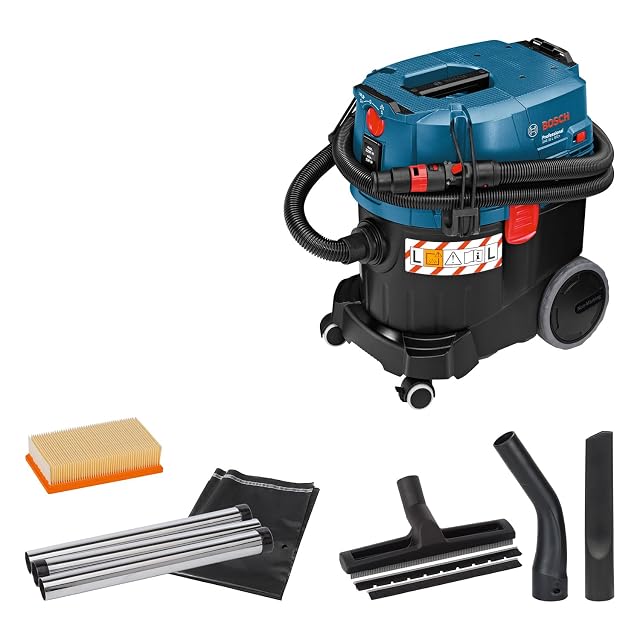
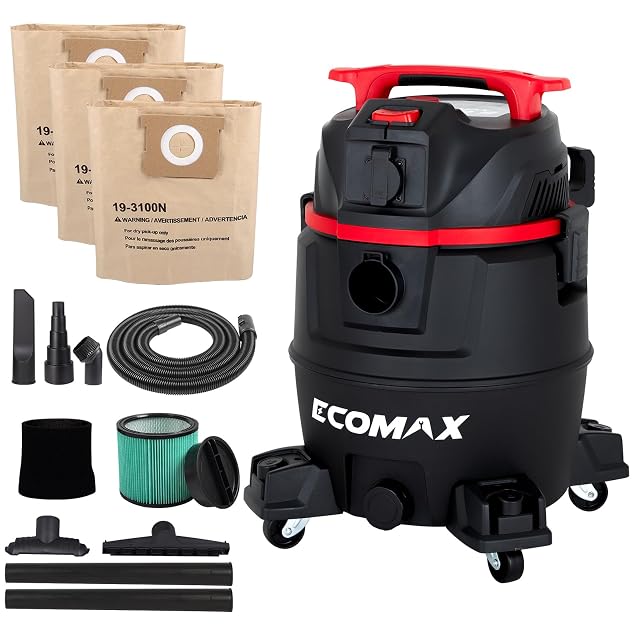
A wet-and-dry workshop vacuum, part number 2342460. Einhell publishes no dust
class, no airflow and no suction figure on this listing.
Dust class L or M — the letter that matters
European workshop vacuums carry a dust class. L lets through up to
1% of the dust it collects; M lets through up to 0.1%, ten times
less. Both look identical and both say “dust extraction” on the box.
Wood dust is classified as a Group 1 carcinogen by the IARC, and the
harmful fraction is the fine one that a filter either holds or does not.
For hardwood in an enclosed workshop, M is the class to look for. An
L-class machine is not useless — it collects chips perfectly well — but
it returns ten times more of the fraction you cannot see to the room you
are standing in.
The absence of a class on the listing is the answer to the question. Machines
that are M-rated say so in the title, because the rating is expensive to certify
and is the reason to charge more.
Two machines, not one
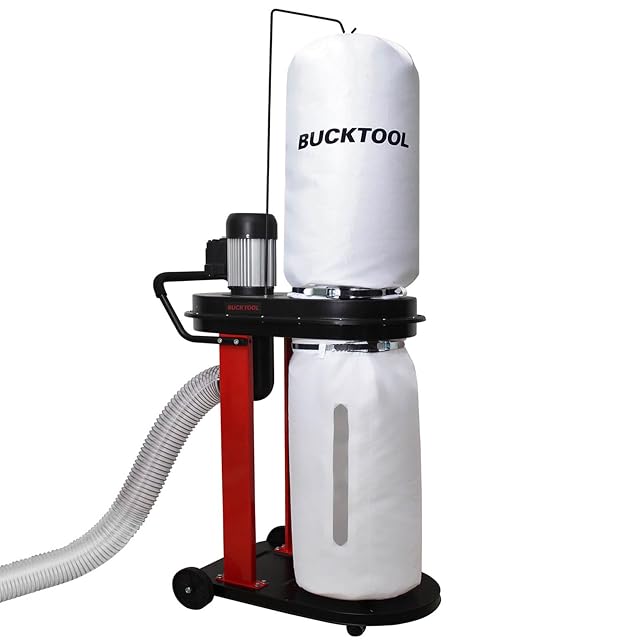
A chip collector moves a large volume of air at low pressure. It
suits a 100 mm (3.94 in) port on a planer, a table saw or a band saw, where the
waste is bulky and the duct is wide.
A workshop vacuum moves a small volume at high pressure. It suits a
32 or 35 mm (1.38 in) hose on a sander, a router or a track saw, where the waste
is fine and the port is narrow.
Swap them and each collects almost nothing, while sounding exactly as
though it is working. It is the most expensive misunderstanding in the
category, and no listing explains it.
Availability
Read on the day this page was built: $450 at the American Amazon shop.
Read from Keepa on the day this page was last revised; stock and price both move without notice.
Prices quoted in this text were read on 2026-08-12. The live price is at the top of the page.
The good side, and the catch
Strengths
One reference and one EAN across all six markets
Wet pickup, which matters more than expected the first time a pipe leaks
Compromises
No dust class published — assume it is not an M-class machine
The listing publishes no airflow or suction figure
Specifications
Type
Wet and dry workshop vacuum
Part number
2342460
Amazon reference
B08W9V2H6H (identical on 6 markets)
EAN
4006825651799
What comes up most often
Why does an automatic start matter?
Because an extractor that has to be switched on separately gets left off. A socket on the vacuum that starts it when the tool starts removes the decision, which over a year is the difference between extraction that happens and extraction that is intended.
Is it good enough for hardwood dust?
The listing does not state a dust class, and a machine at this price is very unlikely to be M-rated. For chips and general cleanup it is fine; for sanding hardwood in an enclosed shop, read the section on dust classes below and decide accordingly.
Where this model is listed
A listing is not an offer: the reference exists on these stores, availability changes daily.
France
Germany
Italy
Spain
United Kingdom
United States
Our score
6.9/ 10
A capable general vacuum. Not the machine to rely on for the fraction you cannot see.
Who buys this one, among woodworking machines
General workshop cleanup and light sanding extraction on a budget
Specifications: the manufacturer sheet for woodworking machines and the matching Amazon product page. Prices and availability: Keepa. Every figure on this page names its source.