The end of it Good airflow for the money, with the one number that matters for your lungs left off the page.
Every figure is a manufacturer specification, read off the
listing itself, and the judgments are ours — drawn from how the
specification behaves in this class of machine and from what long-term
owners consistently report. Where a figure is missing, we say so rather
than fill it in.
What the specification says
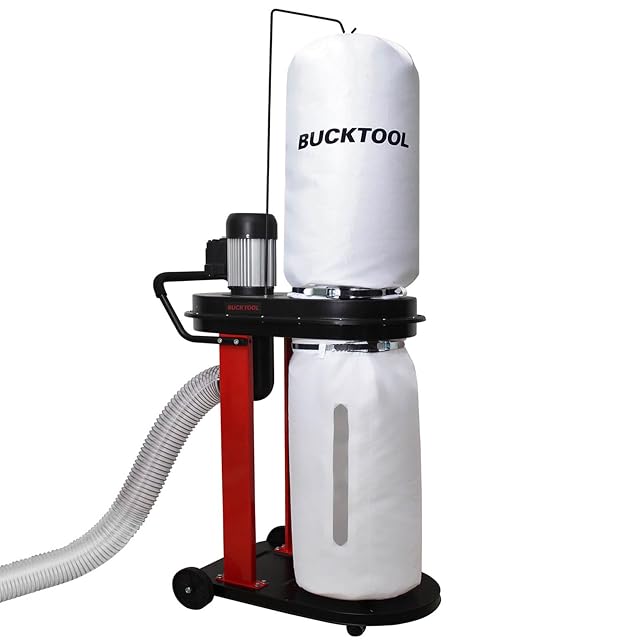
550 W, 1,150 m (3773 ft)³/h of air, a 75 liter collection capacity, a Ø 100 mm (3.94 in) hose
connection with a 2,300 mm (90.6 in) flexible hose, wheels as standard and an adapter set
for connecting small tools. Part number 3906301915.
Volume and suction are two different machines
Workshop dust equipment divides in two, and the division is not about
price. A chip extractor moves a large volume of air at low pressure
through a wide hose: that is what a planer, a bandsaw or a table saw
needs, because those machines produce shavings faster than a narrow hose
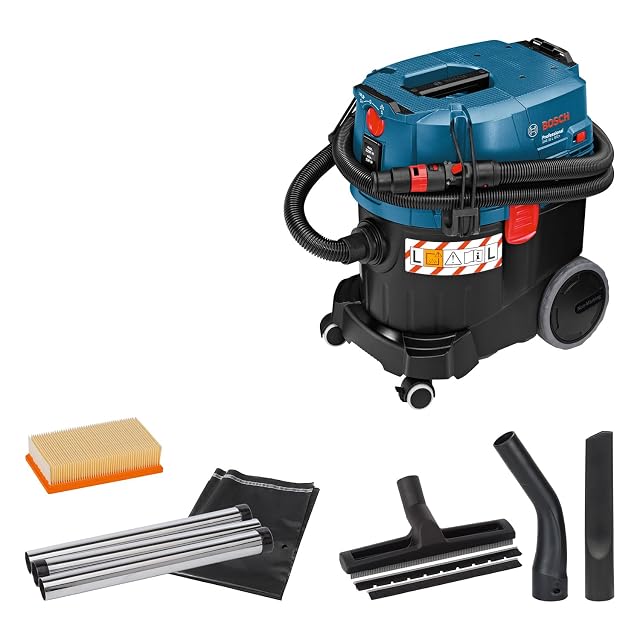
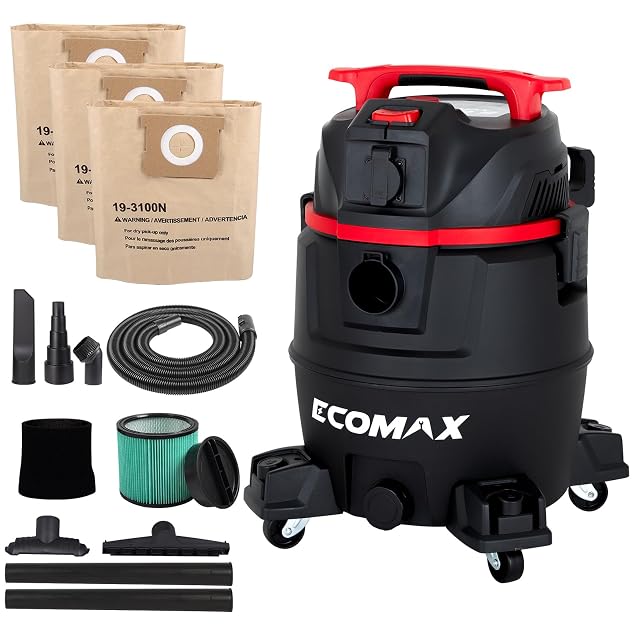
can carry them. A workshop vacuum moves a small volume at high pressure
through a narrow hose: that is what a sander, a router or a track saw
needs, where the waste is fine and the port is small.
Swap them and both fail in a predictable way. The vacuum blocks on the
first handful of shavings, and the extractor develops almost no suction
at a small port — leaving the fine fraction in the air, which is the
part that matters for your lungs.
1,150 m (3773 ft)³/h through a 100 mm (3.94 in) port puts this squarely in the first category. It is
the right machine for the planer, the bandsaw and the table saw in this group, and
the wrong one for the sanders and the routers.
The specification that is missing
Filtration. The listing says how much air the unit moves and how much waste the
bag holds, and says nothing about what the filter medium captures. Those are
different questions: moving chips into a bag is easy, and holding onto the
particles small enough to stay airborne is what separates a good extractor from
one that redistributes dust around the room.
If fine dust is the reason you are buying an extractor at all, get the filtration
grade in writing before ordering.
The availability problem
€169 in Germany and €635 on amazon.com — an import listing rather than local
distribution. The British, French, Italian and Spanish stores carried no price
when we checked, although the reference resolves on all six. For most readers of
this page, that makes it a German purchase or none.
Prices quoted in this text were read on 2026-08-12. The live price is at the top of the page.
The good side, and the catch
Strengths
1,150 m (3773 ft)³/h at a Ø 100 mm (3.94 in) port is genuine chip-extractor performance
75 liters, so it is not emptied every afternoon
Wheels and a 2.3 m (8 ft) hose, so one unit can serve several machines
An adapter set for connecting smaller tools is included
Compromises
No filtration rating published — the number that decides what it does for fine dust
Priced only in Germany and the United States of the six markets
550 W of motor for 1,150 m (3773 ft)³/h means low pressure: this is not a vacuum
Specifications
Motor
550 W
Air volume
1,150 m (3773 ft)³/h
Capacity
75 liters
Hose
Ø 100 mm (3.94 in), 2,300 mm (90.6 in) long
Mobility
Wheeled as standard
Filtration rating
Not published on this listing
Part number
3906301915
Amazon reference
B00IEHZ254 (identical on 6 markets)
EAN
4046664004943
What comes up most often
Is this the HA3200?
No. The listing carries part number 3906301915 and reads HD12. We name the product the listing names rather than the one the search asked for, and on extraction equipment the model number carries the airflow figure — so the two are not interchangeable.
Can I use it on a sander?
Through the adapter set, badly. A chip extractor develops very little suction at a small port; it is a volume machine, and a 35 mm (1.38 in) sander port needs pressure. It will move some dust and it will not do the job a workshop vacuum does.
What does the missing filtration rating mean?
That we cannot tell you what happens to the fine fraction. A bag extractor moves the chips into the bag reliably; whether the fine dust is captured or blown back into the room depends entirely on the filter medium, and that is the specification this listing does not give. Ask before buying if fine dust is your concern.
Where this model is listed
A listing is not an offer: the reference exists on these stores, availability changes daily.
France
Germany
Italy
Spain
United Kingdom
United States
Our score
8.7/ 10
Good airflow for the money, with the one number that matters for your lungs left off the page.
Who buys this one, among woodworking machines
Feeding a planer, a bandsaw or a table saw in a single-machine workshop
Sources
Specifications: the manufacturer sheet for woodworking machines and the matching Amazon product page. Prices and availability: Keepa. Every figure on this page names its source.