Skip to content

Blue Eagle B1BL+FC48 face shield with spare visor

The one piece of protective equipment turning genuinely requires, and the only item here that names every standard it meets.

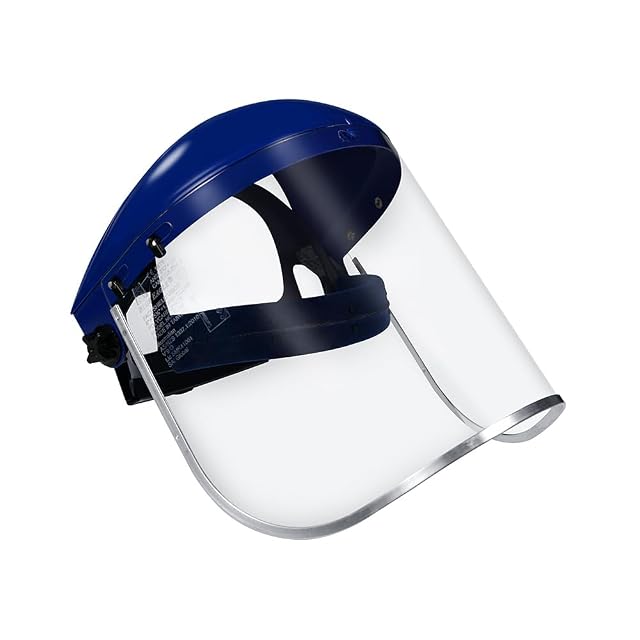
Blue Eagle polycarbonate face shield with ratchet headband, product photograph

Blue Eagle B1BL+FC48 face shield with spare visor

The one piece of protective equipment turning genuinely requires, and the only item here that names every standard it meets.

Visor
Extruded polycarbonate
Standards
ANSI Z87.1, CE EN ISO 16321-1, CSA Z94.3, AS/NZS 1337.1, UKCA
Impact
6 mm (0.24 in) steel ball at 432 km/h, from −23 °C (-9 °F) to +50 °C (122 °F)
Edge
Aluminum reinforced
Headband
Ratchet adjustment
Supplied with
1 spare visor
Origin
Made in Taiwan
Part number
B1BL+FC48
Amazon reference
B08QRQQ5CH (identical on 6 markets)
EAN
4711103670040
  • Five named standards, with the impact test conditions published
  • A spare visor in the box, which is the part that gets scratched
  • A shield is not eye protection — safety glasses still go on underneath

Best for: Bowl turning, where a piece coming off the chuck arrives at face height

≈ $24
Check price on Amazon
Specifications

Visor
Extruded polycarbonate
Standards
ANSI Z87.1, CE EN ISO 16321-1, CSA Z94.3, AS/NZS 1337.1, UKCA
Impact
6 mm (0.24 in) steel ball at 432 km/h, from −23 °C (-9 °F) to +50 °C (122 °F)
Edge
Aluminum reinforced
Headband
Ratchet adjustment
Supplied with
1 spare visor
Origin
Made in Taiwan
Part number
B1BL+FC48
Amazon reference
B08QRQQ5CH (identical on 6 markets)
EAN
4711103670040

Every figure below is a manufacturer specification read off the listing itself. The judgments are ours.

What the specification says

An extruded polycarbonate visor with an aluminum-reinforced edge and a ratchet headband, tested to ANSI Z87.1, CE EN ISO 16321-1, CSA Z94.3, AS/NZS 1337.1 and UKCA. The impact figure quoted is a 6 mm (0.24 in) steel ball at 432 km/h, held from −23 °C (-9 °F) to +50 °C (122 °F). One spare visor is included. Part number B1BL+FC48.

A listing that states its evidence

Most protective equipment listings on this site claim a benefit and leave the test unstated. This one names five standards, the projectile, its speed and the temperature range it was held at. Whether or not you check any of them, a manufacturer that publishes the conditions is making a claim that can be tested, and that is worth something on its own.

The spare visor is the point

A polycarbonate visor scratches. Dust, a wipe with a dry cloth, and a season of turning leave it hazy enough to be a distraction, and a distraction at the lathe is its own hazard. Shipping a second visor turns a consumable into a two-year purchase.

Saws this fits

What comes up most often

Why is a shield necessary for turning specifically?

Because the workpiece is unrestrained and spinning, and if a bowl blank splits or comes off the chuck it leaves at the speed of the rim, on a line through your face. Nothing else in a workshop presents that particular risk. Safety glasses cover the eyes; a shield covers the jaw, the nose and the temples too.

Do I still need glasses underneath?

Yes. A face shield deflects large impacts and leaves a gap all round the edge, so dust and small chips travel underneath it freely. The two are complementary rather than alternative, and the standards a shield is tested against assume eye protection is also worn.

All safety gear