Skip to content

The best router for a table, and for the hand

Buy the wrong router for a table and you will spend the next decade lying on the floor with a torch. The specifications that matter differ completely between the two uses.

For a table

Above-table height adjustment and bit changes. Without them, every fine adjustment means reaching underneath against a spring, which in practice means you stop making fine adjustments.

For the hand

A fine-adjust parallel fence and a template guide adapter. Those two turn freehand routing into accurate routing, and bought separately they cost a meaningful fraction of the router.

The second router

A €57 plunge router with a dedicated flush-trim bit left in it saves more time than it costs. This is the one category where the cheap machine has a permanent job.

Which saw fits your shop?

The router will live in the table
Choose one that adjusts from above, because reaching under a table for every setting is what makes a table unpleasant to use.
You also want to use it handheld
A kit with two bases is more practical than moving one motor in and out of a plate.
You use large panel-raising cutters
You need a large collet and low speeds, and that means a bigger motor.
You mostly cut small profiles
A compact router is easier to handle and adjusts more finely.

Picking by the cut you need

Edge profiles

The commonest table use. Bearing-guided cutters and a fence set flush make this straightforward.

Grooves and rebates

Where the fence does the work and repeatability matters. A fine height adjuster is what makes this pleasant.

Large panel cutters

Demands a big collet, low speed and real power. Not every router in a table can do this safely.

Small joinery

Box joints, splines and tenons with jigs. Here the accuracy of the height setting decides everything.

What matters once the blade is turning

Above-table height adjustment
The difference between a table you use and one you avoid. Reaching underneath for every fine adjustment gets old within one project.
Collet size and quality
A larger collet takes bigger cutters and grips better. A worn or cheap collet lets a cutter creep down mid-cut, which is dangerous.
Variable speed
Large diameter cutters must run slower. A router without speed control cannot use them safely, whatever its power.
Soft start
A powerful router mounted in a table jumps at switch-on. Soft start is a comfort feature that is also a safety one.
Plate compatibility
The mundane detail that decides whether the router fits your table at all. Check before buying, not after.

Which figure for which cut

Your workThe routerWhy
Small profilesCompact routerFiner control, easier handling
Panel cuttersLarge collet, low speedBig cutters need slow speed
Table onlyAbove-table adjustmentThe daily difference
Table and handheldA two-base kitAvoids constant remounting

Where it goes wrong in the shop

Running large cutters at full speed
Rim speed rises with diameter. A big cutter at maximum speed is dangerous and burns the work; the speed chart exists for a reason.
Bottoming the cutter in the collet
The shank should be inserted almost fully but not bottomed out, so the collet grips the shank and not the shoulder. Getting this wrong is how cutters slip.
Taking the whole profile in one pass
Several light passes give a better finish and load the router far less. It also reduces the chance of the workpiece being snatched.
Routing the wrong direction
Feeding with the rotation lets the cutter climb and pull the work out of your hands. Direction is not a matter of preference.

By the woodworker you are

The table-only user
Above-table adjustment, variable speed and a large collet. Everything else is secondary.
The dual user
A kit with a plunge base and a fixed base: one for handheld work, one left in the table.
The small-scale worker
A compact router covers most edge profiles and is far easier to control.

Blades, alignment and working life

A router is kept in service by a clean collet and clean cutters. Resin on a cutter makes it burn and the burning is blamed on the router, and a dirty collet is what lets a cutter creep during a pass.

  • Clean the collet and the cutter shank before every mounting.
  • Replace a collet that shows scoring or no longer grips firmly.
  • Remove pitch from cutters rather than assuming they are blunt.
  • Keep the motor's air vents clear: routers in tables run in a dust box.

Safety

A high-speed cutter in a table, with the workpiece pushed past it by hand.

  • Feed against the rotation, never with it.
  • Use push blocks and a guard, and never trap the work between fence and cutter on a through cut.
  • Set the speed to suit the cutter diameter every time you change cutters.
  • Unplug before changing a cutter; a table hides the switch and the moment of doubt.

Prices quoted in this text were read on 2026-08-12. The live price is at the top of the page.

Our picks, and the case for each

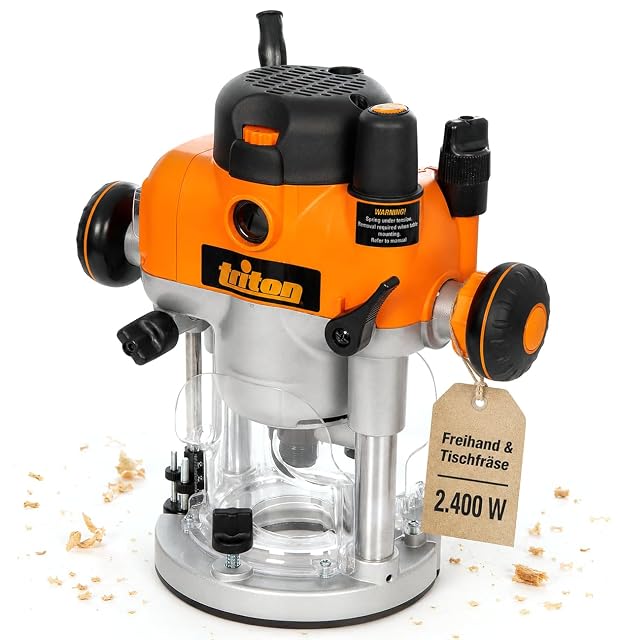
  1. Triton TRA001

    2,400 W · dual function · table-ready

    The router built to live under a table: 2,400 W, above-table height adjustment, and the reason most home-made router tables have a Triton in them.

    Best for: A router table — this is the machine the category is built around
    8.1/10

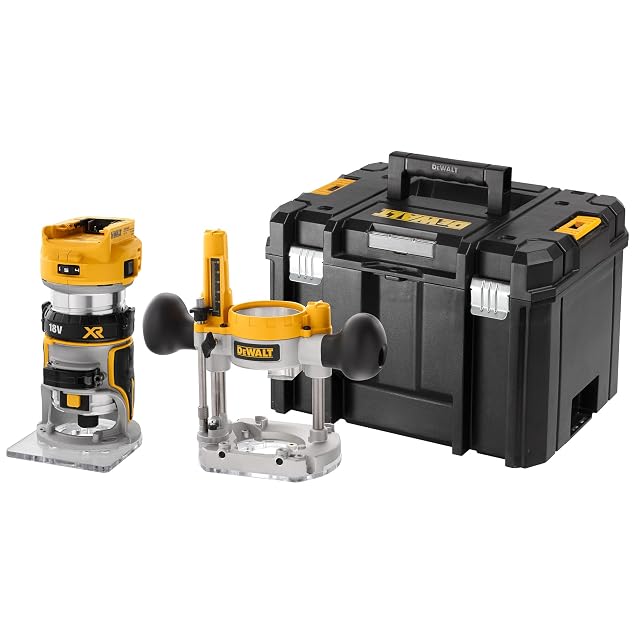
  2. DeWalt DCW604NT

    18 V cordless · plunge or trim base · brushless

    The cordless router, in both bases, with a brushless motor — and a genuinely different tool from every mains machine on this page.

    Best for: Edge trimming, hinge recesses and template work, especially away from a bench

    8.4/10

    ≈ $790

What comes up most often

Why does collet size matter more than power?

Because a large bit on a small shank deflects under load — which chatters the profile and, occasionally, snaps. Bits over about 40 mm (1.57 in) want a 1/2 inch collet and a slow speed.

Do I need variable speed?

If you own large bits, yes. Rim speed follows diameter, and a big panel bit at full speed burns the timber and overloads the bearing.

Does the router need above-table adjustment?

Not strictly, but it is the difference between a table you use and one you avoid. Reaching under for every setting becomes tedious very fast.

What collet size should I look for?

The larger one your work needs: bigger cutters need bigger shanks, and a larger collet grips more securely.

Why did my cutter slip down?

Usually a dirty or worn collet, or a shank bottomed out against the shoulder. Both are avoidable and both are dangerous.

Which way do I feed the work?

Against the cutter's rotation. Feeding with it lets the cutter climb and snatch the workpiece out of your hands.

Can I use my handheld router in a table?

Often yes, if a plate exists for it. The question is whether adjusting it from underneath will stop you using the table.

Each saw, and the cut it was bought for

Triton TRA001

For cutting: A router table — this is the machine the category is built around
Where it shines: 2,400 W, the most powerful router on this page by a wide margin

Where it disappoints: Heavy and large for handheld use

Read the full review →

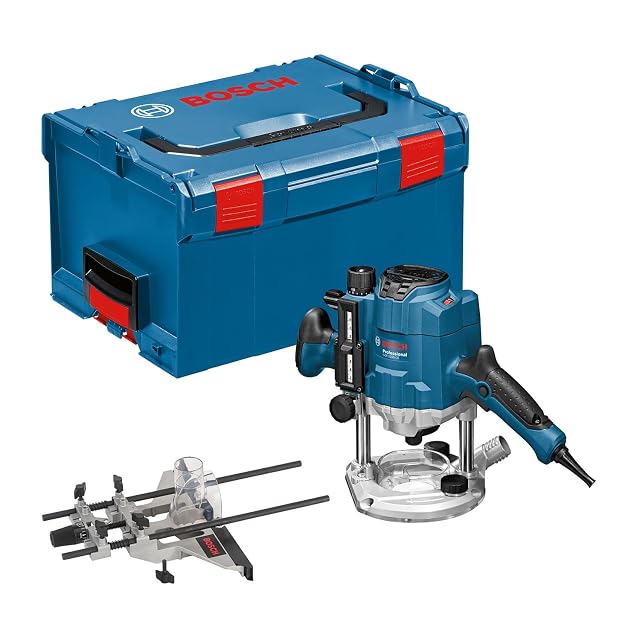
Bosch Professional GOF 1250 CE

For cutting: A workshop that wants a professional router working properly on day one

Where it shines: Parallel fence with fine adjustment included, which is the accessory that decides accuracy

Where it disappoints: The listing publishes no motor rating, collet size or speed range

Read the full review →

DeWalt DCW604NT · $790

For cutting: Edge trimming, hinge recesses and template work, especially away from a bench

Where it shines: Both bases in one product — plunge work and edge trimming without two machines

Where it disappoints: 6–8 mm (0.24 to 0.31 in) collet: small bits only, and no upgrade path

Read the full review →

What else the cut needs

Blades, inserts and spares from the same aisle, at the price we recorded. Check they fit the saw you pick before ordering: it depends on the bore and the part number, which the listing states.

The quick cut

Pairings that settle the choice

Saw against saw, where the comparison already exists in this guide or this aisle.

How this selection was built

The saws above are drawn from the catalog of this site. Specifications are the published ones, from the maker and from the Amazon product page; prices are the Keepa figure for the date below, and both shift. Ranking uses declared specifications, the balance of stated strengths and stated limits, and price. No machine here has cut wood for us, and the page claims nothing else.

Last checked on

The tool we use ourselves

Chosen your machine? Now buy it at the right price.

Table saws and planers swing by a hundred dollars or more across the year, and the biggest "discounts" often land at prices the same model sold for six weeks earlier. UniverTrack tracks the real price history across retailers, spots fake reductions, and alerts you when it is genuinely the moment to buy.

Real price historyBuy-now alertsAI buying assistant
Try free for 14 days →
No commitment · Cancel in one click · 5 languages