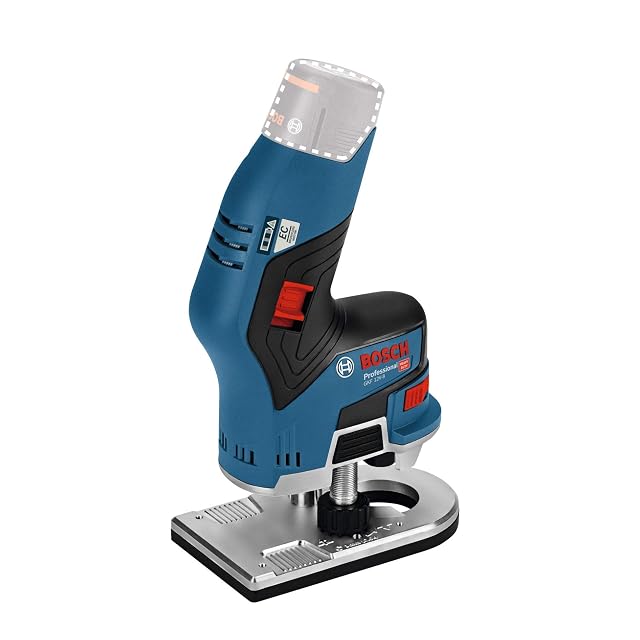
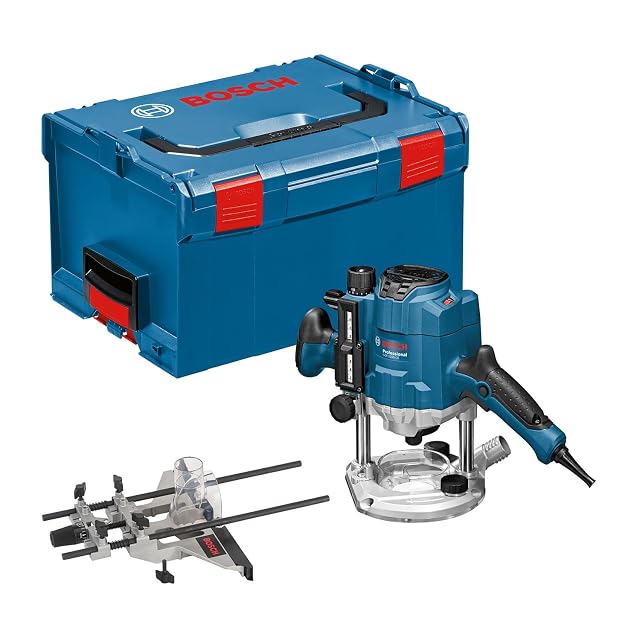
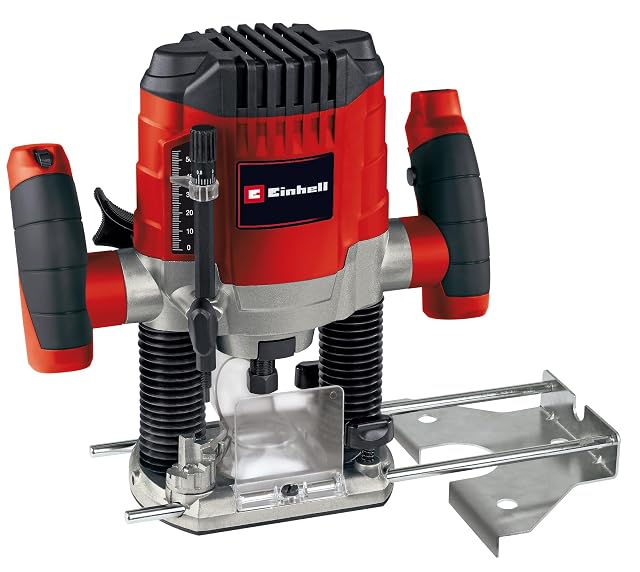
The end of it An excellent second router and a poor only one. The cord you are not fighting is worth more than it sounds.
Every figure is a manufacturer specification, read off the
listing itself, and the judgments are ours — drawn from how the
specification behaves in this class of machine and from what long-term
owners consistently report. Where a figure is missing, we say so rather
than fill it in.
What the specification says
18 V battery power, brushless motor, usable as a plunge router or a trim router,
6–8 mm (0.24 to 0.31 in) tool holder. Part number DCW604NT-XJ.
What losing the cord actually changes
Two things, both about work rather than convenience. On template routing the
cord is the part that catches the workpiece, drags the template or pulls the
machine off line at the end of a pass. And on a hinge recess in a door already
hanging, a cordless trim router is the difference between doing the job and
taking the door off.
The collet is the boundary
6–8 mm (0.24 to 0.31 in) takes flush-trim cutters, roundovers, small straight bits and guide-bush
work. It does not take a panel-raising bit and never will. That is not a fault
in a trim router — it is the definition of one — but it does mean this machine
sits alongside a bigger one rather than replacing it.
Big bit, slow speed — the rule nobody prints on the box
A router bit’s danger and its cut quality both follow rim speed, not
motor speed. A 12 mm (0.47 in) straight bit at 24,000 rpm and a 50 mm (1.97 in) panel-raising
bit at 24,000 rpm are not doing the same thing: the rim of the large bit
is traveling several times faster, which burns the timber, loads the
bearing and — on a bit not rated for it — is how they come apart.
Large-diameter bits must be run slower. That is what electronic speed
control is for, and it is the reason a variable-speed router is not a
convenience but a requirement once you own bits over about 40 mm (1.57 in).
Availability
Read on the day this page was built: $790 at the American Amazon shop.
Read from Keepa on the day this page was last revised; stock and price both move without notice.
Prices quoted in this text were read on 2026-08-12. The live price is at the top of the page.
The good side, and the catch
Strengths
Both bases in one product — plunge work and edge trimming without two machines
No cord, which on template and edge work removes the thing most likely to snag
Brushless, so there are no brushes to replace
Compromises
6–8 mm (0.24 to 0.31 in) collet: small bits only, and no upgrade path
Battery not necessarily included — check the listing before ordering
Specifications
Power
18 V battery, brushless motor
Bases
Usable as plunge router or trim router
Collet capacity
6–8 mm (0.24 to 0.31 in)
Part number
DCW604NT-XJ
Amazon reference
B07R6TR7X6 (identical on 6 markets)
EAN
5035048711804
What comes up most often
Is this the DW625E?
No. We searched for the DW625E and the listing returned carries part number DCW604NT-XJ — a cordless combi router, a different machine entirely. We write up what the reference actually sells rather than the model we went looking for.
Does the collet size disqualify it?
It defines it. 6–8 mm (0.24 to 0.31 in) means small bits: flush trim, roundover, small straight cutters, hinge recesses. That is most of what a router does day to day, and none of what a router table does. Treat it as a second router, not a first one.
Where this model is listed
A listing is not an offer: the reference exists on these stores, availability changes daily.
France
Germany
Italy
Spain
United Kingdom
United States
Our score
8.4/ 10
An excellent second router and a poor only one. The cord you are not fighting is worth more than it sounds.
Who buys this one, among woodworking machines
Edge trimming, hinge recesses and template work, especially away from a bench
Specifications: the manufacturer sheet for woodworking machines and the matching Amazon product page. Prices and availability: Keepa. Every figure on this page names its source.