Skip to content

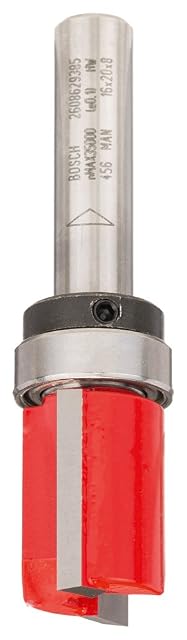
Bosch Expert for Wood flush trim, Ø 16 mm

The one bit that turns a router into a copying machine. Make the template once, cut the part as often as you like.

Bosch flush trim router bit with bearing, product photograph

Bosch Expert for Wood flush trim, Ø 16 mm

The one bit that turns a router into a copying machine. Make the template once, cut the part as often as you like.

Cutting diameter
16 mm (0.63 in)
Working length
20 mm (0.79 in)
Overall length
60 mm (2.36 in)
Guide
Bearing
Part number
2608629385
Amazon reference
B00SJ8XU70 (identical on 6 markets)
EAN
3165140802321
  • Bearing-guided, so the template does the steering
  • One reference and one EAN across all six markets
  • 20 mm (0.79 in) working length limits the thickness you can trim in one pass

Best for: Copying a shape repeatedly — templates, patterns, repairs to matching parts
Check price on Amazon

Specifications

Cutting diameter
16 mm (0.63 in)
Working length
20 mm (0.79 in)
Overall length
60 mm (2.36 in)
Guide
Bearing
Part number
2608629385
Amazon reference
B00SJ8XU70 (identical on 6 markets)
EAN
3165140802321

Every figure below is a manufacturer specification read off the listing itself. The judgments are ours.

What the specification says

Ø 16 mm (0.63 in) cutting diameter, 20 mm (0.79 in) working length, 60 mm (2.36 in) overall, bearing guided. Part number 2608629385.

Why this is the bit to own

Almost every repeatable shape in woodworking comes from a template and a flush trim bit. Curved chair parts, matching drawer fronts, a replacement for a broken component — make the pattern once in MDF, and the router copies it exactly, as many times as needed.

Saws this fits

What comes up most often

How does a flush trim bit work?

The bearing on the end of the bit is exactly the same diameter as the cutter. Run the bearing along a template stuck to your workpiece and the cutter removes everything proud of it. The template can be MDF, the part can be oak, and every copy is identical.

What if my workpiece is thicker than 20 mm (0.79 in)?

Take it in two passes, flipping the work and running the bearing on the freshly cut edge for the second. That is standard practice and it is why the working length limits convenience rather than capability.

All router bits