Scribing set · cased
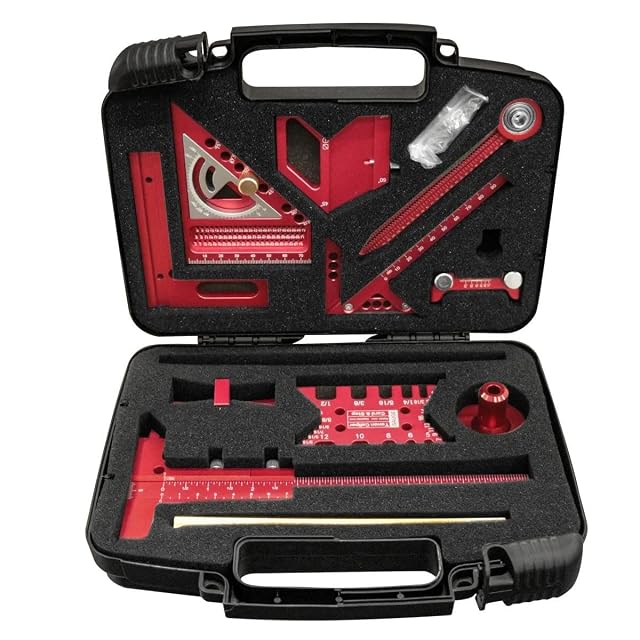
CCIEAO A01-2508-HZ scribing set, 10 piece
Ten pieces, a storage box, and a sharpening tool in a measuring kit — and not one item identified.
Specifications
- Contents
- 10 pieces, from the title · None is named individually · Stated to include rulers, gauges, scribing tools and sharpening equipment
- Material
- Aluminum alloy, CNC machined, with laser-engraved scales
- Case
- A lightweight storage box · No dimensions published
- Graduations
- Laser engraved, stated for long-term accuracy · No system, range or tolerance published
- Scale origin
- Not published by the maker.
- Stated use
- Measuring, marking, layout design and sharpening
- Part number
- A01-2508-HZ
- Amazon reference
- B0FMNMK5G5
- EAN
- 0659381134974
Every figure below names its source. Each one is a manufacturer
specification read off the listing itself. The judgments are ours.
Ten pieces, none named
Rulers, gauges, scribing tools and sharpening equipment. Ten of them.
That is the whole of the product information on this page.
The shuicui set beside it on this shelf names three of its nine or ten, and
cannot agree on the count. This one is certain about the count and silent about
everything else.
For a kit, the contents list IS the specification. Choosing between two cased
sets is choosing between two lists, and here there is a line of categories.
Sharpening equipment, in a layout kit
Unusual, and defensible.
A scriber and a marking knife both have points, and a blunt point tears the
fibers instead of cutting them — which is the exact failure the published Stubai
pin gauge on this shelf is criticized for.
So something to touch up a point belongs with the tools that have points.
What the listing does not say is whether it is a stone, a diamond plate or a
file. Those are three different things.
Laser engraved
Which is worth the distinction from printed.
A printed scale on aluminum wears off under a thumb and a rag; an engraved one
is a groove in the metal and survives the shop.
The published digital angle gauge on this shelf has the opposite kind of
durability problem in its cons — a magnet on a cast table picks up steel dust —
and both are the sort of thing that only shows after a year.
And no case size
The shuicui set here publishes 290 by 220 by 90 millimeters.
On a page with no dimensions, no tolerances and no contents list, the case size
would have been the most useful figure available.
A set whose box does not fit the drawer gets emptied into the drawer, and then
the box is what is taking up the space.
Availability
Read on the day this page was built: $70 at the American Amazon shop.
Read from Keepa on the day this page was last revised; stock and price both move without notice.
Prices quoted in this text were read on 2026-10-07. The live price is at the top of the page.
What comes up most often
What is in it?
The listing says rulers, gauges, scribing tools and sharpening equipment, and it says ten. It does not say which ten. That is the whole of the page's product information, and it is the difference between this and the shuicui set beside it on this shelf, which names three of its nine or ten. For a kit, the contents list is the specification — a buyer choosing between two cased sets is choosing between two lists, and here there is one line of categories instead.
Sharpening equipment in a measuring kit?
Unusual, and defensible. A scriber and a marking knife both have points that blunt, and a blunt scriber tears the fibers instead of cutting them — which is the same failure the published Stubai pin gauge on this shelf is criticized for. So something to touch up a point belongs with the tools that have points. What the listing does not say is what the sharpening item is: a stone, a diamond plate, a file. Those are three different things with three different uses.
Why does the missing case size matter?
Because it is the one figure that decides where a cased set can live, and the shuicui set on this shelf publishes it — 290 by 220 by 90 millimeters. A set whose box will not fit the drawer gets emptied into the drawer, and then the box is the thing taking up space. On a page with no dimensions, no tolerances and no contents list, the case size would have been the most useful number available.