Skip to content

Clarke Brothers RIV001 wheel marking gauge

A wheel severs the fibers where a pin tears them — which is the complaint the published gauge on this shelf already carries.

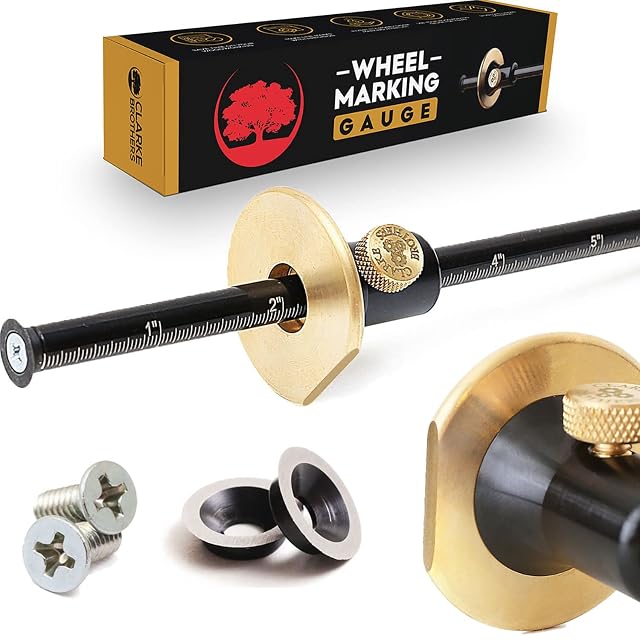
Clarke Brothers wheel marking gauge in brass and steel with spare cutters, product photograph

Clarke Brothers RIV001 wheel marking gauge

A wheel severs the fibers where a pin tears them — which is the complaint the published gauge on this shelf already carries.

Cutter
A hardened steel wheel · Two spare wheel cutters supplied
Bar
Graduated to 6 in and 150 mm (5.91 in), laser engraved, in both systems
Overall length
8 in — 203 mm
Fence
A roll-stop fence with a flat spot, stated patent pending, so the gauge does not roll off the bench · A non-marring brass face
Materials
Solid brass, steel and aluminum alloy, stated corrosion resistant
Operation
Stated one-handed and balanced
Part number
RIV001
Amazon reference
B07FWS5T1L
EAN
0670875893429
  • A wheel cuts the fibers where a pin tears them across the grain
  • Two spare cutters, which a wheel needs and a pin does not
  • A wheel leaves a line that cannot be erased

Best for: Tenon shoulders, mortice walls and dovetail baselines, marked once and cut to

≈ $25
Check price on Amazon

Specifications

Cutter
A hardened steel wheel · Two spare wheel cutters supplied
Bar
Graduated to 6 in and 150 mm (5.91 in), laser engraved, in both systems
Overall length
8 in — 203 mm
Fence
A roll-stop fence with a flat spot, stated patent pending, so the gauge does not roll off the bench · A non-marring brass face
Materials
Solid brass, steel and aluminum alloy, stated corrosion resistant
Operation
Stated one-handed and balanced
Part number
RIV001
Amazon reference
B07FWS5T1L
EAN
0670875893429

Every figure below names its source. Each one is a manufacturer specification read off the listing itself. The judgments are ours.

A wheel, not a pin

The published Stubai double gauge on this shelf is a pin gauge, and its own page carries the argument against it: a pin tears across the grain where a knife or a wheel would sever cleanly.

A pin pushed across the fibers drags them instead of cutting, so the line wanders into the grain — and a chisel dropped into that line follows the wander.

A wheel is a tiny circular knife. It severs.

What the pin keeps is permanence: it never needs sharpening. Which is why this listing supplies two spare wheels and the pin gauge supplies none.

A flat on a round fence

A wheel gauge has a round fence so it can register on a curve as well as a flat.

A round fence on a bench rolls. Off the edge, onto the floor, and the wheel is what lands.

A machined flat on the circumference holds it still. It costs two minutes at the factory, it is the only one on either half of this shelf, and the listing calls it patent pending.

Six inches, graduated, both ways

Which turns the gauge from a transferred setting into a recoverable one.

A traditional gauge is set against the work or against a rule and tightened — accurate, and gone six months later. A graduated bar means a mortice set at 9 mm (0.35 in) is set at 9 mm (0.35 in) again next year.

The published Stubai page here is praised for the same thing: a millimeter scale on the beam, which most traditional gauges omit.

And the line is permanent

A knife or a wheel line cuts into the surface. A pencil line can be erased; this cannot.

The published Kirschen marking knife page on this shelf says it plainly in its cons: mark wrongly and it shows in the finish.

That is the price of a line a chisel can drop into, and it is the right price to pay on a shoulder that has to fit.

Availability

Read on the day this page was built: $25 at the American Amazon shop.

Read from Keepa on the day this page was last revised; stock and price both move without notice.

Prices quoted in this text were read on 2026-10-07. The live price is at the top of the page.
What comes up most often

Wheel or pin?

A wheel, for anything cut to a line. The published Stubai double gauge on this shelf is a pin gauge and its own page carries the reason: a pin tears across the grain where a knife or a wheel would sever cleanly. A pin pushed across the fibers drags them rather than cutting, so the line wanders into the grain and a chisel follows it. A wheel is a tiny circular knife and severs. What a pin keeps is durability — it never needs sharpening, which is why this listing includes two spares and the pin gauge includes none.

What is the flat spot for?

Stopping the gauge rolling. A wheel gauge has a round fence because a round fence registers on a curve as well as a flat, and a round fence on a bench rolls — off the edge, onto the floor, and the wheel is what lands. A machined flat on the circumference holds it still. It is a two-minute change at the factory and the only one of its kind on either half of this shelf, and the listing calls it patent pending, which says somebody thought it was worth owning.

Why does a graduated bar matter?

Because it turns the gauge into a repeatable setting rather than a transferred one. A traditional gauge is set by holding it against the work or against a rule and tightening the thumbscrew — accurate, and not recoverable six months later. A bar graduated to 6 inches and 150 mm (5.91 in) means a mortice set at 9 mm (0.35 in) can be set at 9 mm (0.35 in) again. The published Stubai page on this shelf is praised for exactly this: a millimeter scale on the beam, which most traditional gauges omit.

All measuring & marking