Skip to content

BFZRDT 150 mm hook-and-loop discs, 15 hole, 50 pack

Fifty discs for €20 — and a hole pattern that either lines up with your sander pad or throws dust straight into the room.

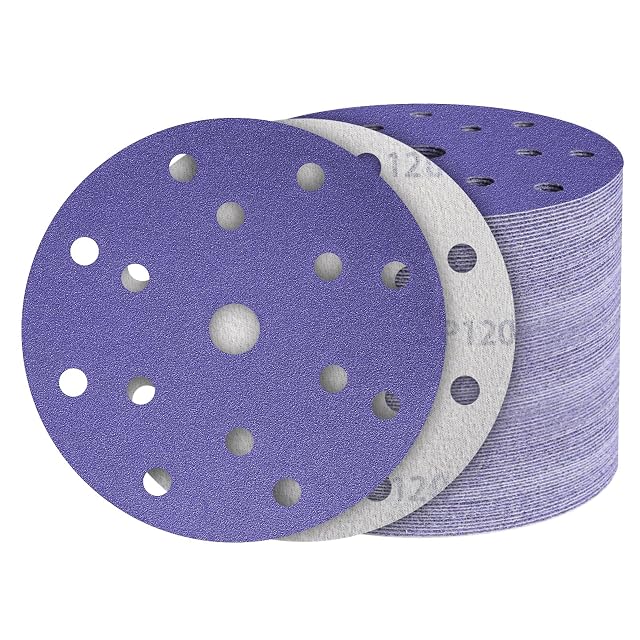
Fifty 150 mm hook-and-loop sanding discs with fifteen holes, product photograph

BFZRDT 150 mm hook-and-loop discs, 15 hole, 50 pack

Fifty discs for €20 — and a hole pattern that either lines up with your sander pad or throws dust straight into the room.

Diameter
150 mm (5.91 in)
Holes
15
Backing
Hook and loop
Abrasive
Ceramic alumina
Quantity
50
Grits
Mixed — the listing does not say which
Part number
150Z-YPS-MixGrit
Availability
No EAN published — other markets could not be verified
Amazon reference
B0FZTWK114
  • Ceramic alumina cuts harder and lasts longer than plain aluminum oxide
  • An anti-clog coating, which is where discs usually die on resinous softwood
  • The listing never states which grits are in the mixed pack

Best for: A 150 mm (5.91 in) random orbital sander whose pad has a matching fifteen-hole pattern

≈ $20
Search Amazon for this model
Specifications

Diameter
150 mm (5.91 in)
Holes
15
Backing
Hook and loop
Abrasive
Ceramic alumina
Quantity
50
Grits
Mixed — the listing does not say which
Part number
150Z-YPS-MixGrit
Availability
No EAN published — other markets could not be verified
Amazon reference
B0FZTWK114

Every figure below is a manufacturer specification read off the listing itself. The judgments are ours.

What the specification says

Ø 150 mm (5.91 in), 15 extraction holes, hook-and-loop backing, ceramic alumina abrasive, 50 discs, mixed grits. Part number 150Z-YPS-MixGrit. No EAN on the listing.

Match the pattern, not the diameter

Six-hole, eight-hole, nine-hole, fifteen-hole and multi-hole pads all exist at 150 mm (5.91 in), and a disc that fits the pad perfectly can still block every extraction port. Count the holes on your sander before ordering fifty of anything. A pad with more holes than the disc still extracts, badly; a disc with holes in the wrong places extracts not at all.

Ceramic against aluminum oxide

Ceramic grain fractures as it wears and keeps presenting a fresh edge, which is why it stays cutting when a conventional grain has rounded off. It costs more per disc and returns it in disc life, particularly on hardwood and on filler.

Availability

Read on the day this page was built: $20 at the American Amazon shop.

Read from Keepa on the day this page was last revised; stock and price both move without notice.

Prices quoted in this text were read on 2026-08-12. The live price is at the top of the page.

What comes up most often

Does the hole pattern really matter?

Yes, and it is the single most common mismatch in this category. Extraction only works where a hole in the disc sits over a hole in the pad. Get the pattern wrong and the dust stays under the disc, which clogs the abrasive, scratches the surface with its own grit, and puts the fine fraction into the air instead of the extractor.

Is a mixed grit pack worth buying?

Only if you know what is in it. A sanding progression works because each grit removes the scratches of the one before, and a pack that jumps two steps leaves marks you will not see until the finish goes on. This listing does not publish the grits, so treat it as a way of finding out which ones you use rather than as a planned progression.

All abrasives