Skip to content

POWERTEC 70125-P2 pipe-to-hose adapter, 2 pack

The one fitting on this shelf that publishes all four of its diameters — which is the whole of what a nominal size hides.

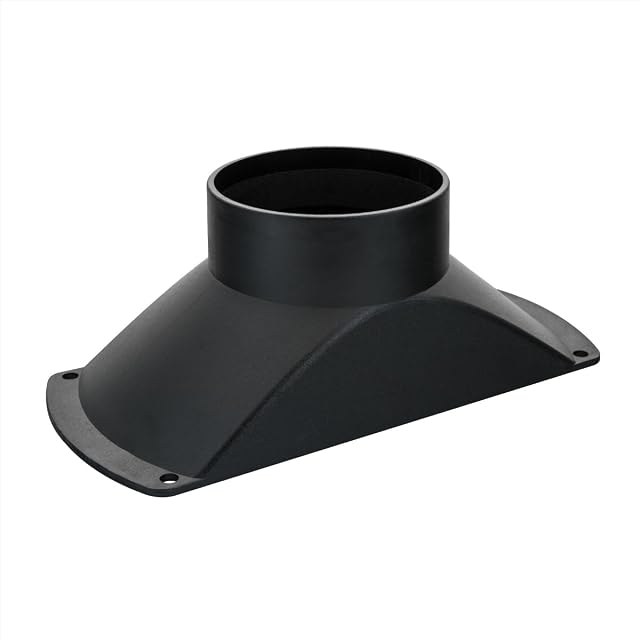
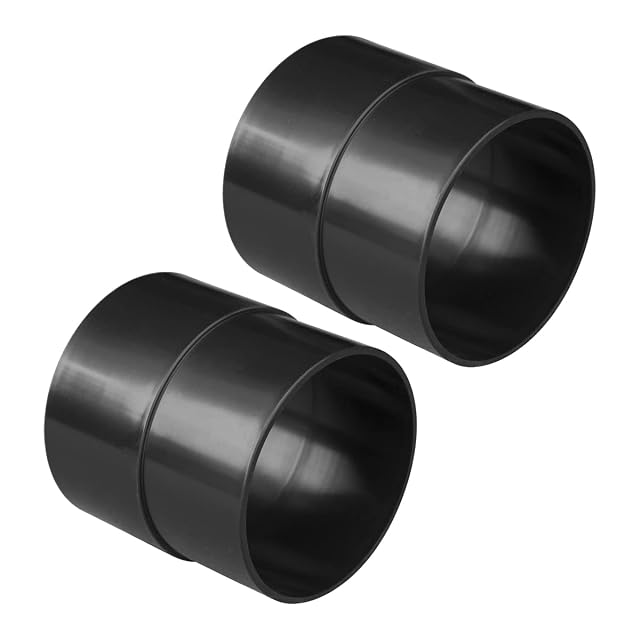
POWERTEC 70125 pipe to hose dust adapters, pair, product photograph

POWERTEC 70125-P2 pipe-to-hose adapter, 2 pack

The one fitting on this shelf that publishes all four of its diameters — which is the whole of what a nominal size hides.

Nominal size
4 in
Narrow end
4 in outer diameter and 3-49/64 in inner — 101.6 and 95.6 mm (3.76 in), stated to fit inside a 4 in ID hose
Large end
4-7/32 in outer diameter and 3-31/32 in inner — 107.2 and 100.8 mm (3.97 in), stated to fit over a 4 in OD port or fitting
Function
Pipe to hose, stated to make switching from one machine to another quick · Stated for use with Y-pieces, T-pieces, elbows and blast gates
Material
Non-threaded all-black ABS
Quantity
2 adapters
Part number
70125-P2
Amazon reference
B0B8SFNDGP
EAN
0843441119586
  • Publishes four diameters, which no other fitting on either half of this shelf does
  • One male end and one female end, so it joins a hose to a port rather than a hose to a hose
  • No wall thickness, where the Taytools Y on this shelf publishes 1/8 in

Best for: Joining a 4 inch duct run to a 4 inch flexible hose, at every machine in a ducted shop

≈ $18
Check price on Amazon

Specifications

Nominal size
4 in
Narrow end
4 in outer diameter and 3-49/64 in inner — 101.6 and 95.6 mm (3.76 in), stated to fit inside a 4 in ID hose
Large end
4-7/32 in outer diameter and 3-31/32 in inner — 107.2 and 100.8 mm (3.97 in), stated to fit over a 4 in OD port or fitting
Function
Pipe to hose, stated to make switching from one machine to another quick · Stated for use with Y-pieces, T-pieces, elbows and blast gates
Material
Non-threaded all-black ABS
Quantity
2 adapters
Part number
70125-P2
Amazon reference
B0B8SFNDGP
EAN
0843441119586

Every figure below names its source. Each one is a manufacturer specification read off the listing itself. The judgments are ours.

Four diameters, on one part

Narrow end: 4 in outside, 3-49/64 in inside.

Large end: 4-7/32 in outside, 3-31/32 in inside.

The two ends do opposite jobs. The narrow one is a male spigot that goes inside a four-inch-internal hose; the large one is a female socket that goes over a four-inch-external port.

So one part turns a hose into a port and a port into a hose — which is the conversion a branched duct needs at every machine.

No other fitting on either half of this shelf publishes more than one diameter.

Why nominal is not a measurement

A four-inch fitting is not four inches anywhere on it.

The POWERTEC listings on this shelf publish the actual figures: a four-inch nominal end measures 3-31/32 in across the outside and 3-39/64 in across the inside — 100.8 mm (3.97 in) and 91.7 mm (3.61 in). The difference between those two is the wall, and the difference between one maker’s outside and another’s inside is the leak.

That is what the shelf’s own intro means by the adaptors that never quite fit. Nominal sizing is a naming convention; the join is decided by the sixty-fourths.

And this part proves it

Within one four-inch-nominal fitting: 3-49/64, 3-31/32, 4, and 4-7/32 inches.

A fitting from another maker whose outside measures 4-1/16 will not enter this one’s socket, and nothing on either label would have said so.

Two of them

Which is the right quantity, because a ducted shop needs one at each end of every flexible drop.

The published Y-piece on this shelf comes with three hose clamps. This comes with none, and the listing says non-threaded — so the joint is a friction fit and a worm-drive clamp is the missing part.

On a four-inch duct a loose joint is not a leak. It is an open inlet, and the system draws from the room instead of the machine.

Availability

Read on the day this page was built: $18 at the American Amazon shop.

Read from Keepa on the day this page was last revised; stock and price both move without notice.

Prices quoted in this text were read on 2026-10-07. The live price is at the top of the page.
What comes up most often

Why four diameters on one part?

Because the two ends do opposite jobs. The narrow end is a male spigot — 4 in across the outside — that goes inside a four-inch-internal hose. The large end is a female socket — 3-31/32 in across the inside — that goes over a four-inch-external port. So one part converts a hose into a port and a port into a hose, which is precisely the conversion a branched duct run needs at every machine. Publishing all four means a buyer can check both joins before ordering, and no other fitting on either half of this shelf publishes more than one.

Does nominal four inch mean anything?

It means a family of parts intended to go together, and nothing about the dimensions. This listing shows why: within one part, four-inch nominal covers 3-49/64, 3-31/32, 4 and 4-7/32 inches. A fitting from another maker whose outside is 4-1/16 will not enter this one's socket. The published pages on the European half of this shelf give Ø 100 mm (3.94 in) and stop, and the published Y-piece page there has the consequence in its cons: a 100 mm (3.94 in) machine port cannot go on a 63 mm (2.48 in) branch.

What is still needed to make the joint?

A clamp. The listing says non-threaded, which means the joint is a friction fit held by a worm-drive hose clamp, and none is supplied. The published Y-piece on this shelf includes three clamps and its page names that as the reason the joint can actually be sealed; the Fulton blast gates here state hose clamps sold separately. On a 4 inch duct a loose joint is not a leak so much as an open inlet — the system draws air from the room instead of from the machine.

All extraction fittings