Skip to content

POWERTEC 70123V hose connector

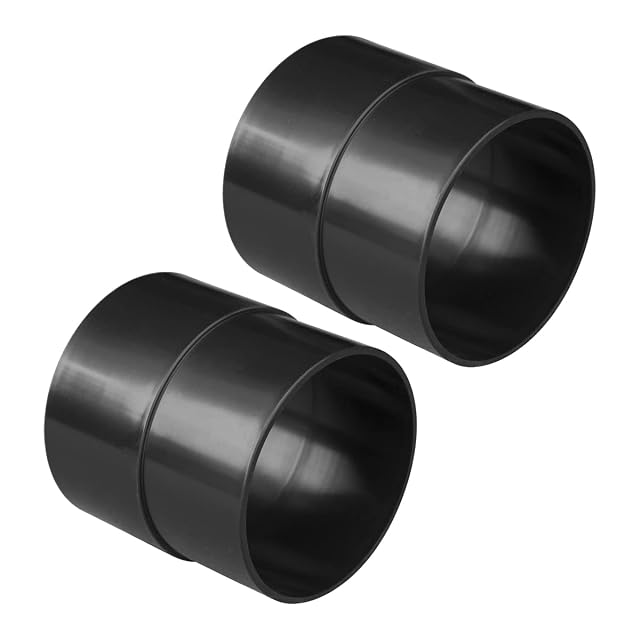
The part that makes two short hoses into one long one — tapered at both ends so it goes in without a fight.

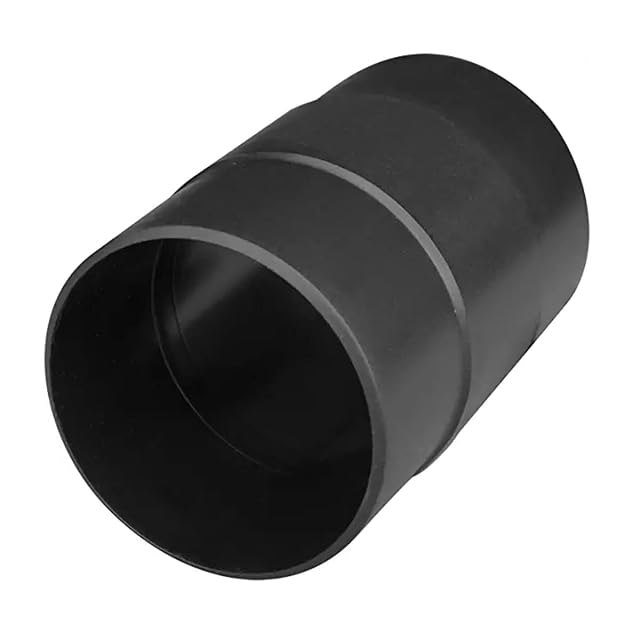
POWERTEC 70123V dust hose connector, product photograph

POWERTEC 70123V hose connector

The part that makes two short hoses into one long one — tapered at both ends so it goes in without a fight.

Nominal size
4 in, both ends
Diameters
3-31/32 in outer and 3-11/16 in inner — 100.8 and 93.7 mm (3.69 in), stated to accommodate all 4 in ID hoses
Function
A secure quick connection between two 4 in ID dust hoses, stated to extend the reach of a standard set-up
Form
Tapered ports at each end, with a raised middle section stated for easier assembly and grip
Material
ABS, stated for abrasion resistance and tensile strength
Quantity
1 connector
Part number
70123V
Amazon reference
B09VXHYDV1
EAN
0843441114000
  • Publishes both diameters, which the European half of this shelf does not
  • Tapered at both ends, so a cold hose goes on without heating it
  • Joins hose to hose only — it will not fit a machine port

Best for: Extending a four-inch hose, or repairing one that has split in the middle

≈ $10
Check price on Amazon

Specifications

Nominal size
4 in, both ends
Diameters
3-31/32 in outer and 3-11/16 in inner — 100.8 and 93.7 mm (3.69 in), stated to accommodate all 4 in ID hoses
Function
A secure quick connection between two 4 in ID dust hoses, stated to extend the reach of a standard set-up
Form
Tapered ports at each end, with a raised middle section stated for easier assembly and grip
Material
ABS, stated for abrasion resistance and tensile strength
Quantity
1 connector
Part number
70123V
Amazon reference
B09VXHYDV1
EAN
0843441114000

Every figure below names its source. Each one is a manufacturer specification read off the listing itself. The judgments are ours.

Tapered at both ends

Corrugated hose is stiff, and a straight spigot has to be forced into it — in a cold shop that means a hot-air gun or a great deal of swearing.

A tapered port enters easily and tightens as it goes, so the joint seats square instead of oval.

Four of the five POWERTEC fittings on this shelf publish a taper. The Fulton blast gates here publish one on both sides and name the same reason.

It is a detail that matters once, at assembly, and that is when it matters.

A raised middle

The listing names both jobs: easier assembly, and grip.

A smooth sleeve can be pushed too far, leaving one hose with all the overlap and the other with none. A raised band stops each hose at the same depth.

And it gives a thumb something to push against.

Nothing else on either half of this shelf publishes a stop on a splice.

Why nominal is not a measurement

A four-inch fitting is not four inches anywhere on it.

The POWERTEC listings on this shelf publish the actual figures: a four-inch nominal end measures 3-31/32 in across the outside and 3-39/64 in across the inside — 100.8 mm (3.97 in) and 91.7 mm (3.61 in). The difference between those two is the wall, and the difference between one maker’s outside and another’s inside is the leak.

That is what the shelf’s own intro means by the adaptors that never quite fit. Nominal sizing is a naming convention; the join is decided by the sixty-fourths.

Hose to hose, and nothing else

Both ends of this part are male spigots at 3-31/32 in across.

So it joins two hoses. It will not go on a machine port, and it will not go on a duct — for those, the 70125 adapter on this shelf has one end of each kind.

Two clamps are needed. Neither is in the box.

Availability

Read on the day this page was built: $10 at the American Amazon shop.

Read from Keepa on the day this page was last revised; stock and price both move without notice.

Prices quoted in this text were read on 2026-10-07. The live price is at the top of the page.
What comes up most often

Why does the taper matter?

Because corrugated hose is stiff and a straight spigot has to be forced into it, usually with a hot-air gun or a lot of swearing in a cold shop. A tapered port enters easily and tightens as it goes, which means the joint seats square instead of oval. Four of the five POWERTEC fittings on this shelf publish a taper; the Fulton blast gates here publish tapered ports on both sides and name the same reason. It is the kind of detail that only matters once, at the moment of assembly, and that is the moment it matters.

What is the raised middle for?

Two things the listing names: assembly and grip. A smooth sleeve can be pushed too far, so one hose ends up with all of the overlap and the other with none; a raised band in the center stops each hose at the same depth. And it gives a thumb something to push against, which on a four-inch hose in a cold shop is not nothing. Nothing else on either half of this shelf publishes a stop of any kind on a splice.

Should a split hose be spliced or replaced?

Spliced, usually, and the arithmetic is in the Availability section below against the cost of a hose. What a splice costs is airflow: every joint is a step change in diameter and a place for the corrugation to catch, and the published Miko hose page on this shelf makes the general point that corrugated hose has far more internal drag than smooth duct. One extra joint in the middle of a run is a small price. Three or four of them is a new hose.

All extraction fittings