Skip to content

Qucship PVC hose, 2-1/2 in × 20 ft

The only hose on this shelf that says how its static is dissipated — and what has to be done for it to work.

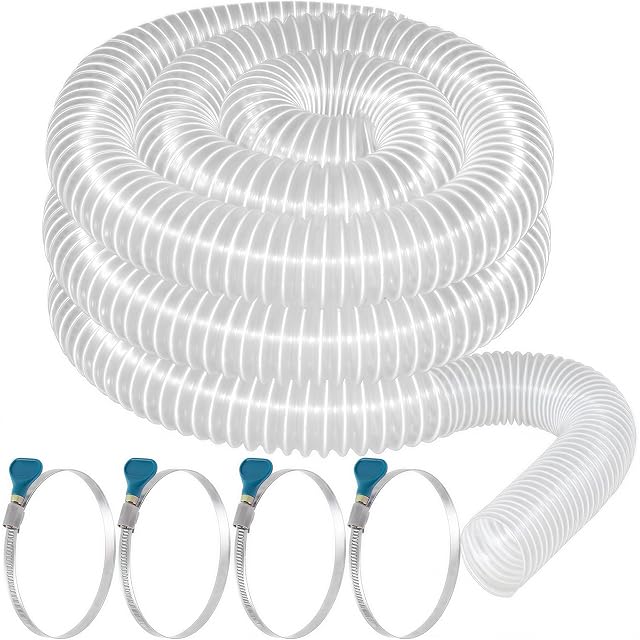
Qucship clear PVC dust collection hose with steel wire coil, product photograph

Qucship PVC hose, 2-1/2 in × 20 ft

The only hose on this shelf that says how its static is dissipated — and what has to be done for it to work.

Diameter
2-1/2 in — 64 mm
Length
20 ft fully extended — 6.1 m (20 ft)
Wall
Clear reinforced PVC, stated thickened and puncture resistant
Reinforcement
A heavy-duty carbon steel wire coil, stated to resist kinking, collapsing and deformation
Static
Stated that the wire coil helps dissipate built-up static when properly grounded at both ends — the only earthing instruction on this shelf
Compression ratio
3:1, published — it stores at about a third of its extended length
Supplied
4 stainless hose clamps with turn keys
Named machines
Table saws, planers, jointers, sanders and router tables, stated to work with matching-size collectors and shop vacuums
Part number
Not published by the maker.
Amazon reference
B0C8M5MGC4
EAN
0760532196960
  • Says what the steel coil does about static, and what is needed for it to work
  • Four stainless clamps with turn keys in the box
  • Grounding at both ends is the buyer's job, and the listing does not say how

Best for: A long run to a shop vacuum or a small collector, earthed at both ends

≈ $29
Check price on Amazon

Specifications

Diameter
2-1/2 in — 64 mm
Length
20 ft fully extended — 6.1 m (20 ft)
Wall
Clear reinforced PVC, stated thickened and puncture resistant
Reinforcement
A heavy-duty carbon steel wire coil, stated to resist kinking, collapsing and deformation
Static
Stated that the wire coil helps dissipate built-up static when properly grounded at both ends — the only earthing instruction on this shelf
Compression ratio
3:1, published — it stores at about a third of its extended length
Supplied
4 stainless hose clamps with turn keys
Named machines
Table saws, planers, jointers, sanders and router tables, stated to work with matching-size collectors and shop vacuums
Part number
Not published by the maker.
Amazon reference
B0C8M5MGC4
EAN
0760532196960

Every figure below names its source. Each one is a manufacturer specification read off the listing itself. The judgments are ours.

Grounded at both ends

The only earthing instruction on either half of this shelf, and the shelf’s own intro names static earthing as one of the things it compares.

The coil is carbon steel and will carry a charge. What it will not do is earth itself, which is why the listing says both ends.

What the listing does not say is how: a screw or clamp through to the coil, and a wire to the machine frame or an earth point.

So it is an instruction without a method, and the method is the buyer’s.

Whether it matters

At this scale, it is unpleasant rather than dangerous.

Fine dust moving down a plastic hose builds a charge, and the charge jumps to whatever is earthed — usually a hand on a machine. A dust explosion needs a concentration and a confinement a home workshop does not have.

What makes earthing worth doing is that the shocks are unpleasant enough to make people stop using the extraction. Extraction that is switched off collects nothing.

Three to one

Twenty feet storing in about seven, which is the difference between a hose on a hook and a hose in a corner.

It also means deep corrugation, and deep corrugation is drag. The published Miko hose page on this shelf puts it plainly: corrugated hose has far more internal drag than smooth duct.

Two listings on this shelf publish a compression ratio. Both publish 3:1.

Four clamps, with turn keys

In the box, in stainless.

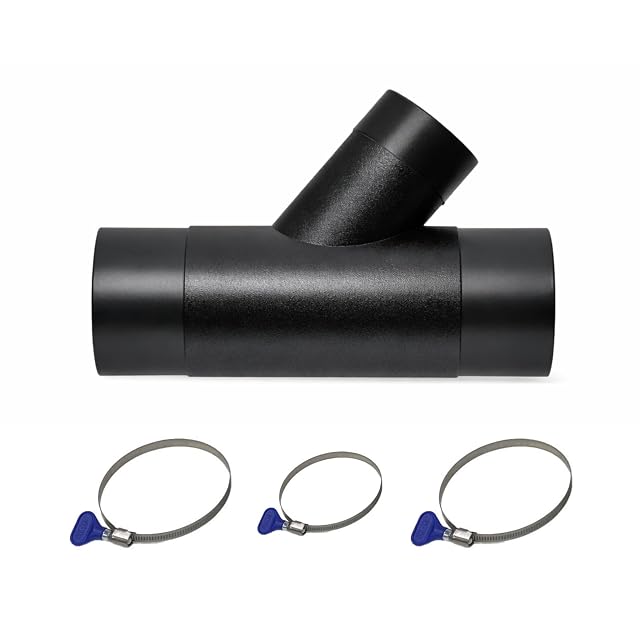
Across both halves of this shelf, two listings supply clamps: the published 100 mm (3.94 in) Y-piece with three, and this with four. Everything else says sold separately or says nothing.

A hose without a clamp is a hose that falls off, and a 2-1/2 inch joint that falls off behind a machine is found by the noise.

And two and a half inches is not a machine size

The listing names table saws, planers, jointers, sanders and router tables.

The last two are right. The first three want four inches, and 64 mm (2.52 in) in front of a planer starves it — the extraction pages in this catalog set out that arithmetic at length.

What is missing from this page is the internal diameter and the wall thickness, which are the two figures the airflow actually depends on.

Availability

Read on the day this page was built: $29 at the American Amazon shop.

Read from Keepa on the day this page was last revised; stock and price both move without notice.

Prices quoted in this text were read on 2026-10-07. The live price is at the top of the page.
What comes up most often

What does “properly grounded at both ends” mean in practice?

A conductive path from the wire coil to earth at each end of the hose — in practice a screw or clamp through to the coil, and a wire to the machine frame or to an earth point. The coil is steel and will carry the charge; what it will not do is earth itself, which is why the listing says both ends. The shelf's own intro names static earthing as one of the things it compares, and this is the only listing on either half of this shelf that addresses it at all. It is also an instruction without a method, so the detail is left to the buyer.

Does static in a dust hose matter?

At this scale it is unpleasant rather than dangerous. Fine dust moving down a plastic hose builds a charge that discharges into whatever is earthed, which is usually a hand on a machine. The genuine hazard of a dust explosion needs a concentration and a confinement that a home workshop does not have. What makes earthing worth doing anyway is that the shocks are unpleasant enough to make people stop using the extraction, and extraction that is switched off collects nothing.

Why does the compression ratio matter?

Storage and drag. A 3:1 ratio means twenty feet of hose stores in about seven, which is the difference between a hose that hangs on a hook and one that fills a corner. It also means the hose is corrugated deeply, and deep corrugation is internal drag — the published Miko hose page on this shelf makes the general point: corrugated hose has far more internal drag than smooth duct. Two listings on this shelf publish a compression ratio, and both publish 3:1.

All extraction fittings