Skip to content

The best workbench when space is short

Everything else in a workshop assumes the work is held still. A bench that moves under a plane stroke is not holding it.

Mass first, features second

A light bench with four clever vices is worse than a heavy one with a plain vice and a row of dog holes. If you must choose, spend on weight and a flat top and add work-holding later.

If the space is shared

A folding table with a height-adjustable foot is the honest compromise — a real surface at a real height that disappears when the car comes back in. Just do not expect to plane on it.

Which saw fits your shop?

You work mostly with hand tools
Mass and workholding matter more than anything: a bench that moves cannot be planed on.
You work mostly with machines
The bench is an assembly surface, and flatness and height matter more than mass.
The space is shared
A folding or wall-mounted bench that is genuinely rigid when deployed is worth more than a heavy one you cannot leave out.
You are unsure
Build or buy something modest and let the work tell you what workholding you actually need.

Picking by the cut you need

Hand planing

The most demanding use. It needs mass, a flat top and a way to hold work against a forward push.

Assembly and glue-up

Flatness matters here more than mass, because anything glued on a twisted surface is glued twisted.

Sawing and chopping

Needs a solid support and the ability to hold work at the right height, often at the end of the bench.

Machine work surface

Where the bench becomes a stand and a landing area, and its height should match your machines.

What matters once the blade is turning

Rigidity, not just weight
A heavy bench that racks is worse than a lighter one that is braced. Diagonal bracing or a solid back is what stops racking.
Workholding
A vice, dog holes and a planing stop are what turn a table into a bench. Without them a flat top is only a table.
Height
Too high for planing, too low for assembly: the compromise depends on your work and on you. It is worth deciding deliberately.
Top flatness and material
A flat top that can be re-flattened is worth more than a hard top that cannot. Solid timber tops can be trued; sheet tops cannot.
Footprint and mobility
In a small shop, whether the bench can move or fold decides how much of the room is usable.

Which figure for which cut

Your workWhat mattersWhat matters less
Hand planingMass and workholdingA perfect finish on the top
AssemblyFlatnessMass
Machine supportHeight matched to machinesA vice
Shared spaceRigidity when deployedWeight

Where it goes wrong in the shop

Buying a bench with no workholding
A top and four legs is a table. The vice and the dog holes are what make the surface useful for anything but assembly.
Choosing height by convention
Bench height is personal and depends on the work. It is worth standing at a few before committing, because it cannot be changed easily afterwards.
A top that cannot be flattened
Every bench top moves. A solid top can be trued again; a laminated sheet top cannot, and it is replaced instead.
Underestimating racking
A bench that shifts under a plane stroke makes hand work impossible. It is the failing most benches bought on price share.

By the woodworker you are

The hand tool user
Mass, bracing and a proper vice. This is the case where a serious bench genuinely changes the work.
The machine user
A flat assembly surface at a height matched to your machines, with mobility if space is short.
The shared space
A folding or wall-mounted bench that locks rigid. Rigidity when deployed is the criterion, not weight.

Blades, alignment and working life

A bench is maintained by keeping the top flat and the fixings tight. Every bench racks a little with use, and a bench top that has cupped will glue everything on it out of true without ever announcing itself.

  • Check the top for flatness with a straight edge periodically, especially after a season change.
  • Retighten bolts and wedges; benches loosen with hammering and planing.
  • Keep the top free of glue and finish build-up, which stops work sitting flat.
  • Do not varnish the top: a slick surface makes work slide and prevents re-flattening.

Safety

A bench is safe equipment, and its risks come from movement and clutter.

  • Make sure the bench cannot shift or tip when work is clamped at one end.
  • Keep the top clear: tools left on a bench are what fall onto feet.
  • Fix a wall-mounted bench into structure, not into plasterboard alone.
  • Check clamps and vices grip before applying force to a workpiece.

Our picks, and the case for each

What comes up most often

Can a folding table replace a bench?

For machine work, cutting and assembly, largely yes. For hand tool work, no — a light bench skitters under a plane and bounces under a chisel.

What makes a bench a woodworking bench?

Mass, a flat top you can use as a reference surface, and work-holding built in — a face vice, a tail vice and dog holes, so a board can be held edge-on, face-up or on end.

What height should a bench be?

It depends on you and on your work: lower for hand planing, higher for detail work and assembly. It is worth trying a few before committing.

Does a bench need to be heavy?

For hand planing, mass helps a great deal. For assembly and machine support, rigidity and flatness matter more than weight.

Is a solid timber top worth it?

Its advantage is that it can be re-flattened when it moves. A sheet top is cheaper and is replaced rather than trued.

What workholding do I actually need?

A vice and dog holes cover most work. Beyond that, add holdfasts and stops as the work shows you what is missing.

Can a folding bench be good enough?

If it locks genuinely rigid, yes for assembly and machine work. For heavy hand planing it will always be a compromise.

Should I finish the top?

Lightly if at all. A slick varnished top lets work slide, shows every mark, and cannot be planed flat again without stripping it.

Each saw, and the cut it was bought for

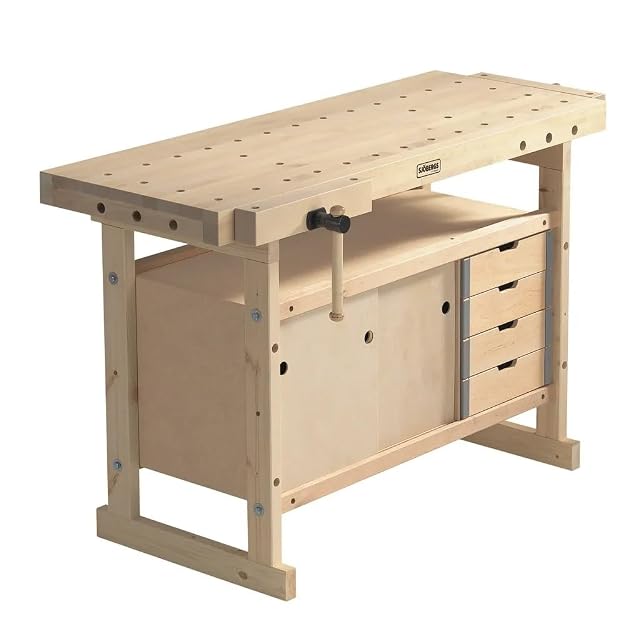
Sjöbergs Nordic 1450

For cutting: Hand tool work, and any workshop where the bench is the primary tool
Where it shines: A real bench: mass, a flat top and integrated vices

Where it disappoints: Only the German and British listings resolved when we checked

Read the full review →

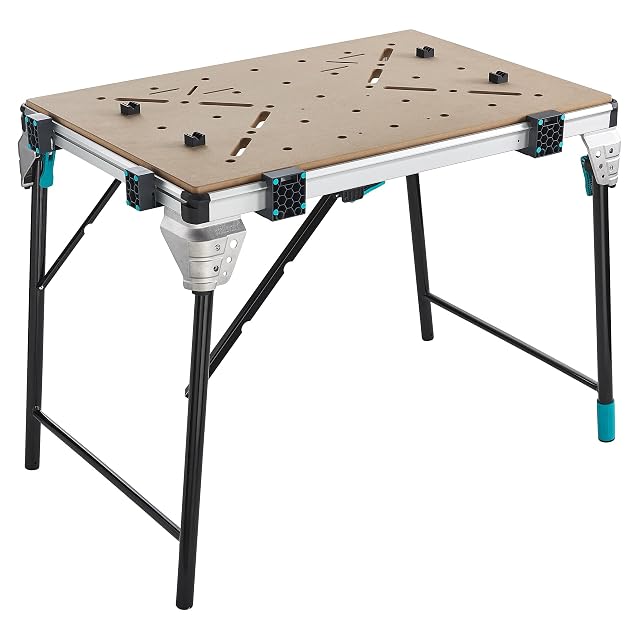
wolfcraft Master Work 1600 · $790

For cutting: A workshop that needs a real surface and cannot give up the floor space permanently

Where it shines: A height-adjustable foot, which is what makes a folding table stable on a workshop floor

Where it disappoints: Still a folding table, so still light

Read the full review →

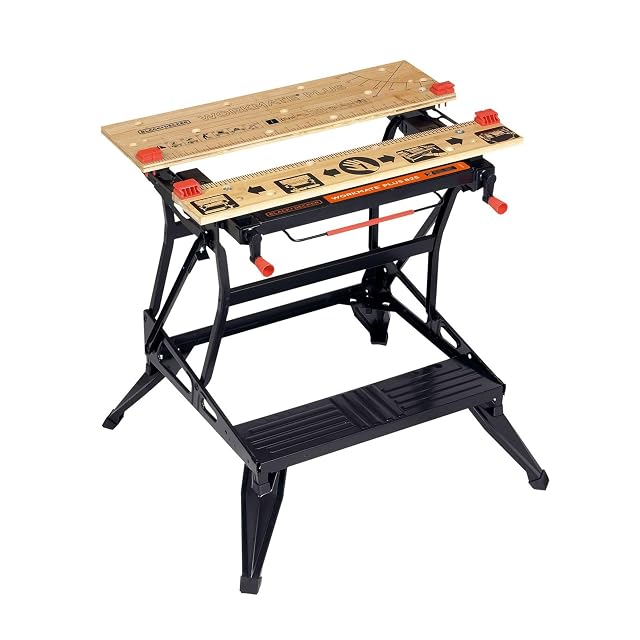
Black+Decker Workmate WM825 · $350

For cutting: A small or shared space where the bench has to disappear between jobs

Where it shines: The top itself is a vice — the whole surface clamps

Where it disappoints: Light — it will move under a hand plane

Read the full review →

What each band of spend cuts

What else the cut needs

Blades, inserts and spares from the same aisle, at the price we recorded. Check they fit the saw you pick before ordering: it depends on the bore and the part number, which the listing states.

The quick cut

How this selection was built

The saws above are drawn from the catalog of this site. Specifications are the published ones, from the maker and from the Amazon product page; prices are the Keepa figure for the date below, and both shift. Ranking uses declared specifications, the balance of stated strengths and stated limits, and price. No machine here has cut wood for us, and the page claims nothing else.

Last checked on

Prices quoted in these summaries are dated readings. The live price is shown next to each product.

The tool we use ourselves

Chosen your machine? Now buy it at the right price.

Table saws and planers swing by a hundred dollars or more across the year, and the biggest "discounts" often land at prices the same model sold for six weeks earlier. UniverTrack tracks the real price history across retailers, spots fake reductions, and alerts you when it is genuinely the moment to buy.

Real price historyBuy-now alertsAI buying assistant
Try free for 14 days →
No commitment · Cancel in one click · 5 languages