Skip to content

FOXBC FOX735, 13 in HSS knives for DW735, set of 3

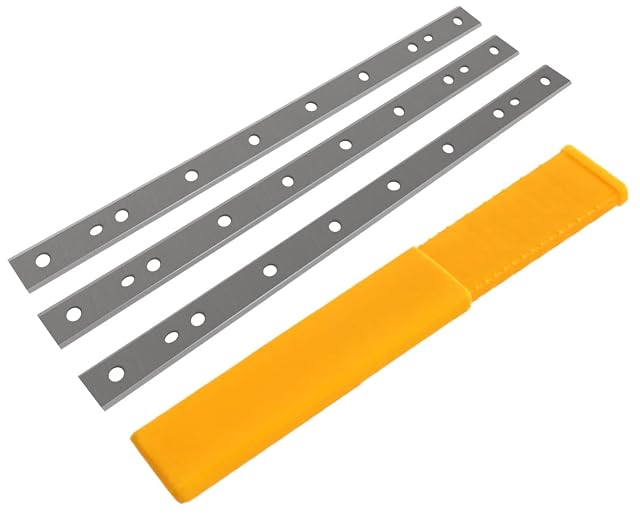
Three double-edged M2 knives with locator holes — which is what setting knives without a gauge requires.

FOXBC 13 inch planer knives for DeWalt DW735, set of three, product photograph

FOXBC FOX735, 13 in HSS knives for DW735, set of 3

Three double-edged M2 knives with locator holes — which is what setting knives without a gauge requires.

Length
13 in, published — 330 mm (13 in) · The POWERTEC knives for the same DeWalt part on this shelf publish 13-1/8 in
Width
7/8 in — 22.2 mm
Thickness
1/16 in — 1.6 mm
Material
M2 laminated high-speed steel, stated to stay sharper and last longer than conventional knife materials
Type
Reversible, double sided, with honed cutting edges
Setting
Machined locator holes, stated to align the knives on the cutterhead during a change
Quantity
3 knives
Replaces
DeWalt DW7352, for the DW735 and DW735X
Part number
FOX735
Amazon reference
B07DH5FVNF
EAN
0703931966888
  • Publishes all three dimensions, which is the whole specification of a knife
  • Locator holes, so the knives set themselves rather than needing a gauge
  • Thirteen inches here against 13-1/8 on the POWERTEC set for the same part

Best for: A DeWalt DW735 or DW735X, changed without a setting gauge

≈ $30
Check price on Amazon

Specifications

Length
13 in, published — 330 mm (13 in) · The POWERTEC knives for the same DeWalt part on this shelf publish 13-1/8 in
Width
7/8 in — 22.2 mm
Thickness
1/16 in — 1.6 mm
Material
M2 laminated high-speed steel, stated to stay sharper and last longer than conventional knife materials
Type
Reversible, double sided, with honed cutting edges
Setting
Machined locator holes, stated to align the knives on the cutterhead during a change
Quantity
3 knives
Replaces
DeWalt DW7352, for the DW735 and DW735X
Part number
FOX735
Amazon reference
B07DH5FVNF
EAN
0703931966888

Every figure below names its source. Each one is a manufacturer specification read off the listing itself. The judgments are ours.

Three figures, and all three have to match

A planer knife is bought by its section, not by its machine name.

Length sets which cutterhead it spans. Width sets how far it projects past the clamping bar. Thickness sets whether the clamp closes on it at all. A knife an eighth of an inch too long will not seat; one a tenth of a millimeter too thick will not clamp.

Which is why the machine list on a listing is a convenience and the three dimensions are the specification — and why two listings on this shelf for the same DeWalt part publish two different lengths.

Thirteen, or thirteen and an eighth

This listing publishes 13 inches. The POWERTEC set on this shelf, for the same DeWalt DW7352, publishes 13-1/8.

Same width, 7/8. Same thickness, 1/16. One eighth of an inch of length between them, which is 3.2 millimeters.

On a cutterhead that is the difference between seating and not seating — or, more likely, between a nominal figure and a measured one.

Both are printed, on their own pages. The move before ordering is to measure the knife already in the machine.

Locator holes

Which replace a setting gauge and twenty minutes.

Without them each knife is set by eye against a straight edge or a dial gauge so that all three project equally — and a knife a tenth of a millimeter high leaves a ridge down every board that passes.

Holes that drop onto pins in the cutterhead fix the projection in the casting.

The published 260 mm (10.2 in) knives on this shelf carry the alternative in their cons: setting knives requires a gauge and patience.

M2, laminated

Hard steel only where the edge is.

A fully hardened knife is brittle along its whole length and can crack at a clamp bolt. A laminated one bonds an M2 high-speed steel edge to a tougher backing, so the edge takes the heat and the body takes the clamping.

It is the oldest construction in edge tools — a Japanese chisel is made the same way — and it is the only steel construction named on either half of this shelf.

The European listings here say HSS and stop.

Three knives, six edges

Reversible and double sided, with both edges honed.

So a set lasts twice as long as it looks, and the change halfway through is a flip rather than a purchase.

The published CENTROFIX knives on this shelf are the same idea with the setting problem solved as well, and their page names the limit: when both edges are gone, they are gone. Neither kind can be resharpened.

Availability

Read on the day this page was built: $30 at the American Amazon shop.

Read from Keepa on the day this page was last revised; stock and price both move without notice.

Prices quoted in this text were read on 2026-10-07. The live price is at the top of the page.
What comes up most often

Thirteen inches, or thirteen and an eighth?

Both are published on this shelf, for the same DeWalt DW7352 replacement. This listing says 13 in; the POWERTEC set says 13-1/8 in, with the same 7/8 in width and 1/16 in thickness. One eighth of an inch is 3.2 mm (0.13 in), which on a cutterhead is the difference between seating and not seating — or, more likely, the difference between a nominal figure and a measured one. This page prints what this listing says and names the discrepancy; the right move before ordering is to measure the knife that is already in the machine.

What do locator holes replace?

A setting gauge and twenty minutes. On a planer without them, each knife is set by eye against a straight edge or a dial gauge so that all of them project equally — and a knife a tenth of a millimeter high leaves a ridge down every board. Locator holes drop onto pins in the cutterhead, so the projection is fixed by the casting. The published 260 mm (10.2 in) knives on this shelf have the opposite problem in their cons: setting knives requires a gauge and patience. Three of the six American listings here publish locator holes.

M2 laminated — what does the lamination do?

It puts the hard steel only where the edge is. A fully hardened knife is brittle along its whole length and can crack at a clamp bolt; a laminated one has an M2 high-speed steel edge bonded to a softer, tougher backing, so the edge takes the heat and the body takes the clamping. It is the oldest trick in edge tools — the same construction as a Japanese chisel — and it is the only steel construction named on either half of this shelf. The European listings here say HSS and stop.

All planer knives