Hand planer · TCT · 10 blades
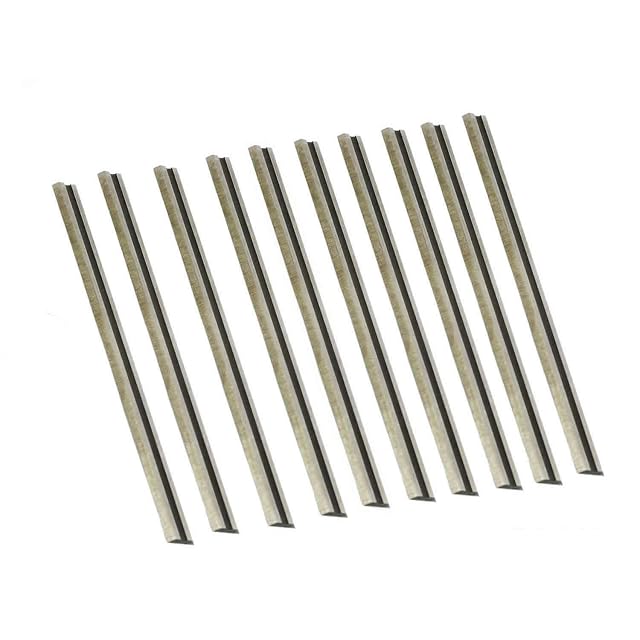
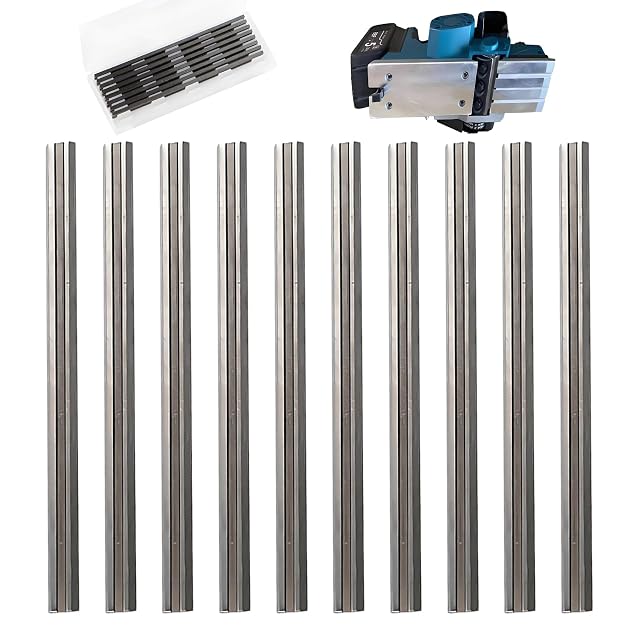
HZ 82T, 82 × 5.5 × 1.2 mm TCT, 10 pack
Exactly the section of the published HSS blades on this shelf, in tungsten carbide instead — a direct substitution.
Specifications
- Length
- 82 mm (3.23 in) — 3-1/4 in
- Width
- 5.5 mm (0.22 in)
- Thickness
- 1.2 mm (0.05 in) · The published HSS blades on this shelf are 82 × 5.5 × 1.2 mm (3.23 × 0.22 × 0.05 in) — the same section
- Material
- TCT tungsten carbide
- Type
- Reversible, stated to double the lifespan of each blade
- Claims
- Stated to last up to 30 per cent longer and to be 10 per cent sharper than standard tungsten carbide blades · The FOXBC blades on this shelf publish the same two percentages, word for word, and neither names the standard it compares with
- Quantity
- 10 blades, in a plastic case
- Fits
- Makita, Bosch, DeWalt, Black & Decker, Ryobi and other 3-1/4 in hand planers
- Part number
- 82T
- Amazon reference
- B07F63DVZV
- EAN
- 0703931966079
Every figure below names its source. Each one is a manufacturer
specification read off the listing itself. The judgments are ours.
Eighty-two by five and a half by one point two
The same section as the published HSS blades on this shelf, to the tenth of a
millimeter.
Which makes this a straight substitution: the same clamp, the same projection,
the same machines — and a different material in the edge.
That is a rarer thing on this site than it sounds. Two listings on this shelf
cannot agree on the length of a DeWalt knife; here two listings agree exactly
and differ only in the steel.
HSS or carbide
HSS takes a keener edge and can be honed. It suits clean timber and a user who
maintains edges.
Carbide holds its edge perhaps five to ten times longer on paint, glue, MDF and
reclaimed stock — and cannot be honed at all. A chip is the end of that edge.
For fitting painted doors, carbide. For dressing clean softwood, HSS.
The two listings sit side by side on this shelf at the same section, which is
exactly how that choice should be presented.
Thirty per cent, and ten per cent
Stated: lasts up to 30 per cent longer and 10 per cent sharper than standard
tungsten carbide blades.
The FOXBC carbide blades on this shelf publish the same two percentages, in the
same words.
Neither says what a standard carbide blade is, who makes it, or how either
figure was measured.
Two brands with identical unattributed numbers is shared copy rather than a
comparison, and it is printed here as that. The dimensions on both pages can be
checked. These two cannot.
Ten blades, twenty edges
An 82 mm (3.23 in) blade is a consumable the width of a finger.
The published HSS ten-pack on this shelf makes the practical argument: cheap
enough to change them before they are truly blunt, which is the habit that keeps
a planer cutting instead of burnishing.
The same logic holds here, with a longer interval between changes.
Availability
Read on the day this page was built: $27 at the American Amazon shop.
Read from Keepa on the day this page was last revised; stock and price both move without notice.
Prices quoted in this text were read on 2026-10-07. The live price is at the top of the page.