Skip to content

VEVOR 8-piece carbon steel set

The cheapest set on this shelf, in the one steel both published pages here argue against.

VEVOR eight piece carbon steel wood turning tool set with bag, product photograph

VEVOR 8-piece carbon steel set

The cheapest set on this shelf, in the one steel both published pages here argue against.

Contents
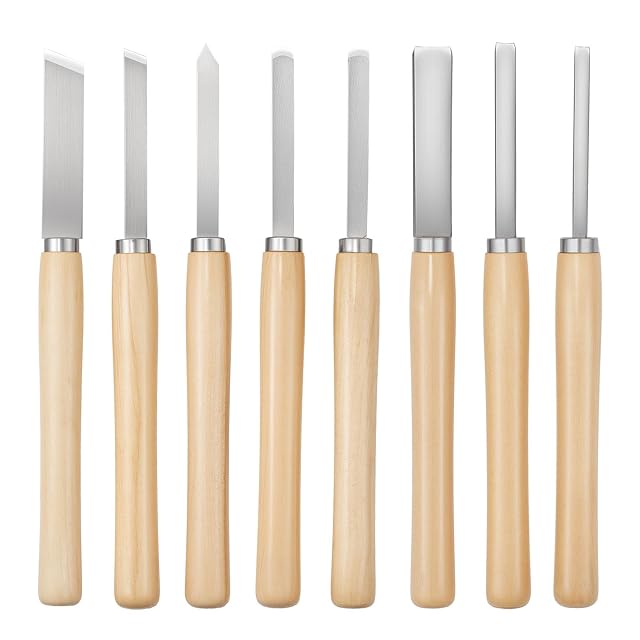
Eight, each named and sized: a 1/2 in and a 1 in skew chisel, a 1 in spear point, a 1/2 in parting tool, a 1/2 in round nose, and 1/4 in, 1/2 in and 3/4 in gouges
Steel
Carbon steel — the only carbon steel set on either half of this shelf · No grade and no hardness published
Edge
Honed and pre-sharpened before shipping, stated
Handles
A reinforced design with a metal collar tightening the handle, stated against loosening · No material and no length published
Case
An Oxford bag
Part number
Not published by the maker. · The listing title is used as the reference
Amazon reference
B0FD53QVJT
EAN
0197988153962
  • All eight tools named and sized, which three sets on this shelf do not manage
  • Three gouge sizes, which is a genuine spread for spindle work
  • Carbon steel loses its edge as soon as the cut heats it, which both published pages here say

Best for: Finding out whether turning is going to stick, before spending on HSS

≈ $25
Check price on Amazon

Specifications

Contents
Eight, each named and sized: a 1/2 in and a 1 in skew chisel, a 1 in spear point, a 1/2 in parting tool, a 1/2 in round nose, and 1/4 in, 1/2 in and 3/4 in gouges
Steel
Carbon steel — the only carbon steel set on either half of this shelf · No grade and no hardness published
Edge
Honed and pre-sharpened before shipping, stated
Handles
A reinforced design with a metal collar tightening the handle, stated against loosening · No material and no length published
Case
An Oxford bag
Part number
Not published by the maker. · The listing title is used as the reference
Amazon reference
B0FD53QVJT
EAN
0197988153962

Every figure below names its source. Each one is a manufacturer specification read off the listing itself. The judgments are ours.

Carbon steel

The only carbon steel set on either half of this shelf, and both published pages here argue against it in the same words.

The bowl gouge page: HSS rather than carbon steel, so the edge survives a heating cut. The Holzstar page: it holds an edge through a heating cut.

Carbon steel is easier to grind and takes a keener edge. It loses that edge the moment friction takes the tip past about 200 degrees, which on a roughing cut is a matter of seconds.

So it is sharpened constantly. For learning the movements that is survivable. For production it is not.

Eight tools, all named

Two skews at 1/2 and 1 inch. A 1 inch spear point. A 1/2 inch parting tool. A 1/2 inch round nose. Gouges at 1/4, 1/2 and 3/4.

Three sets on this shelf do not name their contents at all, and this is the cheapest one that does.

What is not among the eight is a bowl gouge — the three gouges are spindle sizes, without the deep flute and swept wings a bowl needs.

One of the four American sets here names a bowl gouge. Three do not.

A metal collar

On the handle joint, stated against loosening.

It is the same problem brass ferrules solve on the Hurricane set here: the tang is wedged into the handle and every catch tries to split it.

A collar is the cheaper answer and it addresses the right failure.

And a bag

Eight sharpened edges in fabric, touching each other.

The Hurricane and IMOTECHOM sets on this shelf publish a wooden box with a slot per tool, and a nicked skew edge is a regrind rather than a hone.

Against that, a bag costs nothing and hangs on a nail — and a turner using carbon steel has the grinder running anyway.

Two schools, and they are not the same hobby

A traditional turning tool is ground steel on a long handle. It is presented to the wood at an angle so the bevel rubs and the edge slices, which leaves a surface that needs almost no sanding — and it has to be sharpened, which means a grinder, a jig and a skill.

A carbide tool is a square or round plate screwed to a bar. It is held flat and scrapes. It never needs grinding: when an edge dulls, the plate is rotated to the next corner and eventually replaced.

The published pages on this shelf put both sides of it. The carbide set’s page: removes the grinder and the sharpening jig from a beginner’s shopping list — and carbide scrapes where a gouge slices, so the surface off the tool needs more sanding. That is the whole choice.

Availability

Read on the day this page was built: $25 at the American Amazon shop.

Read from Keepa on the day this page was last revised; stock and price both move without notice.

Prices quoted in this text were read on 2026-10-07. The live price is at the top of the page.
What comes up most often

How bad is carbon steel for turning?

It is the one material question on this shelf with a settled answer, and both published pages here give it. The bowl gouge page: HSS rather than carbon steel, so the edge survives a heating cut. The Holzstar page: HSS rather than carbon steel — it holds an edge through a heating cut. Carbon steel is harder to grind and takes a keener edge, and it loses that edge the moment friction heats the tip past about 200 °C (392 °F), which happens in seconds on a roughing cut. So it is sharpened constantly. For learning the movements that is survivable; for production it is not.

Is a bag a problem?

For eight sharpened edges, a little. A wooden box with a slot per tool keeps the edges apart — which is what the Hurricane and IMOTECHOM sets on this shelf publish, and what the published Holzstar set implies. Eight tools in a fabric roll or bag touch each other, and a nicked edge on a skew chisel is a repair rather than a hone. Against that, a bag costs nothing and hangs on a nail, and a turner who sharpens constantly already has the grinder running.

Eight tools and no bowl gouge, again?

Yes — two skews, a spear point, a round nose, a parting tool and three gouges. The three gouges are sized 1/4, 1/2 and 3/4 inch, which are spindle gouge sizes; nothing in the eight has the deep flute and swept wings a bowl needs. Of the four sets on the American half of this shelf, one names a bowl gouge and three do not. The published 1/2 inch bowl gouge on this shelf exists for precisely that, and the published M33 chuck beside it is the other thing bowl turning requires.

All turning tools