Carbide · titanium coated
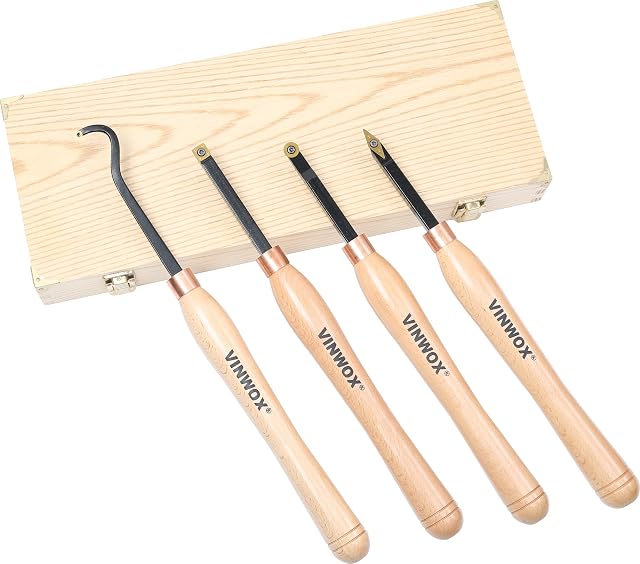
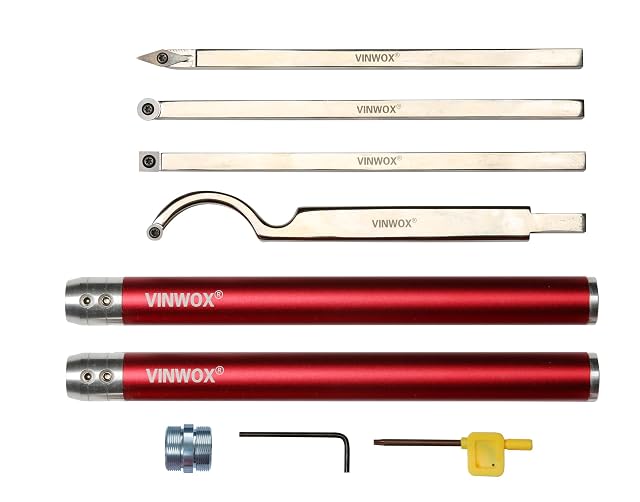
VINWOX 4-piece carbide set, 13.5 in
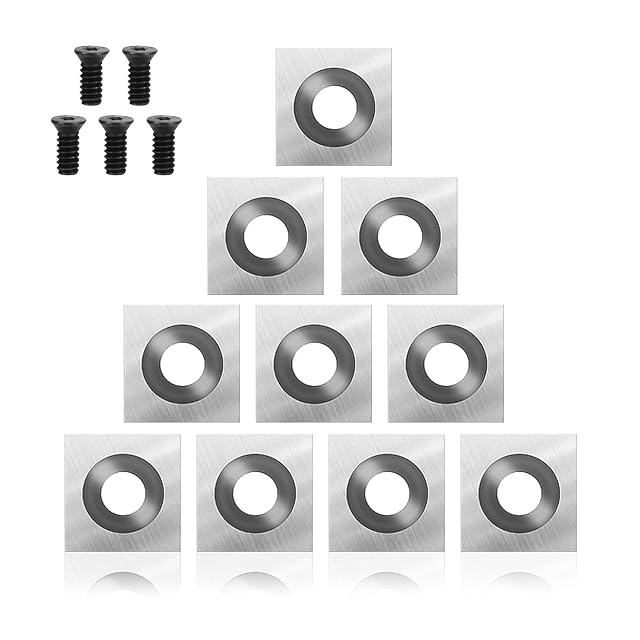
A rougher insert with two straight sides and two radiused ones — one plate doing two jobs, published in millimeters.
Every figure below names its source. Each one is a manufacturer
specification read off the listing itself. The judgments are ours.
Two straight sides, two radiused
The rougher insert: 11.3 by 11.1 by 1.75 millimeters, with two square sides and
two on a 2 inch radius.
Rotated one way it presents a straight edge for taking a blank down. Rotated
ninety degrees it presents a gentle curve for sweeping a shoulder or a cove.
A plain square insert gives four identical straight corners. A plain round one
gives a curve and no straight edge. This gives both.
On a four-piece set that is one fewer tool to buy — and it means two of the four
corners are unavailable for each of the two jobs.
Titanium coated, two times the life
The claim, with nothing behind it.
Titanium nitride coatings are real: they reduce friction and raise surface
hardness on steel tooling. On carbide the gain is smaller, because the substrate
is already harder than the coating usefully adds to.
Two times what is not stated. Against uncoated carbide of the same grade, against
a competitor, measured over what cut in what timber — none of it is on the page.
Two listings on the router-bit shelf in this catalog publish unattributed
percentages the same way, and this is printed on the same terms.
Three pieces, on a four-piece set
The reference reads “wood chisel-3pcs”.
The same maker’s nine-piece set on this shelf reads “wood chisel-4pcs”.
Both are references rather than specifications, which is why both sit in the part
number row above. But a reference is what a buyer searches to reorder, and one
that disagrees with the count will not be found.
Thirteen and a half inches
The overall length, published, and the limit of this set.
A swan neck hollower in a four-piece kit is the tool a small box needs — and 343
millimeters of total tool is short for reaching past a rest into anything deep.
The maker’s nine-piece set on this shelf answers that with two handles that join
to twenty-nine inches. This one is the bench version.
Two schools, and they are not the same hobby
A traditional turning tool is ground steel on a long handle. It is presented to
the wood at an angle so the bevel rubs and the edge slices, which leaves a
surface that needs almost no sanding — and it has to be sharpened, which means a
grinder, a jig and a skill.
A carbide tool is a square or round plate screwed to a bar. It is held flat and
scrapes. It never needs grinding: when an edge dulls, the plate is rotated to the
next corner and eventually replaced.
The published pages on this shelf put both sides of it. The carbide set’s page:
removes the grinder and the sharpening jig from a beginner’s shopping list — and
carbide scrapes where a gouge slices, so the surface off the tool needs more
sanding. That is the whole choice.
Availability
Read on the day this page was built: $50 at the American Amazon shop.
Read from Keepa on the day this page was last revised; stock and price both move without notice.
Prices quoted in this text were read on 2026-10-07. The live price is at the top of the page.