Carbide · joining handles
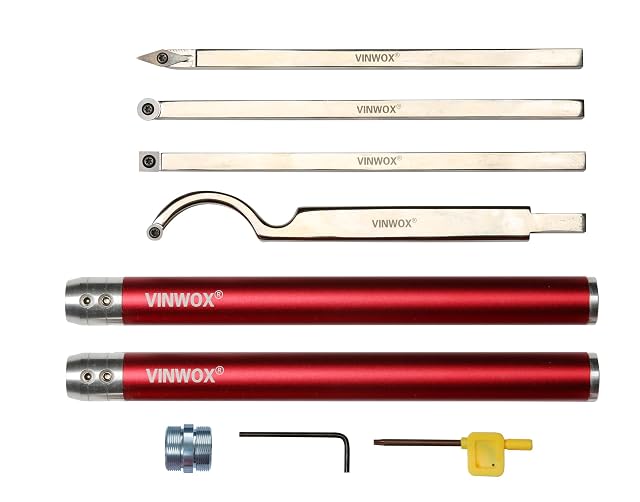
VINWOX 9-piece carbide set, aluminium handles
Two handles that screw together into one long tool with a cutter at each end — published nowhere else in this catalog.
Every figure below names its source. Each one is a manufacturer
specification read off the listing itself. The judgments are ours.
Two handles that become one
Fourteen inches for spindle work at the rest. Twenty-nine when the tool goes
inside something.
Hollowing is a leverage problem. A tool reaching 150 mm (5.91 in) past the rest into a
hollow form has 150 mm (5.91 in) of lever trying to twist it out of the hand, and the only
answer is more handle on the other side of the rest.
Which is why dedicated hollowing tools have handles two feet long, and why they
are useless for anything else.
Two handles and a connector give both lengths. Nothing else in this catalog
publishes that.
And a cutter at each end
The fourth feature: once the handles are connected, two cutting tools can be
mounted at the two ends.
A rougher at one end and a finisher at the other, turned end for end instead of
swapped.
It is published, it is unusual, and this page prints it without recommending it.
A long bar with a carbide cutter on the far end, pointing back at the turner, is
a thing to think about before fitting.
Four pieces, or nine
The title says nine. The reference says “wood chisel-4pcs ALU Handle”.
The likeliest reading is four cutting tools plus two handles, a connector and
inserts — counted to nine. The page never enumerates.
The published European carbide set on this shelf has the same fault named in its
cons: the listing states ten pieces and four pieces on the same line, and never
lists the contents.
Two listings, one shelf, the same arithmetic.
Ten by ten, polished stainless
The shank section, published, with the insertion depth into the handle stated
adjustable.
Adjustable depth is a real control: it sets the balance point, and a tool that
balances where the hand is does not fight.
What aluminum handles do not do is dampen. Wood absorbs the chatter a carbide
scraper sets up; an aluminum tube transmits it, which is why the two HSS sets on
this shelf publish hardwood and teak.
Two schools, and they are not the same hobby
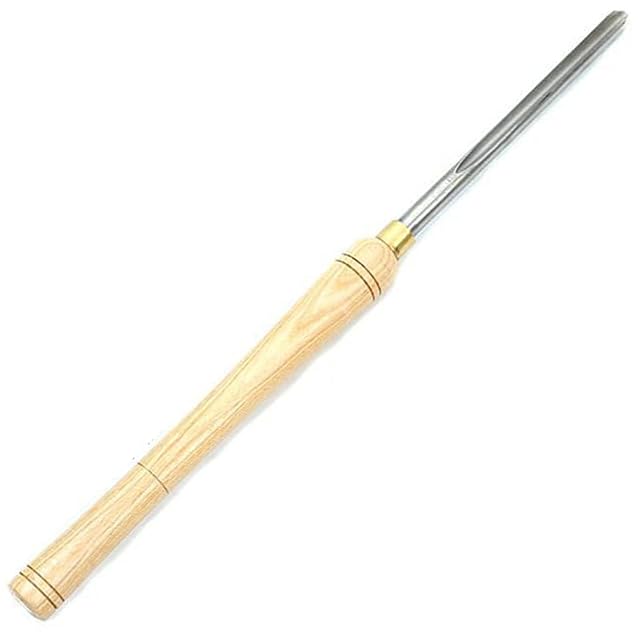
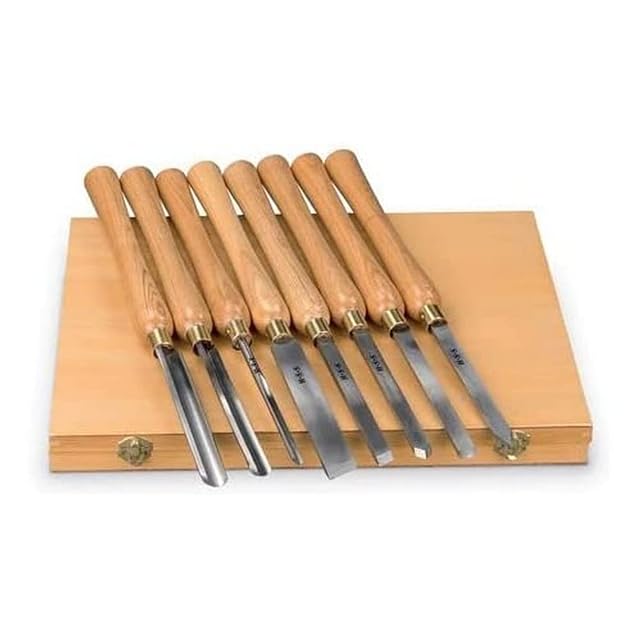
A traditional turning tool is ground steel on a long handle. It is presented to
the wood at an angle so the bevel rubs and the edge slices, which leaves a
surface that needs almost no sanding — and it has to be sharpened, which means a
grinder, a jig and a skill.
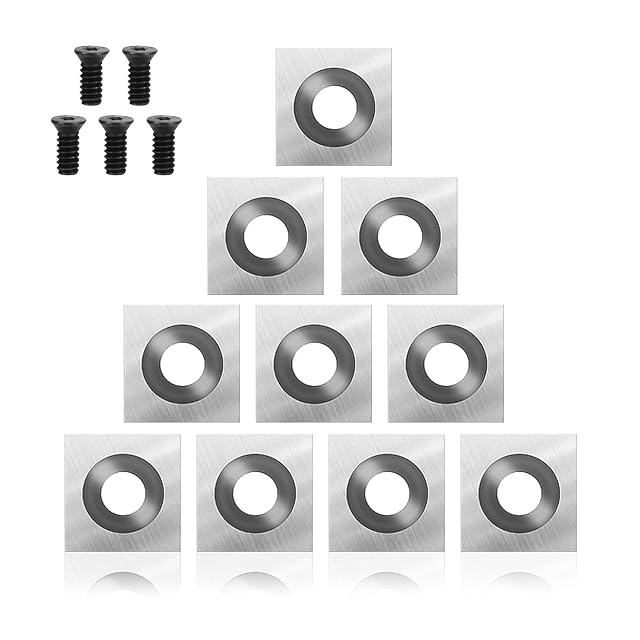
A carbide tool is a square or round plate screwed to a bar. It is held flat and
scrapes. It never needs grinding: when an edge dulls, the plate is rotated to the
next corner and eventually replaced.
The published pages on this shelf put both sides of it. The carbide set’s page:
removes the grinder and the sharpening jig from a beginner’s shopping list — and
carbide scrapes where a gouge slices, so the surface off the tool needs more
sanding. That is the whole choice.
Availability
Read on the day this page was built: $43 at the American Amazon shop.
Read from Keepa on the day this page was last revised; stock and price both move without notice.
Prices quoted in this text were read on 2026-10-07. The live price is at the top of the page.