Every figure below is a manufacturer
specification read off the listing itself. The judgments are ours.
What the specification says
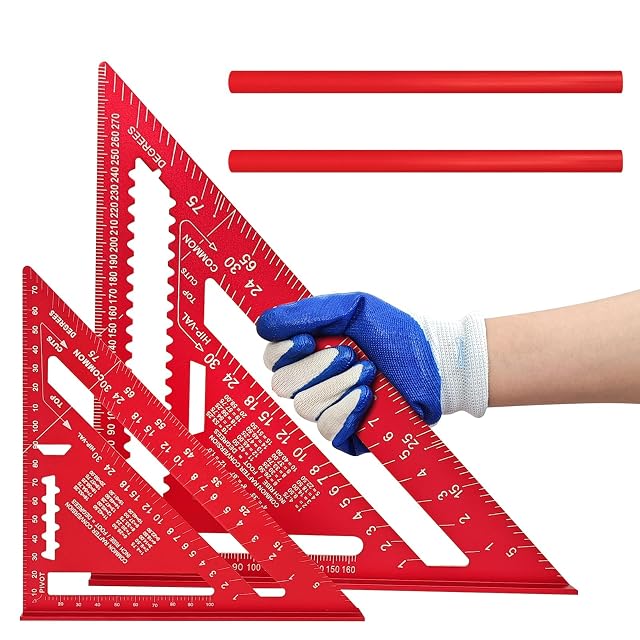
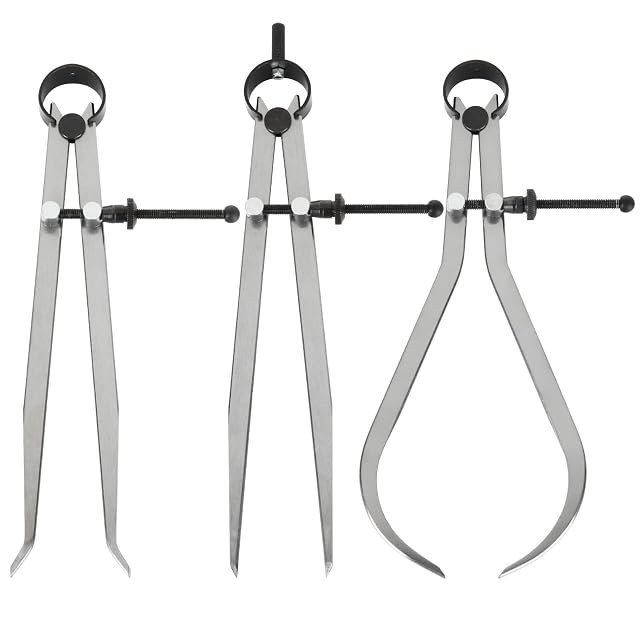
Two try squares, 180 mm (7.09 in) and 300 mm (11.8 in).
Test before trusting
No tolerance is stated on this listing, and no tolerance stated on any listing
should be trusted without checking. The flip test above takes ten seconds and
gives you the real number for the square in your hand, rather than the number
printed for the batch.
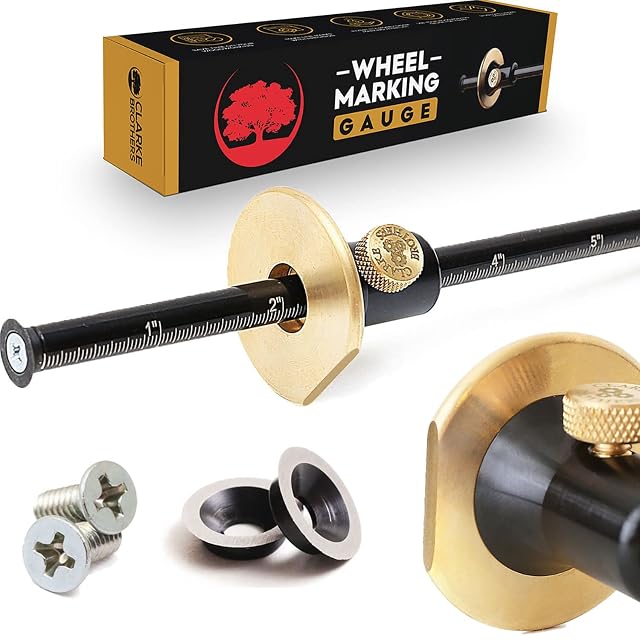
A square that fails it is not useless — it is a marking gauge. Just do not use
it to check anything.
What comes up most often
How do I test a square?
Put the stock against a known straight edge and mark a line along the blade. Flip the square over, register from the same point, and mark again. If the two lines diverge, the error is half the gap between them. Ten seconds, and it disqualifies a surprising number of squares sold as precision instruments.
Why two sizes?
The 180 mm (7.09 in) is the one you actually pick up — for joints, small parts and checking a fence. The 300 mm (11.8 in) is for carcases and panels, where a short square cannot tell you whether the whole assembly is square, only whether one corner is.
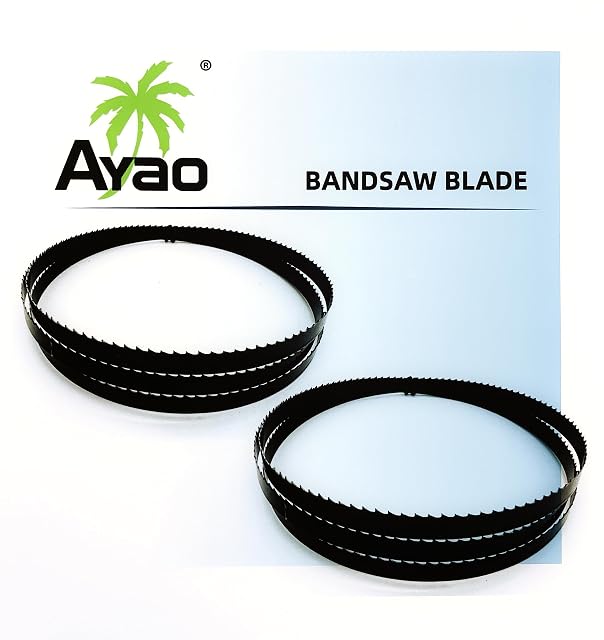
Eighteen thousandths of an inch — the thinnest band here, which needs less tension and takes a tighter curve than anything else at this length.
Length
93-1/2 in, published — 2,375 mm (93.5 in)
Width
3/8 in, published — 9.5 mm (0.37 in)
Thickness
0.018 in, published — 0.46 mm (0.02 in), the thinnest on this shelf
Pitch
6 TPI
Tooth form
Raker set, stated, with all teeth stated arranged evenly
Steel
Not published by the maker. · A unique welding technique is stated, with a strong and smoother weld point
Quantity
2 blades
Intended machine
14 in saws taking a 93-1/2 in band — Delta/Rockwell, Jet, Rikon, Steel City, General, Ridgid, older Sears Craftsman, Grizzly, Bridgewood and Woodtek are named: ten, the longest list on this shelf
Part number
JS-screen-11.10-1176
Amazon reference
B075ZX2RXL
EAN
0712640709716
The only listing on this shelf to publish all three dimensions in one bullet
Eighteen thousandths of an inch: less tension, tighter radius, easier on a light frame
No steel grade at all — not carbon, not alloy, not bi-metal
Best for: A 14 inch saw with a light frame, where a thin band tensions properly and turns tighter