Skip to content

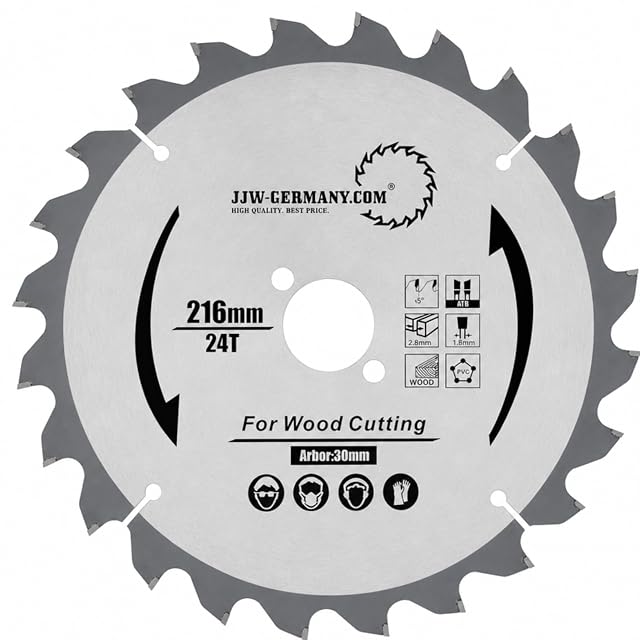
jjw-germany 216 × 30, 24T negative rake

The only blade here that states a negative rake — which on a mitre saw matters more than the tooth count.

Negative-rake 216 mm mitre saw blade, product photograph

jjw-germany 216 × 30, 24T negative rake

The only blade here that states a negative rake — which on a mitre saw matters more than the tooth count.

Diameter
216 mm (8.50 in)
Bore
30 mm (1.18 in)
Teeth
24, alternate top bevel
Rake angle
Negative
Part number
42509806
Amazon reference
B01LXCVAJM (identical on 5 markets)
EAN
4250980605894
  • States a negative rake, which almost no listing does
  • The correct geometry for a chop saw
  • 24 teeth is coarse for trim work — good for framing, rough for architrave

Best for: Framing and construction cuts on a mitre saw, where safety of geometry matters more than finish
Search Amazon for this model

Specifications

Diameter
216 mm (8.50 in)
Bore
30 mm (1.18 in)
Teeth
24, alternate top bevel
Rake angle
Negative
Part number
42509806
Amazon reference
B01LXCVAJM (identical on 5 markets)
EAN
4250980605894

Every figure below is a manufacturer specification read off the listing itself. The judgments are ours.

What the specification says

Ø 216 × 30 mm (8.50 × 1.18 in), 24 alternate-top-bevel teeth, negative rake. Part number 42509806.

Rake angle — the specification that matters on a chop saw

Rake is the angle the tooth leans forward. A positive rake pulls itself into the cut, which is what you want on a table saw where the work is fed against the blade. On a mitre saw, where the blade comes down onto fixed work, that same self-feeding is what makes the head snatch and climb.

Mitre saws want a negative rake. It is the single most important number on a chop saw blade, it costs nothing extra, and almost nobody checks it.

This is the only blade in this batch that states it, and it is the reason the blade is on the page despite being an unfamiliar brand.

Tooth count, in one paragraph

Fewer teeth cut faster and rougher; more teeth cut slower and cleaner. The reason is chip clearance: each tooth has to carry its chip out of the kerf, and a coarse blade has room to do it. A fine blade in a deep rip cut has nowhere to put the waste, so it heats up and burns.

Roughly: 24 teeth on a 250 mm (9.84 in) blade for ripping solid timber, 40 to 60 for general work, 80 for crosscutting and sheet goods where the finish shows.

Saws this fits

What comes up most often

Is a cheap blade safe?

Geometry matters more than price here, and this one has the right geometry for the machine. What you get for more money is flatter plate, better carbide and longer life between sharpenings — real advantages, but the rake angle is the one that affects how the saw behaves in your hands.

Should I get 24 or 60 teeth for a mitre saw?

It depends on what shows. 24 teeth for studwork and rough framing; 60 for architrave, skirting and anything that gets painted. Both should be negative rake.

All saw blades

Prices quoted in these summaries are dated readings. The live price is shown next to each product.