Fine finish · 60 teeth
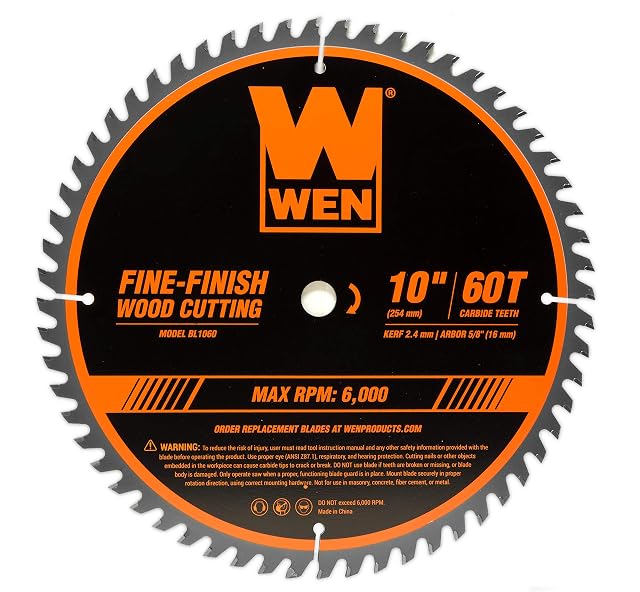
WEN BL1060, 254 × 15.88 mm, 60T
The same blade as the 80-tooth beside it in every published figure but one — which makes the comparison clean.
Every figure below names its source. Each one is a manufacturer
specification read off the listing itself. The judgments are ours.
One variable
The two WEN blades on this shelf publish the same diameter, the same bore, the
same kerf and the same maximum speed.
Sixty teeth here. Eighty there.
That makes this the cleanest comparison on either half of this shelf — nowhere
else can two blades be set against each other with only one figure moving.
And sixty is the one that stays on the saw
Eighty gives a better face on melamine and veneer, and burns in a rip.
Sixty gives a very good face and will still rip 40 mm (1.57 in) of hardwood without
stalling.
Each tooth removes a chip, and the chip has to fit in the gullet in front of it.
More teeth means smaller gullets, so the feed slows or the gullets pack.
Three to five teeth in the cut is the working rule for a rip. Sixty in 20 mm
stock is already generous; eighty is working hard.
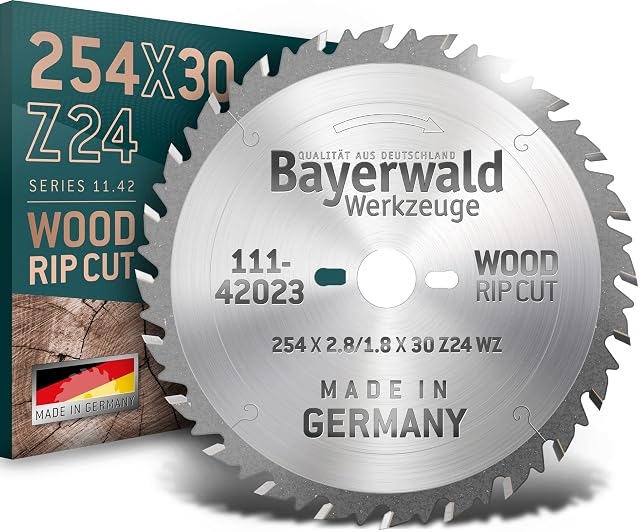
The published Bayerwald 24-tooth on this shelf is the other end of the scale, and
its page says the same thing from there: 24 teeth clears the chip in a deep rip,
where a fine blade burns.
Two point four millimeters
At the thin end of this shelf.
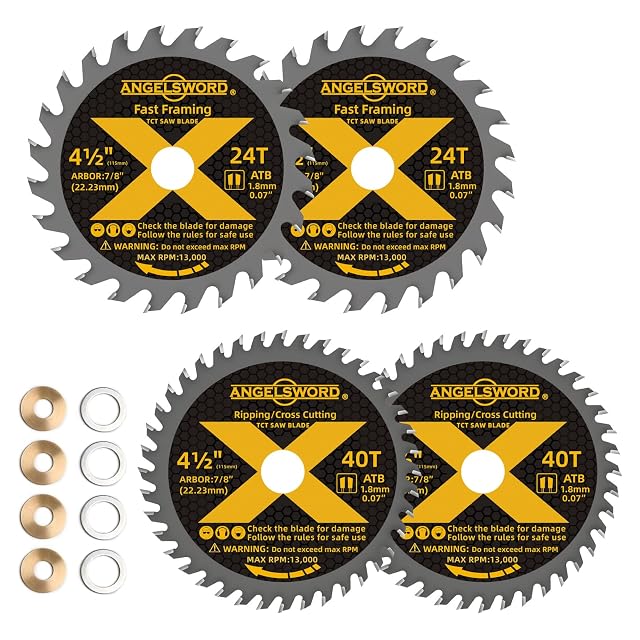
The published blades here give 2.8, 2.6, 2.4 and 2.0, and three publish nothing
at all. The ANGELSWORD on this shelf publishes 1.8 on a much smaller body.
Thinner wastes less timber and asks less of the motor. Thicker is stiffer and
wanders less in a long rip. Two point four on a 254 mm (10 in) blade is the middle, and
it is published.
Bore before diameter
The diameter decides whether the blade clears the guard. The bore decides
whether it goes onto the shaft at all.
Thirty millimeters is the European standard, and every European blade on this
shelf publishes 30 or 20. The American standard is 5/8 of an inch — 15.88 mm —
and on small saws 7/8, which is 22.23. Those are not the same hole, and no
adapter makes a shaft bigger.
Reducer rings step a large bore down onto a smaller shaft and never the other way
round. A ring that is a loose fit lets the blade run slightly off center, which
arrives as vibration and a cut that wanders.
Availability
Read on the day this page was built: $19 at the American Amazon shop.
Read from Keepa on the day this page was last revised; stock and price both move without notice.
Prices quoted in this text were read on 2026-10-07. The live price is at the top of the page.
What comes up most often
Sixty or eighty?
Sixty, if the blade is to stay on the saw. The two WEN listings on this shelf publish the same diameter, the same bore, the same kerf and the same speed rating, so the tooth count is the only variable — which makes this the cleanest comparison on either half of this shelf. Eighty teeth gives a better face on melamine and veneer and burns in a rip. Sixty gives a very good face and will still rip 40 mm (1.57 in) of hardwood without stalling. For one blade on a table saw, sixty.
What does tooth count do to feed rate?
It sets how fast the timber can be pushed. Each tooth removes a chip, and the chip has to fit in the gullet in front of it; more teeth means smaller gullets, so the feed has to slow or the gullets pack. The practical rule is three to five teeth in the cut for a rip and more for a crosscut — so a 60-tooth blade in 20 mm stock is already generous, and an 80-tooth one is working hard. The published Bayerwald 24-tooth rip blade on this shelf is the other end of that scale, and its page says why: 24 teeth clears the chip in a deep rip, where a fine blade burns.
Is 2.4 mm (0.09 in) a thin kerf?
It is at the thin end of this shelf. The published blades here give 2.8, 2.6, 2.4 and 2.0 mm (0.08 in), and three publish nothing; the ANGELSWORD on this shelf publishes 1.8 mm (0.07 in) on a much smaller blade. A thinner kerf wastes less timber and asks less of the motor, which matters on a jobsite saw; a thicker one is stiffer and wanders less in a long rip. Two point four on a 254 mm (10 in) blade is the sensible middle, and it is published, which three of the eight European listings here do not manage.