Fine finish · 80 teeth
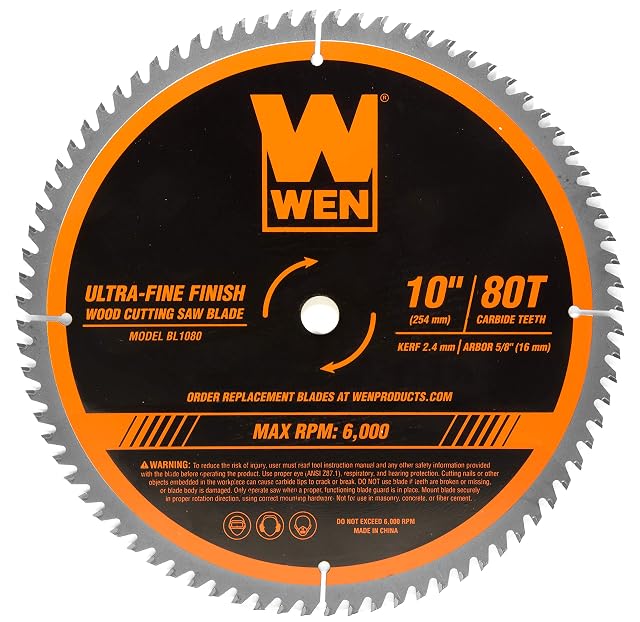
WEN BL1080, 254 × 15.88 mm, 80T
Eighty teeth at a published 6,000 rpm — the only maximum speed on either half of this shelf.
Every figure below names its source. Each one is a manufacturer
specification read off the listing itself. The judgments are ours.
Six thousand revolutions a minute
Published, and the only maximum speed on either half of this shelf.
It is the figure that says whether a blade may be fitted to a saw at all. Every
circular saw has a no-load speed, and the blade has to be rated at or above it: a
254 mm (10 in) blade sees about 4,000 rpm on a table saw, about 5,000 on a mitre saw, and
more on some jobsite saws.
Six thousand covers all of them.
Not one of the eight European blades on this shelf publishes it. The published
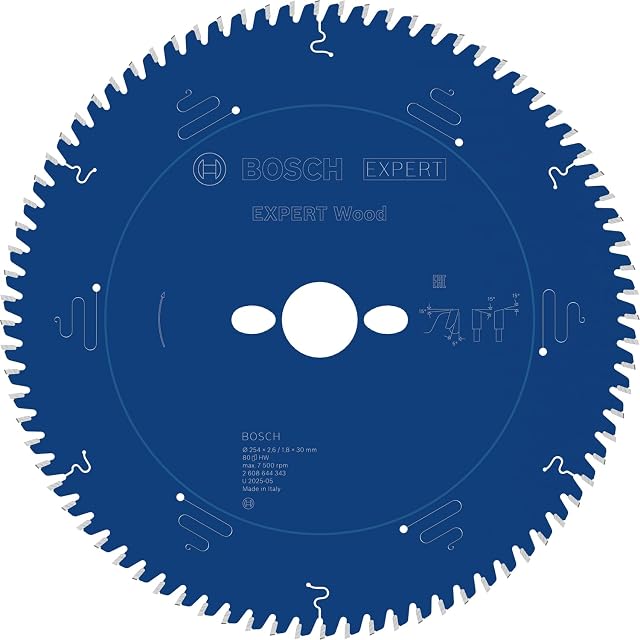
Bosch Optiline page there names a different absence in its cons — Bosch does not
publish the rake angle — and nor does this.
Eighty teeth
A smaller bite per tooth, so the fibers are severed instead of torn.
On melamine or veneer that is the difference between a usable edge and a chipped
one, and it is why an 80-tooth blade is the one that stays on a mitre saw.
The cost is heat. Eighty gullets cannot clear the chip from a deep rip, so the
blade rubs and burns — which the published Bosch 80-tooth page on this shelf puts
in one line: this is not a general-purpose blade.
Bore before diameter
The diameter decides whether the blade clears the guard. The bore decides
whether it goes onto the shaft at all.
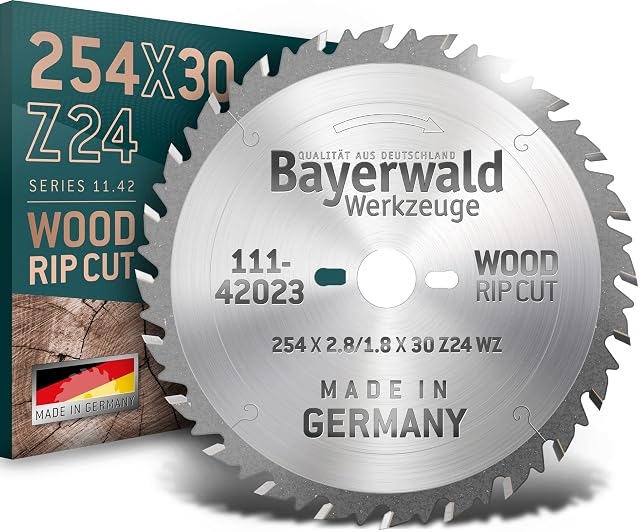
Thirty millimeters is the European standard, and every European blade on this
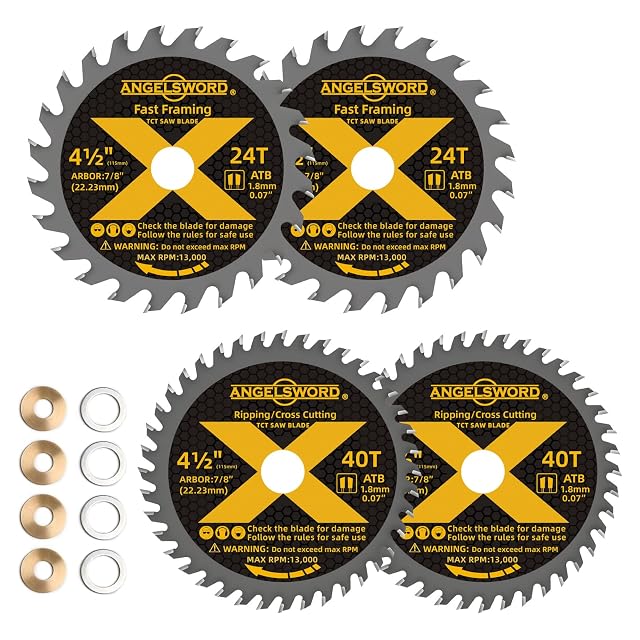
shelf publishes 30 or 20. The American standard is 5/8 of an inch — 15.88 mm —
and on small saws 7/8, which is 22.23. Those are not the same hole, and no
adapter makes a shaft bigger.
Reducer rings step a large bore down onto a smaller shaft and never the other way
round. A ring that is a loose fit lets the blade run slightly off center, which
arrives as vibration and a cut that wanders.
And this one is 15.88
Five eighths of an inch, published in both units, which is the honest way to
publish it.
It will not fit a European saw. A reducer ring makes a big bore fit a small
shaft; nothing makes a small bore fit a big one.
The shelf’s own intro names this as the detail that catches everyone out on
imported blades. The American half of this shelf is where it becomes visible.
Availability
Read on the day this page was built: $20 at the American Amazon shop.
Read from Keepa on the day this page was last revised; stock and price both move without notice.
Prices quoted in this text were read on 2026-10-07. The live price is at the top of the page.
What comes up most often
Why is a published speed rating unusual?
Because it is the figure that says whether a blade may legally and safely be fitted to a given saw. Every circular saw has a no-load speed, and a blade must be rated at or above it — a 254 mm (10 in) blade on a 10 inch table saw sees about 4,000 rpm, on a mitre saw about 5,000, and on some jobsite saws more. Six thousand covers all of those. Not one of the eight European blades on this shelf publishes the figure, and the published Bosch Optiline page there names a different missing number in its cons: Bosch does not publish the rake angle.
What does 80 teeth actually buy?
A face that needs no cleaning up. Each tooth takes a smaller bite, so the fibers are severed rather than torn, and on melamine or veneer that is the difference between a usable edge and a chipped one. The cost is heat and feed rate: eighty gullets cannot clear the chip from a deep rip, so the blade rubs and burns. The published Bosch 80-tooth blade on this shelf says it in one line — will burn in a deep rip cut, this is not a general-purpose blade — and the same is true here.
Will it fit a European saw?
No, not without machining. The bore is 5/8 of an inch, which is 15.88 mm (0.63 in), and European arbors are 30 mm (1.18 in) or 20. A reducer ring makes a big bore fit a small shaft; nothing makes a small bore fit a big one. This is exactly the compatibility detail the shelf's own intro names, and the American half of this shelf is where it is visible: two 5/8 in bores and one 7/8, against eight European blades at 30 or 20 mm (0.79 in).