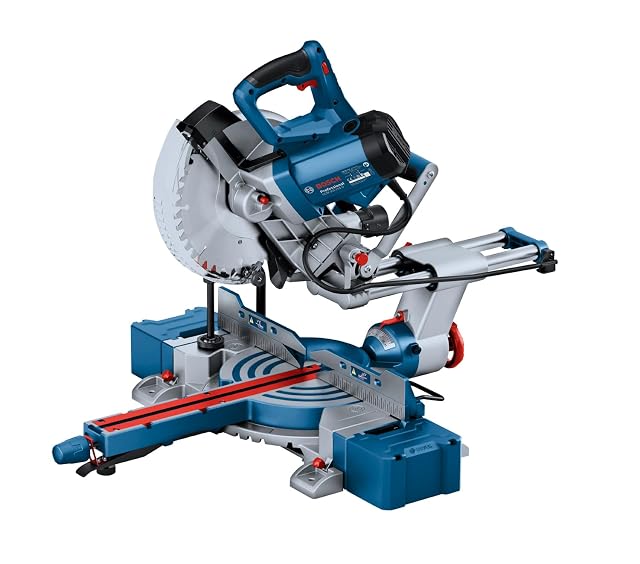
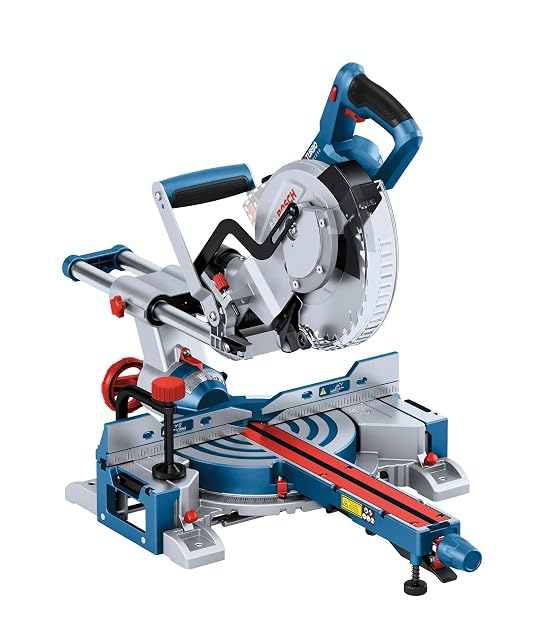
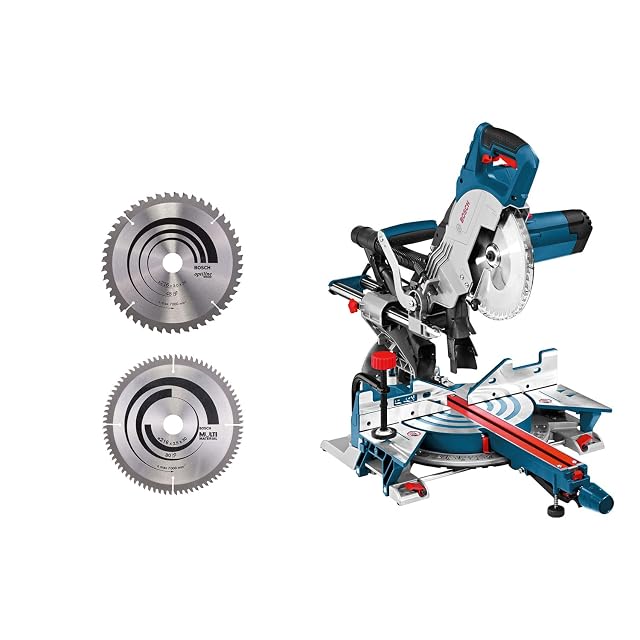
The bottom line The value pick of this page. The shadow line alone justifies it over anything cheaper.
Hands-on testing pending. Nothing below is presented as our own
measurement. Every figure is a manufacturer specification, read off the
listing itself, and the judgements are ours — drawn from how the
specification behaves in this class of machine and from what long-term
owners consistently report. Where a figure is missing, we say so rather
than fill it in.
What the specification says
216 mm blade, 1 400 W, XPS shadow line, fixed detents for mitre and bevel
angles, and a 24-tooth carbide-tipped blade in the box.
Shadow line or laser
A laser projects a red line near the cut. A shadow line puts an LED
behind the blade and lets the blade cast its own shadow onto the
workpiece. The difference is not cosmetic: a laser is a separate part
aimed at where the blade is supposed to be, so it needs calibration and
it drifts; a shadow is cast by the blade itself, so it shows the actual
kerf, it moves when you change the blade, and there is nothing to align.
On a saw you will own for a decade, that is the feature worth paying for.
This is the cheapest saw here that has it, and it is the reason to choose this
machine over the Metabo at €100 less or the Scheppach at half the price.
The blade in the box is not the blade you want
24 teeth on a 216 mm blade is a framing tooth count. It rips through softwood
studs quickly and it tears the surface of anything you intend to paint or
varnish. This is not a criticism of DeWalt specifically — almost every mitre saw
ships with a coarse blade — but it does mean the saw as delivered cuts worse
than the saw is capable of.
A 60-tooth negative-rake blade transforms it. The rake angle is the part people
miss: a positive-rake blade on a chop saw self-feeds and grabs, which is the
mechanism behind most snatching accidents on this type of machine.
Availability
One reference and one EAN across Germany, Britain, France, Italy and Spain, from
about €294 to €399. Not sold on amazon.com.
Prices quoted in this text were read on 2026-08-12. The live price is at the top of the page.
What we like, and what we don't
Strengths
XPS shadow line — no calibration, ever, and it follows the blade you fit
Positive detents on both mitre and bevel
About €294 in Germany, which undercuts the DWS777 by a clear margin
Compromises
1 400 W against the DWS777's 1 800 W
The supplied 24-tooth blade is a framing blade — fine for studwork, coarse for trim
Not sold on amazon.com
Specifications
Blade diameter
216 mm
Motor
1 400 W
Cut line
XPS shadow line
Detents
Fixed stops for mitre and bevel
Supplied blade
24-tooth carbide-tipped
Part number
DWS774-QS
Amazon reference
B01EO45SDG (identical on 5 markets)
EAN
5035048614099
Questions people actually ask
DWS774 or DWS777?
The same shadow line, the same 216 mm blade, and 400 W between them. The bigger motor matters on dense hardwood and on repeated cuts in thick stock; on trim, flooring and studwork it does not. The DWS774 is roughly a hundred euros cheaper and is the better buy for most people.
Is the supplied blade any good?
It is a 24-tooth framing blade: fast, coarse, and exactly wrong for architrave. Budget for a 60-tooth negative-rake blade at the same time as the saw, and keep the 24-tooth for stud.