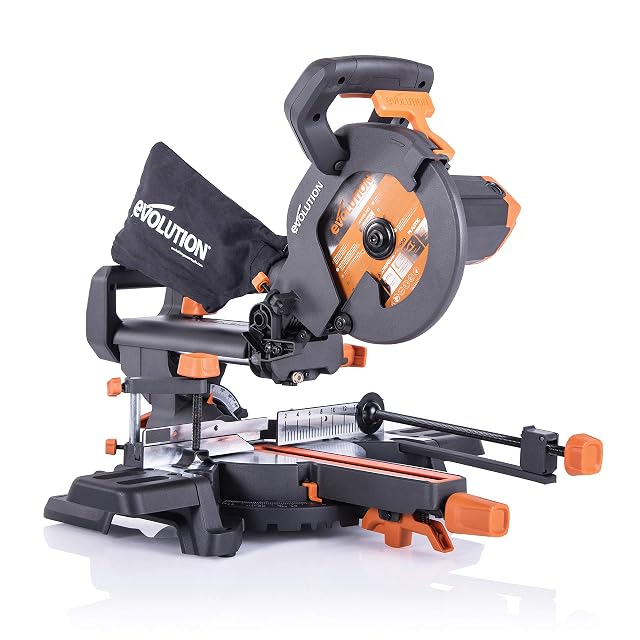
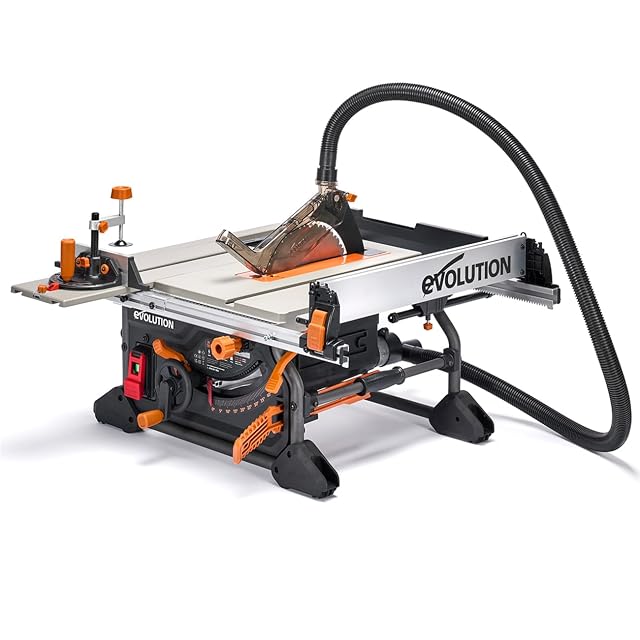
Evolution built its business on carbide-tipped blades that cut mild steel dry —
no coolant, and none of the shower of sparks an abrasive disc produces. It works,
and no other machine on this site offers it.
The compromise, stated plainly
A tooth geometry that survives steel is not the geometry that leaves a clean
shoulder on oak. The cut in timber is acceptable rather than fine.
The fix is straightforward and cheap: keep the supplied blade for metal, fit a
proper wood blade for wood. The saw is then better at both jobs than any single
blade makes it.
One hazard worth repeating
Hot metal chips into an extractor full of sawdust is a bad combination, and an
extractor connected during a metal cut delivers the first straight into the
second. Disconnect it for metal work and sweep up instead.
Where it sits
Renovation rather than furniture. If the next cut might be a stud, a length of
steel angle or a plastic conduit, one machine that does all three is worth real
time. If everything you cut is timber, the Scheppach cuts wider for less.