Rules · scale starts at 0
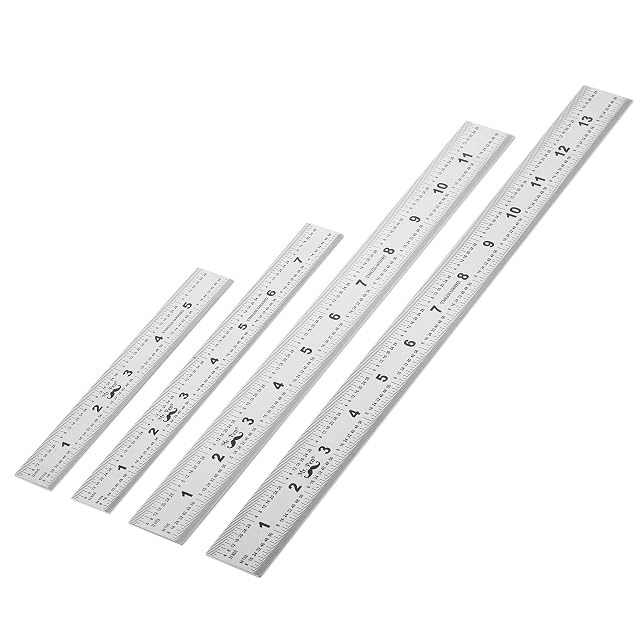
Mr. Pen MR04 machinist rules, 4 pack
The only listing on this shelf that says where its scale starts — which is the one thing a rule has to get right.
Every figure below names its source. Each one is a manufacturer
specification read off the listing itself. The judgments are ours.
Scale starts at 0
Four words, and the only listing on either half of this shelf to say them.
A rule whose scale begins a few millimeters inside the end cannot measure from an
edge. Setting a router bit to 6 mm (0.24 in) above the table means standing the rule on the
table and reading where the cutter falls, and that works only if the zero is at
the metal.
Rules made for drawing often set the zero in from the end to protect it, and
nothing on the outside says which kind is in the packet.
Here it is stated. Elsewhere it is discovered at the bench.
Nine tenths of a millimeter
Published, and it decides two things.
A thin rule lifts at the ends and has to be held down, which moves it. A thicker
one lies flat and stays where it is put.
And it resists being bent in a drawer, which is how most rules die.
Nine tenths is a working bench thickness: thin enough to sit against a shoulder,
stiff enough to stay straight.
Two faces, two systems
Sixty-fourths and thirty-seconds on one side. Millimeters and half millimeters
on the other.
They are closer than they look: a sixty-fourth is 0.397 mm (0.02 in), a half millimeter is
0.5.
For joinery the metric face is easier, because the subdivisions are decimal. For
American stock and American tooling the inch face matches the way the material
is sold.
And no tolerance on either
How accurately the lines were etched is not published.
Neither is flatness. The published try squares on this shelf have the same gap
and their page ends in the only available conclusion: which is why you test it
yourself.
Availability
Read on the day this page was built: $8 at the American Amazon shop.
Read from Keepa on the day this page was last revised; stock and price both move without notice.
Prices quoted in this text were read on 2026-10-07. The live price is at the top of the page.
What comes up most often
Why does “scale starts at 0” matter?
Because a rule whose scale begins a few millimeters inside the end cannot measure from an edge. Setting a router bit to 6 mm (0.24 in) above a table, or a blade to 18 mm (0.71 in), means standing the rule on the surface and reading where the cutter falls — and that only works if the zero is at the metal end. Rules made for drawing often set the zero in from the end to protect it, and nothing on the label says which you have. One listing on either half of this shelf states it. The rest leave it to be discovered at the bench.
Does nine tenths of a millimeter of thickness matter?
More than it sounds. A thin rule lifts at the ends and has to be held down, which moves it; a thicker one lies flat and stays where it is put. It also resists being bent in a pocket or a drawer, which is how most rules die. Nine tenths is a working thickness for a bench rule — thin enough to sit against a shoulder, stiff enough to stay straight. The published try squares on this shelf publish no tolerance at all, and their page says the same thing in the end: which is why you test it yourself.
Sixty-fourths or half millimeters?
Both are on the same rule, one face each, and they are close in size: a sixty-fourth of an inch is 0.397 mm (0.02 in), a half millimeter is 0.5. For joinery the metric face is easier because the subdivisions are decimal and the arithmetic is trivial; for American stock and American tooling the inch face matches what the material is sold as. What neither face gives is a stated graduation tolerance, which is the figure that would say how accurately the lines were etched.