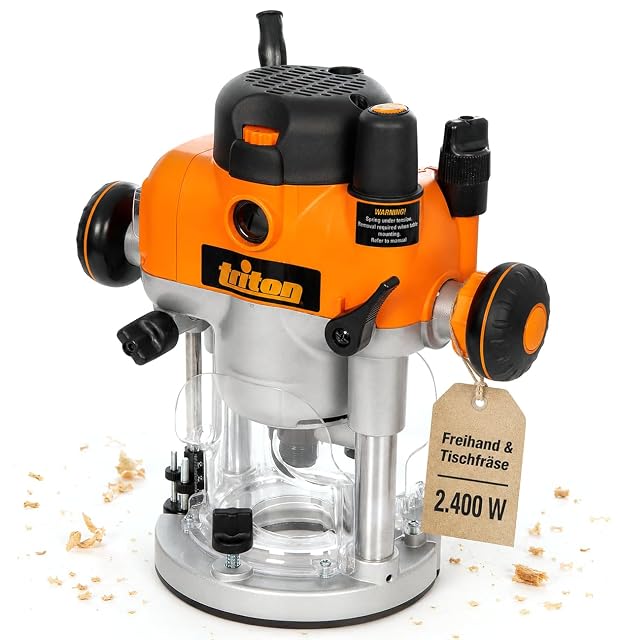
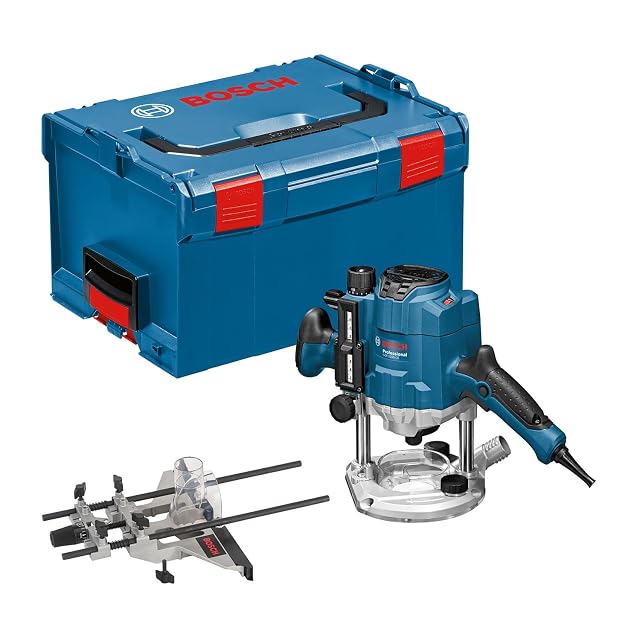
Rim speed, not motor speed
A 12 mm (0.47 in) bit and a 50 mm (1.97 in) bit at the same rpm are not doing the same thing: the rim of the larger one travels several times faster. That extra speed burns the timber, loads the bearing, and on a bit not rated for it is how they come apart.
Collet size is about deflection
A large bit on a small shank flexes under load. The flex chatters the profile, and at the extreme the shank fails. Bits over about 40 mm (1.57 in) want a 1/2 inch collet.
Depth of cut
Several shallow passes beat one deep one, every time. The cut is cleaner, the bit runs cooler, and the router is not fighting you.
This does not replace your machine’s manual. Guards, riving knives and safe working procedures differ between machines, and the manufacturer’s instructions for yours take precedence over anything written here.
What comes up most often
What speed should a large bit run at?
Follow the bit manufacturer's figure — it is normally printed on the packaging or the shank. Where none is given, treat anything over 50 mm (1.97 in) in diameter as needing the bottom third of the router's range.
Last reviewed 2026-08-12