The mechanism
A rip cut releases tension in the timber and the kerf closes behind the blade. The offcut pinches against the rising teeth at the back of the blade, which are traveling towards you, and it is thrown.
The three defenses
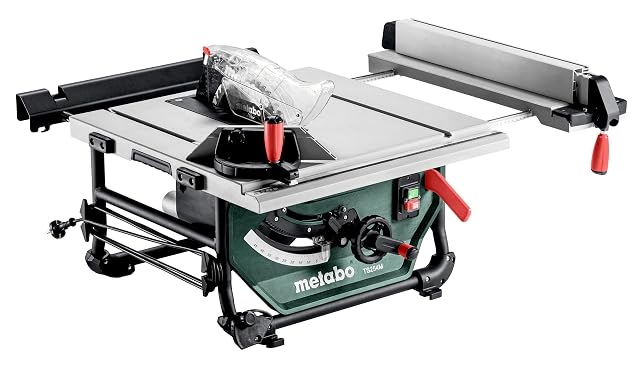
A riving knife holds the kerf open so it cannot pinch. Never remove it for a through cut.
A fence that stays parallel. A fence that closes towards the back squeezes the workpiece into the blade on every cut. See our guide to setting a fence.
A featherboard, which holds the work against the fence with sprung fingers angled to allow forward movement only — so the board physically cannot travel backwards.
And hands
A push block is sacrificial by design. A block with saw marks in it has done its job, and that is the whole point of owning one.
This does not replace your machine’s manual. Guards, riving knives and safe working procedures differ between machines, and the manufacturer’s instructions for yours take precedence over anything written here.
What comes up most often
Is a riving knife the same as a splitter?
A riving knife rises and falls with the blade and stays a constant distance behind it; a fixed splitter does not. Both hold the kerf open behind the blade — which is the point.
Last reviewed 2026-08-12