Every figure below is a manufacturer
specification read off the listing itself. The judgments are ours.
What the specification says
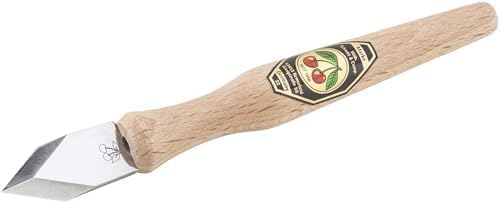
A prismatic-ground marking knife with a red beech handle.
Why prismatic
A single-bevel knife is ground flat on one side, so it registers against a
square without leaning — but it only works on one side of the line. A prismatic
grind is symmetrical and works in both directions, which suits marking around a
workpiece where you cannot always approach from the same side.
What comes up most often
Why not a pencil?
Because a pencil line is half a millimeter wide and you have to decide which side of it to cut. A knife line has no width, and it does something a pencil cannot: it severs the surface fibers, so a chisel placed in the line drops into a positive registration and the shoulder comes out crisp.
When should I use a pencil instead?
For anything you might change your mind about, and for marking waste. A knife line on a visible face is permanent unless you plane it out.
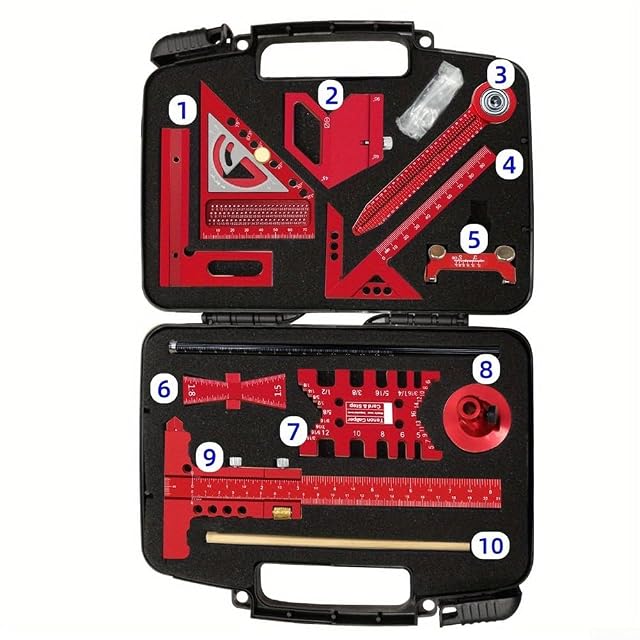
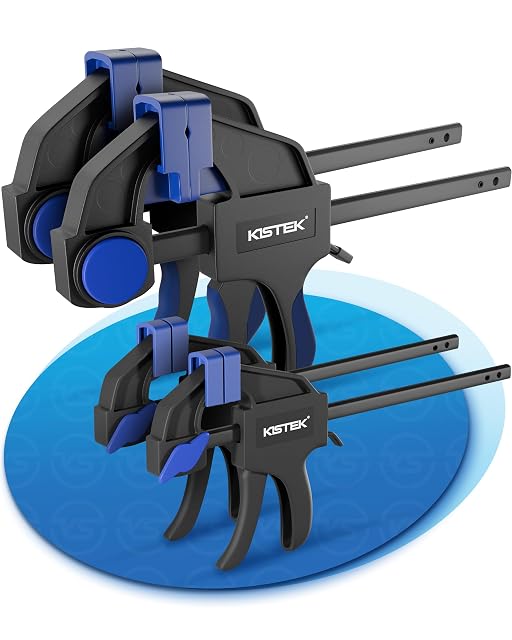
A kit whose own title gives two different counts — and the only one on this shelf to publish its case size.
Contents
The title says 9 Piece and then (10 Pieces.) · The first feature says a 9-piece kit · The part number reads 10PIECES · Named within it: an angle ruler, a dovetail gauge, a scriber and other marking tools
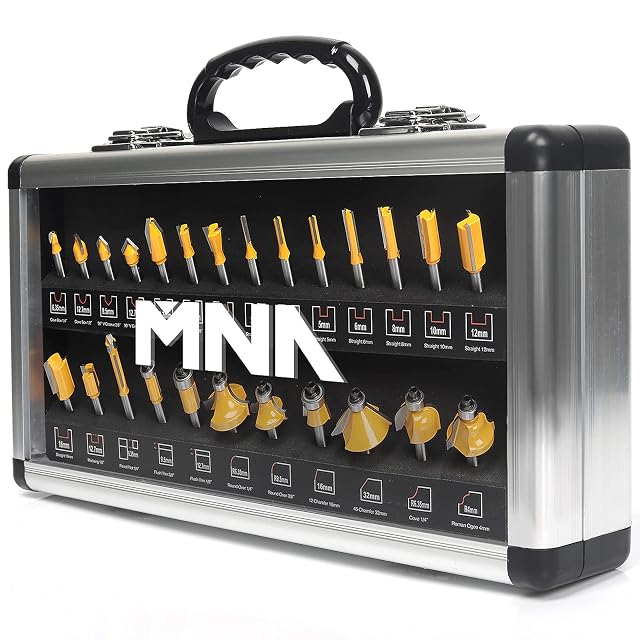
Twenty-five bits, an American carbide classification, and a compatibility list that names a rival on this shelf.
Shank
1/4 in — 6.35 mm, stated universal
Quantity
25 bits · None is named or dimensioned · Stated the most popular carbide-tipped bits
Carbide grade
C3, stated as the American industry classification, for wear resistance and sharp edges
Standard
Stated to match the requirement of the American dimension and standard
Case
A protective storage case
Materials
MDF, hardwood, softwood and particle board
Compatibility
Ten router brands named: MNA, Kowood, Bosch, DeWalt, Makita, Milwaukee, Porter & Cable, Skil, Ryobi and Black & Decker — the only listing on this shelf to name a brand that is also on it
Part number
RS-25P4
Amazon reference
B095W4V3K6
EAN
0770773583429
Names the carbide grade and the classification system it comes from
Ten router brands named, which is the longest compatibility list here
Not one of the twenty-five bits is named or dimensioned
Best for: A quarter-inch router that will meet a wide range of profiles, in a shop working to American dimensions
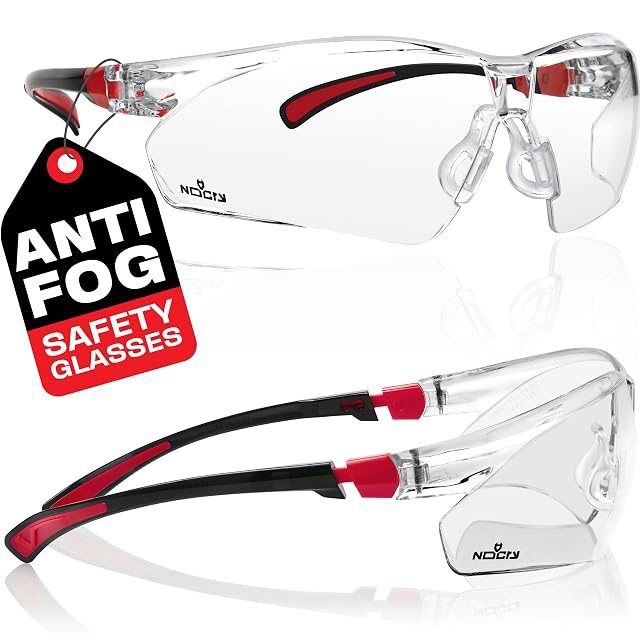
A named impact standard, two coatings and a lifetime warranty — on glasses whose comparison figures name nothing to compare with.
Standard
ANSI Z87 certified, stated — one of three standards named on the American half of this shelf
Lens
Polycarbonate, wraparound, stated to protect from direct and peripheral threats
Coatings
Anti-fog and scratch resistant · Stated 5 times more fog resistant and 2 times more scratch resistant than most clear protective glasses — no product and no test is named
UV
100 per cent UV radiation blocked, stated
Fit
Extendable arms, an adjustable soft nose pad and non-slip rubber grips
Warranty
A lifetime warranty, stated, with replacement or refund — the only lifetime warranty on either half of this shelf
Part number
EyeArmor+
Amazon reference
B07GB8Y11G
EAN
4744452013893
Names an impact standard, which the published over-glasses on this shelf do not
Both coatings, which together decide whether glasses are worn
“5x” and “2x” name no product and no test to compare against
Best for: A pair that gets worn, because it does not fog and does not scratch — on a face without prescription glasses