Skip to content

IMOTECHOM MTA0001A, 8-piece HSS set

The only listing on this shelf to publish a blade length — six point three inches, which is how much tool there is to regrind.

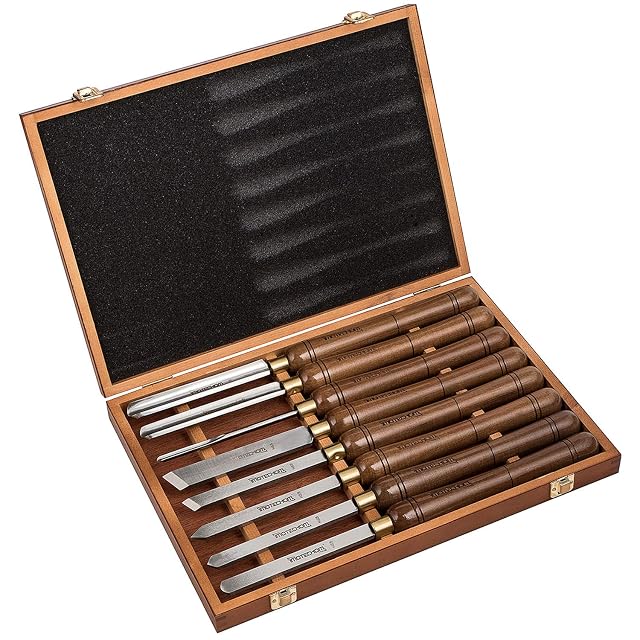
IMOTECHOM eight piece HSS wood turning tool set with teak handles, product photograph

IMOTECHOM MTA0001A, 8-piece HSS set

The only listing on this shelf to publish a blade length — six point three inches, which is how much tool there is to regrind.

Contents
Eight, each named and sized: a 1 in and a 7/8 in roughing gouge, a 5/16 in spindle gouge, a 1 in and a 5/8 in skew chisel, a 5/8 in spear scraper, a 5/8 in round nose scraper and a 5/8 in parting tool
Steel
High-speed steel, stated to outlast high carbon steel · No grade and no hardness published
Blade length
6.3 in — 160 mm, published, the only blade length on either half of this shelf
Handles
10 in teak, stated harder and comfortable
Edge
Accurately pre-sharpened by machine, stated for all the tools
Case
A wooden case with double-layer panels, an enlarged structure and a thickened hinge, shipped in a mail box with EPE protection
Part number
MTA0001A
Amazon reference
B07RN4G83B
EAN
6971620540389
  • Publishes the blade length, which is how much tool there is to grind away
  • All eight tools named and sized
  • No steel grade and no hardness, where the Hurricane set here publishes both

Best for: Spindle work and scraping, by somebody who will add a bowl gouge separately

≈ $160
Check price on Amazon

Specifications

Contents
Eight, each named and sized: a 1 in and a 7/8 in roughing gouge, a 5/16 in spindle gouge, a 1 in and a 5/8 in skew chisel, a 5/8 in spear scraper, a 5/8 in round nose scraper and a 5/8 in parting tool
Steel
High-speed steel, stated to outlast high carbon steel · No grade and no hardness published
Blade length
6.3 in — 160 mm, published, the only blade length on either half of this shelf
Handles
10 in teak, stated harder and comfortable
Edge
Accurately pre-sharpened by machine, stated for all the tools
Case
A wooden case with double-layer panels, an enlarged structure and a thickened hinge, shipped in a mail box with EPE protection
Part number
MTA0001A
Amazon reference
B07RN4G83B
EAN
6971620540389

Every figure below names its source. Each one is a manufacturer specification read off the listing itself. The judgments are ours.

Six point three inches of blade

A hundred and sixty millimeters, published, and the only blade length on either half of this shelf.

It matters because a turning tool is consumed by sharpening. Every grind takes metal off the end, and 160 mm (6.30 in) of blade is perhaps ten years of regrinding before the flute runs into the tang.

It also sets reach. A short blade cannot get to the bottom of a deep bowl without the handle fouling the rim.

On a set at this price, it is the figure that says how long the set lasts.

Eight tools, and no bowl gouge

Two roughing gouges, one spindle gouge, two skews, two scrapers, a parting tool.

That is a spindle turner’s kit, and it is a good one — two scrapers, spear point and round nose, is more than most sets give.

A bowl is hollowed with a bowl gouge: deeper flute, wings swept back, so it cuts across the grain on the inside of a curve. A spindle gouge used for that is the classic route to a catch.

The Hurricane set on this shelf includes a 1/2 inch bowl gouge. The published 1/2 inch bowl gouge on this shelf is sold on its own for exactly this gap.

And no grade, and no hardness

High-speed steel, stated to outlast high carbon steel. Which is true, and is the family rather than the steel.

The Hurricane set beside it publishes M2 and HRC 56-63.

The published bowl gouge and Holzstar set on the European half of this shelf both say HSS and stop, and both of their pages make the same argument this listing makes: HSS rather than carbon steel, so the edge survives a heating cut.

Two schools, and they are not the same hobby

A traditional turning tool is ground steel on a long handle. It is presented to the wood at an angle so the bevel rubs and the edge slices, which leaves a surface that needs almost no sanding — and it has to be sharpened, which means a grinder, a jig and a skill.

A carbide tool is a square or round plate screwed to a bar. It is held flat and scrapes. It never needs grinding: when an edge dulls, the plate is rotated to the next corner and eventually replaced.

The published pages on this shelf put both sides of it. The carbide set’s page: removes the grinder and the sharpening jig from a beginner’s shopping list — and carbide scrapes where a gouge slices, so the surface off the tool needs more sanding. That is the whole choice.

Availability

Read on the day this page was built: $160 at the American Amazon shop.

Read from Keepa on the day this page was last revised; stock and price both move without notice.

Prices quoted in this text were read on 2026-10-07. The live price is at the top of the page.
What comes up most often

Why does blade length matter?

Because a turning tool is consumed by sharpening. Every grind takes metal off the end, and a gouge that starts at 160 mm (6.30 in) of blade has perhaps ten years of regrinding in it before the flute runs into the tang. It also sets how far the tool can reach past the tool rest — a short blade cannot reach the bottom of a deep bowl without the handle fouling the rim. No other listing on either half of this shelf publishes it, and on a set sold at this price it is the figure that says how long the set lasts.

What is missing from these eight?

A bowl gouge. The set has two roughing gouges, one spindle gouge, two skews, two scrapers and a parting tool — which is a spindle turner's kit. A bowl is hollowed with a bowl gouge, whose flute is deeper and whose wings are swept back so it can cut across the grain on the inside of a curve; a spindle gouge used for that is the classic way to get a catch. The Hurricane set on this shelf includes a 1/2 inch bowl gouge, and the published 1/2 inch bowl gouge here is sold on its own for exactly this gap.

Does machine pre-sharpening help?

It saves the first hour and it is not a turning edge. A machine-ground bevel is flat, consistent and square, which is a better starting point than the rough grind most sets arrive with — but a turning edge is finished on a wheel or a hone at the angle the turner uses, and the bevel geometry is a personal thing. The Hurricane set on this shelf calls its edge a ready-to-use factory edge, which is the same claim in plainer words. Both are honest about being a starting point.

All turning tools