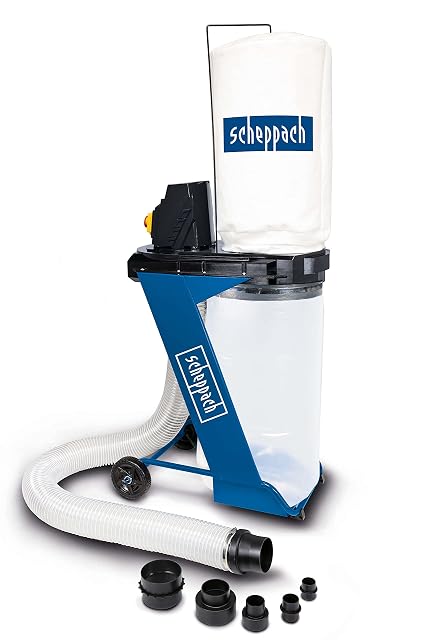
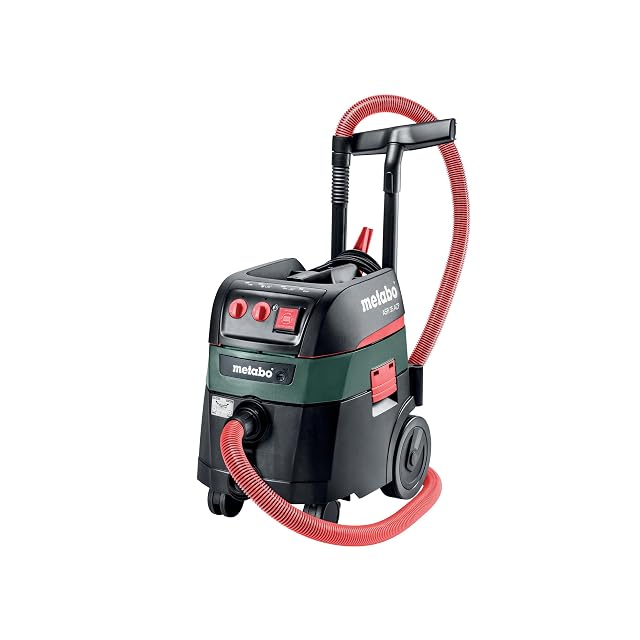
Mistake one: the wrong kind of machine
A chip collector moves a large volume at low pressure — right for a 100 mm (3.94 in) port on a planer or a saw. A workshop vacuum moves a small volume at high pressure — right for a 35 mm (1.38 in) hose on a sander or a router. Swap them and each collects almost nothing while sounding exactly as though it works.
Mistake two: the hose
Flow falls sharply as diameter drops. A 100 mm (3.94 in) port reduced to a 50 mm (1.97 in) hose can leave a chip collector performing worse than a vacuum. Match the hose to the port; keep the run short and straight; every bend costs.
Mistake three: no gates
Air takes the easiest path. An open branch to an idle machine is a wide-open hole, and the extractor draws its air through that rather than through the machine you are using. One gate open at a time is not a refinement — it is what makes a ducted system work.
And then the fraction you cannot see
None of the above improves filtration. Wood dust is an IARC Group 1 carcinogen and the harmful part stays airborne for hours. Class M rather than class L, FFP3 rather than FFP2, and an ambient filter for what escapes both.
This does not replace your machine’s manual. Guards, riving knives and safe working procedures differ between machines, and the manufacturer’s instructions for yours take precedence over anything written here.
What comes up most often
Can one extractor serve the whole shop?
One collector can serve several 100 mm (3.94 in) machines through ducting with blast gates — one gate open at a time. It cannot also serve a sander on a 35 mm (1.38 in) hose; that is the other kind of machine.
Last reviewed 2026-08-12