Power before machines
Check the circuit before buying anything large. A 2,800 W planer draws close to 12 A on 230 V, which is inside a 16 A circuit and leaves nothing for an extractor on the same one. Plan a separate circuit for extraction.
And read voltages carefully: some floor-standing machines are 400 V three-phase, which a domestic supply does not provide — and the requirement can hide in a part number suffix rather than the title.
Everything on wheels
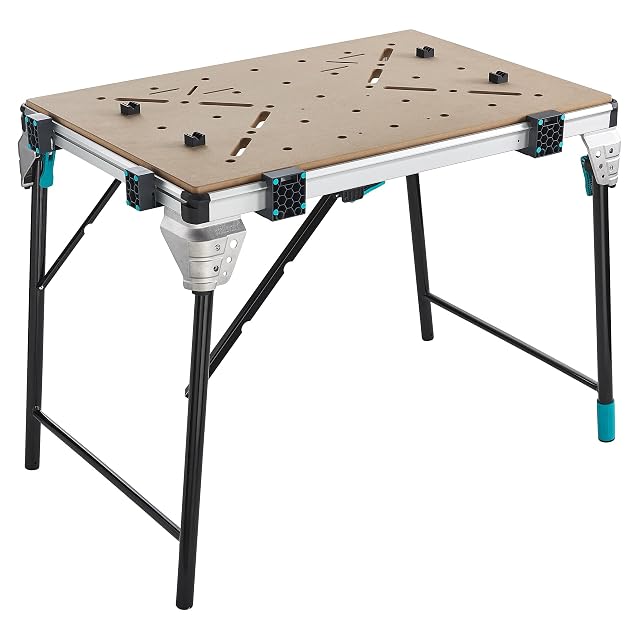
A garage workshop is assembled and dismantled around a car. Mobile bases under the machines and a folding bench turn an impossible layout into a workable one.
Break sheets down outside
A track saw and two lengths of insulation foam on the driveway does what a panel saw does, in a space you do not have indoors.
Dust is the constraint nobody plans for
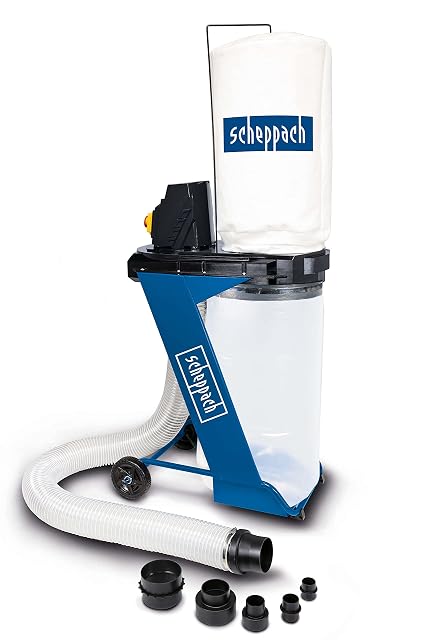
An enclosed garage with no ventilation concentrates exactly the fraction you cannot see. Extraction at the machine, a mask on your face, and the door open.
This does not replace your machine’s manual. Guards, riving knives and safe working procedures differ between machines, and the manufacturer’s instructions for yours take precedence over anything written here.
What comes up most often
What machine should I buy first?
The one that unlocks the work you actually want to do. For sheet goods, a track saw — it needs no floor space. For solid timber, a planer, because it makes cheap rough stock usable.
Last reviewed 2026-08-12