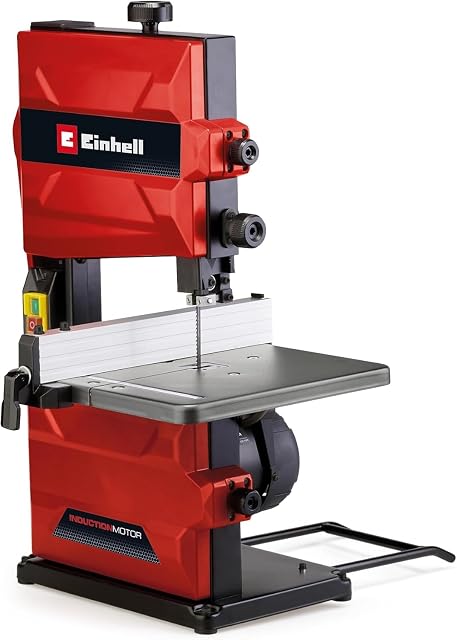
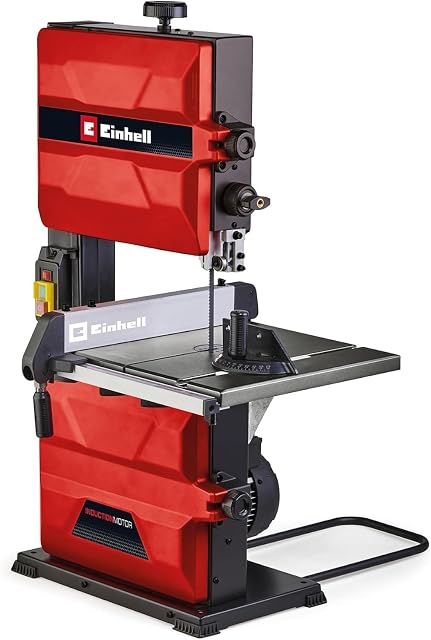
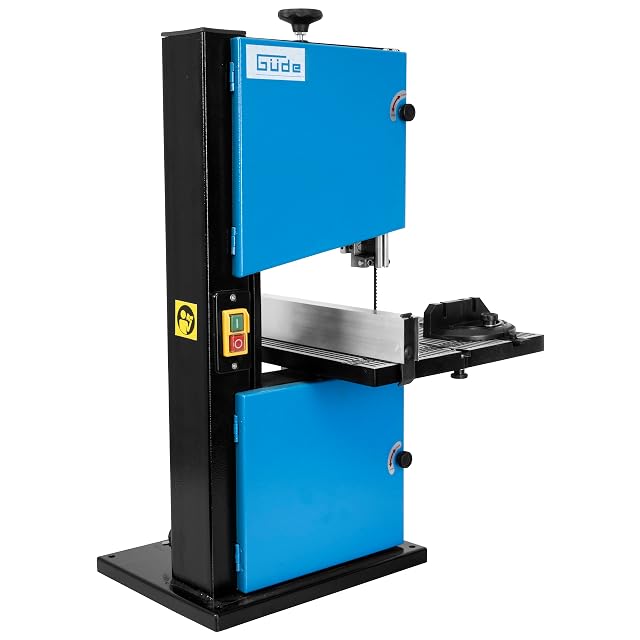
The end of it Worth the premium only if you cut something other than wood. Otherwise the cheaper saws here do the same work.
Every figure is a manufacturer specification, read off the
listing itself, and the judgments are ours — drawn from how the
specification behaves in this class of machine and from what long-term
owners consistently report. Where a figure is missing, we say so rather
than fill it in.
What the specification says
Two blade speeds, 720 and 1,000 m (3281 ft)/min. Scheppach publishes no cut height and no
throat depth on this listing.
The two-speed argument
Blade speed has to suit the material. Timber wants a fast blade: the chip clears
the gullet on its own and heat is carried away with it. Aluminum, brass and
acrylic do not behave that way — at wood speed the material softens, welds to
the tooth and stops cutting, which is how a new blade is ruined in one cut.
A saw with a slow range solves that. It is the single reason to choose this
machine over the cheaper ones above, and if you have no intention of cutting
anything but wood, it is not a reason at all.
What “resaw” means, and why most of these cannot
Resawing is splitting a board through its thickness — turning one 50 mm (1.97 in)
plank into two 22 mm (0.87 in) ones. It is the job a band saw does that no other
machine can, and it is the reason serious workshops own one.
It needs three things at once: enough height under the guides, a frame
stiff enough to tension a wide blade, and enough power to keep the blade
moving through a long cut. A saw with 80 mm (3.15 in) of height cannot resaw
anything worth resawing, however good it is at curves — and most saws
sold as band saws under €300 are in that group. That is not a fault;
it is a different machine, and the listings rarely say so.
Availability
No such listing: the American Amazon shop answers the reference with a search box rather than a page.
Read from Keepa on the day this page was last revised; stock and price both move without notice.
Prices quoted in this text were read on 2026-08-12. The live price is at the top of the page.
The good side, and the catch
Strengths
Two blade speeds — the slower one is what makes non-ferrous metal and plastic possible
One reference and one EAN across five European markets
Compromises
No published cut height or throat depth on this listing
No price on the Italian or Spanish store when we checked
Not sold on amazon.com
Specifications
Blade speeds
720 and 1,000 m (3281 ft)/min
Part number
5901505901
Amazon reference
B07GF9CCXZ (identical on 5 markets)
EAN
4046664068051
What comes up most often
What does the slower speed do?
It stops the blade from melting plastic and from loading up on aluminum. Wood is cut fast because the chip clears itself; softer non-ferrous metals and thermoplastics weld themselves to a blade running at wood speed, which ruins both the cut and the blade. 720 m (2362 ft)/min is in the range those materials want.
Is two speeds worth paying for on a wood-only saw?
No. If you never cut anything but timber, the Einhell at €165 does the same job and the extra €35 buys you nothing you will use.
Where this model is listed
A listing is not an offer: the reference exists on these stores, availability changes daily.
France
Germany
Italy
Spain
United Kingdom
Our score
7.5/ 10
Worth the premium only if you cut something other than wood. Otherwise the cheaper saws here do the same work.
Who buys this one, among woodworking machines
A mixed workshop where the same saw meets timber, aluminum section and acrylic
Sources
Specifications: the manufacturer sheet for woodworking machines and the matching Amazon product page. Prices and availability: Keepa. Every figure on this page names its source.